












No legal provision, yet Meerut police threaten Muslims’ passport cancellation for road namaz
text_fields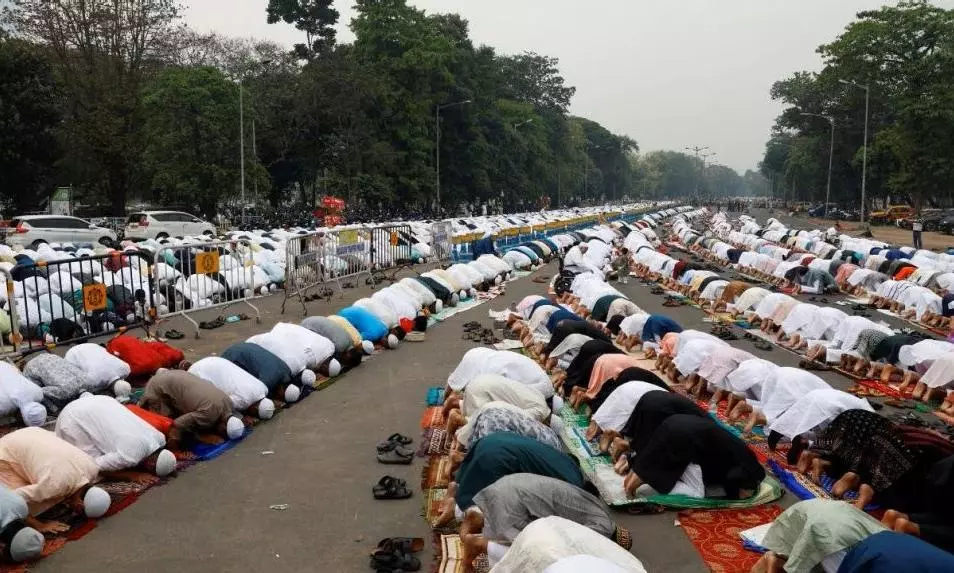

It appears that the Muslim community is increasingly being subjected to bizarre restrictions and punitive measures, as shortly after Sambhal Circle Officer Kuldeep Kumar imposed an unprecedented constraint on raising slogans or displaying placards against Israel during Friday prayers over the Iran war, another diktat surfaced threatening the cancellation of passports for those offering namaz on public roads despite the absence of any such provision in law.
This recent escalation of administrative bellicosity was epitomised by Meerut’s Senior Superintendent of Police, Avinash Pandey, who issued a stern admonition that any flouting of the prohibition against roadside prayers would invite the revocation of travel documents, an assertion that ostensibly prioritises intimidation over statutory accuracy.
Although Pandey subsequently conceded that the police lack the direct unilateral authority to annul passports, he clarified that they could instigate exhaustive inquiries into the "criminal antecedents" of violators, thereby leveraging the bureaucracy of police verification as a sword of Damocles to ensure compliance among the congregants of the district's numerous mosques and eidgahs.
Simultaneously, the atmosphere in Sambhal has been further embittered by the inflammatory rhetoric of Circle Officer Kuldeep Kumar, who, during a putative peace meeting, disparaged those expressing solidarity with West Asian causes by suggesting they expatriate themselves to the frontlines of the Iran-Israel conflict.
In a video that has since achieved a viral notoriety, Kumar’s sardonic invitation for citizens to board repatriation flights and engage in foreign combat highlights a burgeoning intolerance for dissent; he insisted that global geopolitical strife remains the exclusive purview of the nations involved and warned that no international grievances should permeate the sanctity of the Friday prayer.
These developments have not escaped the excoriating critique of All India Majlis-e-Ittehadul Muslimeen chief Asaduddin Owaisi, who invoked the constitutional guarantee of freedom of expression to question whether the regional constabulary would maintain such a censorious and combative posture toward pro-Israel demonstrations.
As the state’s enforcement mechanisms pivot toward these increasingly idiosyncratic mandates, the tension between communal religious practice and aggressive administrative oversight continues to widen the fracture in the region's civil discourse.