















Climate change: A precautionary lens on child marriage
text_fields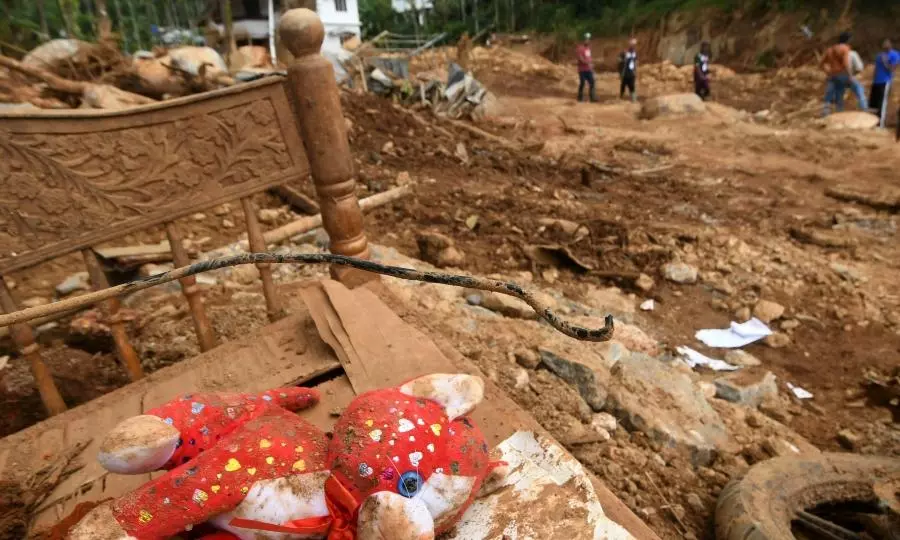

Child marriages continue to exist in some parts of the world and are largely driven by poverty, gender inequality, limited access to education, and, in some cases, cultural practices. These risks intensify during any crisis. Climate change, which was once spoken of as a distant threat, is now a lived reality marked by displacement, livelihood loss, and repeated disasters. Beyond visible damage, these events create fear, insecurity, and psychological stress within families. In such uncertain conditions, some may view early marriage as a way to manage hardship and protect daughters, thereby increasing the risk of child marriage.
The psychological aftermath of climate fury
The psychological aftermath is one of climate change’s least visible consequences. Anxiety, anticipatory grief, survivor’s guilt, and recurring trauma quietly settle into communities that live in disaster-prone regions. Over time, the environment itself becomes a trigger. Survivors, especially children and adolescents, may experience loss of a sense of safety and uncertainty about the future. In such situations, parents may go to great lengths to protect their daughters from perceived threats, even if those actions risk compromising the child’s well-being.
According to Mr Junaid Kaippani, Ex- Chairman, Wayanad District Panchayath Welfare Standing Committee, “in a crisis of the intensity which we have witnessed at Wayanad, we must have more sustained follow-up support in terms of psychological aid, since even after the immediate needs are taken care of, the psychological wounds continue to bleed".
It is a well-known fact that women and girls are disproportionately affected by disasters and experience higher levels of post-traumatic anxiety and emotional distress. Their vulnerability is exacerbated in displacement settings such as temporary shelters, where the risk of domestic and sexual violence increases. In extreme cases, they may be compelled to enter exploitative situations to secure necessities, including food and shelter.
The unholy nexus
The link between child marriage and climate change has only recently begun to be recognised. While disasters do not directly cause early marriage, they exacerbate existing drivers such as poverty and gender inequality, increasing the likelihood that families will marry off daughters early. Repeated disasters further heighten this risk. In some cases, families marry daughters to shield them from harassment or sexual violence in camps or insecure settings created by disasters. This illustrates how the hidden psychological and social impacts of climate events can indirectly contribute to higher rates of child marriage in affected communities.
Patterns across countries and India
According to the Times of India, a 2023 systematic review published in International Social Work by the researchers from The Ohio State University, found that extreme weather events, such as droughts, floods, heatwaves, and cyclones, in low- and middle-income countries are associated with increased rates of child, early, and forced marriages.
A report titled Indian Ocean Tsunami Through the Gender Lens documented that more girls, particularly those aged 14–17 years, were married before the age of 18 after the 2004 Tsunami, thus linking the rise to economic stress from lost livelihoods, disruption of girls’ education, safety concerns in temporary shelters, and social pressures such as dowry. The report also notes that these marriages were largely absent from official statistics because post-disaster systems did not actively monitor early marriage. Overall, the findings highlight that disasters tend to intensify existing social and gender vulnerabilities, with child marriage emerging as a distress-driven response in vulnerable families.
In Bangladesh, it was found that during years with heatwaves lasting more than 30 days, girls aged 11–14 were about 50% more likely to be married, and those aged 15–17 were about 30% more likely to marry compared to other years. Evidence from contexts such as droughts in Kenya, Cyclone Aila in Bangladesh, and other flood and heat-related shocks further supports this link between climate stress and increased child marriage. Families are pushed to marry off daughters not merely from tradition, but as a survival tactic, as reported from the drought-affected parts of Marathwada, Maharashtra (Down to Earth, 2023).
A 2023 scoping review in PubMed confirms that environmental crises worsen key drivers of child marriage — asset loss, income insecurity, displacement, school disruption and fear of sexual violence. Socio-cultural practices such as dowry and gender norms further shape this impact.
While global studies show a pattern, what does the evidence reveal closer to home?
The Kerala context
Kerala has traditionally reported lower rates of child marriage compared to many other Indian states. However, certain tribal and economically vulnerable communities — including some in Wayanad — have seen instances of the practice over the years. The Kerala High Court in March 2025 directed the State authorities to conduct awareness programmes to prevent child marriage among tribal communities in Wayanad. The Court observed that although child marriage may be a longstanding custom, tradition cannot justify practices that harm children’s health, education, and autonomy. The court had stressed the need for long-term measures, such as community-based awareness programmes in schools, settlements and community centres. to prevent child marriage among tribal populations in Wayanad.
Data gaps in disaster monitoring
Recent government data from the Kerala Women and Child Development (WCD) Department indicates a slight rise in reported child marriages in the state. In the year up to mid-January 2025, 18 child marriages were officially recorded across Kerala, compared to 14 cases in 2023–24 and 12 cases in 2022–23. While exact figures for the 2025–26 period are not yet officially published, the recent government data reported that Kerala recorded 18 child marriages between April 2024 and January 2025 — the highest in the last three years
Fiscal Year Reported Child Marriages Child Marriages Prevented
2022–23 12 108
2023–24 14 52
2024–25* 18 48
*Data for 2024–25 is up to mid-January 2025.
The data also shows that the number of child marriages being stopped has gone down, even though more cases are being reported. In 2022–23, officials prevented 108 child marriages. In 2023–24, this number fell to 52, and in 2024–25 (up to mid-January), 48 marriages were stopped. (The New Indian Express).
Of the 18 cases reported in 2024–25, only one case was recorded in Wayanad district, while higher numbers were reported in districts such as Thrissur and Malappuram. Although the statewide figures show a gradual increase, this dataset does not provide evidence that the Wayanad landslide has directly led to any surge in child marriages in the district.
The data indicated that while reported child marriages are rising slightly, the number of marriages being prevented has decreased over time, highlighting the need for stronger monitoring and intervention.
According to a report published in The New Indian Express on October 11, 2025, the reported rise in child marriages in Kerala appears to stem from multiple factors rather than a single cause. While improved reporting and surveillance have increased detection, experts point to deeper issues such as post-pandemic economic stress, persistent gender norms, and the continued social acceptance of early marriage in some communities. Cultural practices, social media influences and gaps in parenting also contribute to the trend.
Wayanad after the landslides
The 2024 Wayanad landslides, caused by heavy monsoon rains, were among Kerala’s deadliest recent disasters, killing over 400 people and displacing thousands and where rehab works are still going on. News and relief sources have highlighted the human toll of devastated families and instances of children left orphaned in the relief efforts and rehabilitation. However, no major media coverage in English or Malayalam has reported a rise in child marriages directly linked to the Wayanad disaster. Similar situations where disasters are known to increase vulnerability, but limited or unavailable local statistical evidence, are quite common in disaster research.
Although no specific data shows a rise in child marriages in Wayanad after the disaster, the slight increase seen at the state level in Kerala suggests that post-disaster situations should be closely monitored. This also highlights the need for better data collection and disaster-sensitive/gender sensitive social tracking to fully understand how climate crises may influence vulnerable practices such as child marriage
While India has strong laws against child marriage, these do not yet integrate climate adaptation strategies, thereby leaving a gap in preventive frameworks that address the root causes triggered by an environmental crisis. As Kerala prepares for the next monsoon, the state cannot focus solely on dams or flood barriers. Without connecting climate action with child protection, families may start seeing early marriage as a way to manage disasters
Rains in Kerala were once romanticised. The association of rain and the warm feelings they evoke have changed for communities being repeatedly struck down by its wrath. Here, fear replaces nostalgia and calmness.
“We have lost everything. Only my daughter and I remain. We now have a secure home under the government scheme. Even then, whenever I hear the sound of rain, I feel uneasy, my heart starts to pound heavily, and an unexplained fear grips me. Right now, my biggest worry is my daughter. I must secure her future as soon as possible, coz if I am gone, she has no one else.” A mother broke down, holding her 14-year-old daughter close to her.
It is within this altered emotional landscape that practices like child marriages can emerge more as a response to fear and a desire to protect daughters in an unpredictable climate.
This report was produced under Population First’s Laadli Media Fellowship 2026