
















Choose more than a degree: Why CFSPP, Jamia Hamdard matters
text_fields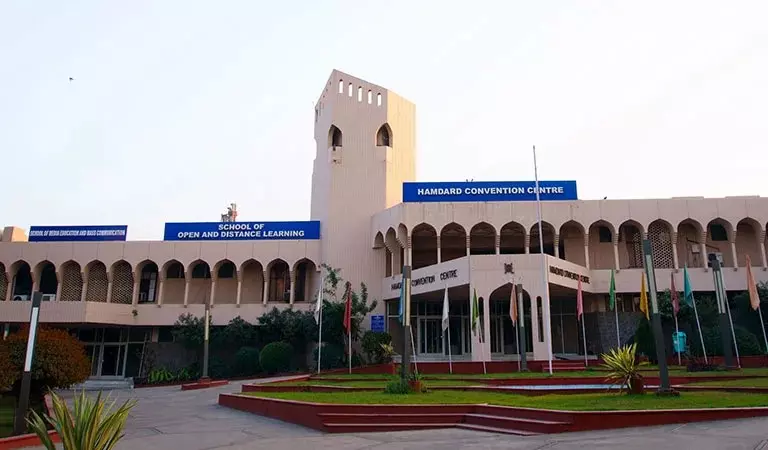
“To govern a garden, one must know the scent of every flower; to lead a nation, one must honour the roots of every region.” These words capture, perhaps more than any formal description can, the guiding philosophy of the Centre for Federal Studies and Public Policy (CFSPP), Jamia Hamdard, New Delhi.
In the history of Indian institution-building, there are stories that begin with the pulse of a human being and culminate in the heartbeat of a nation. Such is the legacy of Hakeem Abdul Hameed, or Hakeem Saheb, as he remains etched in the collective memory of Jamia Hamdard.
His ancestors, healers who traversed the long road from China to India, did not bring merely herbs and tinctures; they brought with them a philosophy of balance. As pioneers of Unani medicine, they understood that health lies in the harmony of diverse elements—a principle that would eventually bloom into the university that stands today.
Yet Hakeem Saheb’s vision extended far beyond the physical body. He recognized that a society, much like a patient, requires a form of “social medicine” to thrive. This understanding found institutional expression in the 1990s, when the study of federalism—the science of coexistence and co-living—was brought from Jawaharlal Nehru University (JNU) to the serene academic environs of Jamia Hamdard, with the support of the University Grants Commission (UGC).
It was a convergence born of the deep friendship between Hakeem Saheb and the eminent social scientist Rasheeduddin Khan—two visionaries who believed that India’s vast diversity was not a challenge to be managed, but a strength to be nurtured.
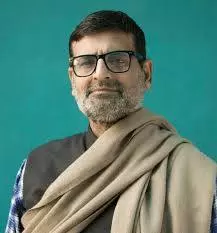
Together, they entrusted Prof. Ajay Kumar Singh, a promising and grounded scholar in the Political sciences from JNU, with the task of carrying forward this mission. Today, under Prof. Singh—now a globally respected scholar of federal studies—the Centre for Federal Studies and Public Policy (CFSPP) functions as a bridge between the realities of the grassroots and the corridors of governance in India. Over the years, the Centre has played a significant role in producing research, policy insights and academic tools that help integrate samaj, sarkar and bazaar—society, state and market—three inseparable elements of the 21st-century world.
Why CFSPP, Jamia Hamdard?
April, May and June mark the admission season in Indian universities and centres of higher learning. It is also the time when students and families begin asking serious questions: Where should one study? What kind of learning prepares one not just for a job, but for a meaningful role in public life? Which institution can connect scholarship with the real concerns of society?
By all accounts, the Centre for Federal Studies and Public Policy, Jamia Hamdard, stands apart in guiding students towards careers as policy professionals, researchers, teachers, analysts and social science experts.
It is the only institution in India recognized by the International Association of Centres for Federal Studies (IACFS), yet its soul remains firmly anchored in the soil of the country. At its core, the Centre is dedicated to the 21st-century imperatives of coexistence, diversity, decentralisation and federalism.
It is a place where policy is not viewed merely through data sheets and official files, but also through the lived realities of people—the preservation of folklore, the protection of the environment, and respect for the often-unlettered wisdom of the agriculturist and the grassroots citizen.
For students seeking a career that contributes to meaningful nation-building, the Centre offers more than a degree; it offers a way of understanding how a multi-hued nation survives, negotiates and prospers through the art of living together.
A Centre Rooted in India, Relevant to the World:
In an age of rapid transition, the Centre stands as a testament to the belief that to lead a nation, one must first learn to understand its diversities, heal its divisions, and honour its roots. Over the years, Jamia Hamdard’s Centre for Federal Studies and Public Policy has evolved into a serious academic space for the study of state- and nation-building, decentralised governance, empowerment and welfare, civil rights, and peace and conflict resolution.
The Centre’s areas of teaching and research include Comparative Federalism, Inter-State Comity, Federal Power Sharing, Coalition Politics, Environmental Management and the Ecological Concerns of Development, Sectoral Analysis of State Policies, Decentralisation, Development and Empowerment, Human Rights, Inclusive Growth, the development of socio-economically marginalised groups, Federal Accommodation of Identities, Globalisation and Global Governance, Indian Government and Politics, the working of Indian federalism, Social and Regional Movements, Public Finance and Economic Management of Taxes and Resources, Local Self-Government, and Election Studies.
As Prof. Ajay Kumar Singh puts it: “Methodologically, the Centre promotes interdisciplinary and interface studies in the themes mentioned. It prefers case-specific, simulated and guided modes of teaching and research.” This statement also reflects the Centre’s larger academic ethos—serious in scholarship, but always connected to real-world complexity.
The programmes offered by the Centre include B.A. (Politics and Governance), B.A. (Public Policy), M.A. (Politics and Governance), M.A. (Federal Studies), besides Ph.D. programmes in Public Policy and Federal Studies.
Over the years, the Centre has built a notable alumni base that includes researchers, educators, policy professionals, environmentalists, civil servants and academic practitioners in India and abroad. Prof. Singh himself has served as an expert for the 14th Finance Commission, the Indian Parliament, and the Prime Minister’s Office (PMO). The Centre has also contributed to the training of officers from the Indian Administrative Service (IAS) and the Indian Police Service (IPS) through its academic and professional programmes.
The University’s Vice Chancellor, Prof. (Dr.) Afshar Alam, has also extended steady institutional support to the Centre, helping strengthen the broader mission and vision envisioned by Hakeem Saheb.
Career Pathways for Students
One of the most important questions for any student today is practical: What can I do with this degree?
The answer, in the case of CFSPP, is both wide-ranging and socially relevant.
Graduates specialising in these multifaceted areas—ranging from federal governance and public finance to ecological management and human rights—are well positioned for careers that bridge the gap between policy theory and grassroots implementation. Since the curriculum engages both the structural aspects of governance and the social dimensions of development, it opens up diverse professional pathways.
Students with a grounding in Comparative Federalism, Decentralisation and Public Policy can work as policy analysts, joining think tanks, policy research bodies, state planning boards, and legislative research teams. They may contribute to the design, evaluation and implementation of public policies and government schemes. For aspirants preparing for the civil services, such a background also offers a valuable intellectual edge in understanding inter-state relations, governance, public administration and local self-government.
The study of Human Rights, Inclusive Growth and Global Governance opens opportunities in international development and multilateral institutions. Graduates may find roles in organisations working on development, governance, social justice and rights-based advocacy, both in India and globally.
Those interested in Environmental Management and Ecological Concerns of Development can move into the growing field of sustainability and environmental policy, working with research institutions, advocacy groups, consultancies, development organisations and public bodies concerned with the ecological dimensions of growth and regulation.
Similarly, the Centre’s engagement with Election Studies, Social Movements and Regional Politics can lead to careers in political consulting, electoral research, public affairs and specialised journalism. Graduates may work in areas involving data analysis, public communication, political research and issue-based reporting, especially in relation to democracy, governance and social justice.
Students interested in academic and long-term research careers can also move toward doctoral research, university teaching, or research associate positions in projects related to federalism, identity, governance and public policy.
The Centre’s emphasis on Public Finance, Taxation and Economic Management of Resources also prepares students for roles in economic and policy research, especially in institutions concerned with fiscal policy, public expenditure, development planning and state-level governance.
A Final Word to Aspirants:
For students and scholars aspiring to pursue meaningful learning and research in the social sciences, the Centre for Federal Studies and Public Policy, Jamia Hamdard, opens the door to a wide range of intellectually rewarding and socially relevant career pathways.
But one should choose it not merely for a degree. One should choose it with a genuine interest in understanding federalism, governance, public policy and the complex realities of India’s democratic life.
For those who wish not only to study society, but also to understand, serve and strengthen it, CFSPP offers a serious and meaningful academic home.