










Is Cuba going to succumb to US sanctions?
text_fields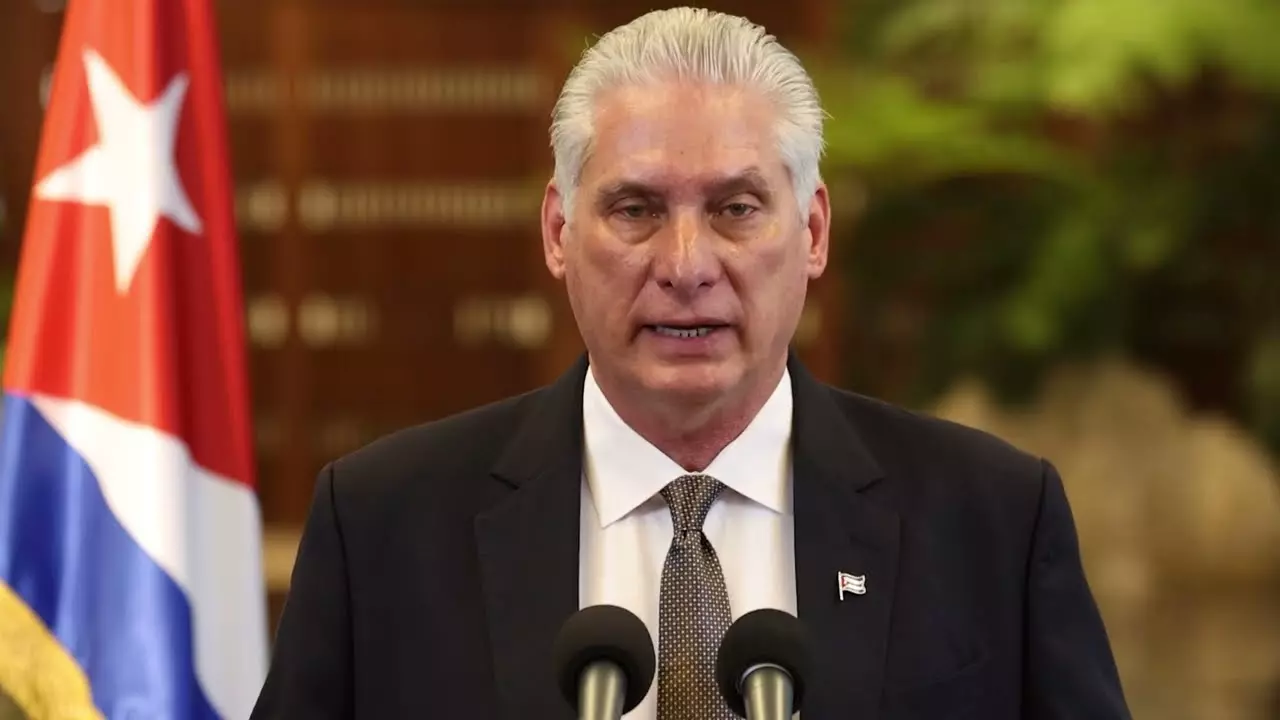
Cuban President Miguel Diaz Canel (file photo)

The United States introduced sanctions on anyone selling oil to Cuba on 3 January 2026. Cuba’s own production is far from sufficient for domestic needs. Most oil was imported fro Venezuela and Mexico. The US threatened swingeing tariffs against any country that supplied oil to Cuba. Washington DC introduced the embargo by the preposterous step of declaring a ‘national emergency’ in the United States. Trump has routinely abused the notion of a national emergency to exploit it for the purpose of depriving people of their rights. The USA has once again labelled Cuba a state sponsor of terrorism. It has twice so designated Cuba and twice removed that designation. ‘Terrorism’ is merely pejorative in the American political lexicon. It just means ‘You do not agree with me.’
Cuba has endured three and a half months of what the US Government terms ‘maximum pressure.’ The Cuban Government already admits it is in crisis. If it carries on like this in a few months there might be a total breakdown in law and order with people fighting for food and there will be no electricity to see thieves at night and no fuel for police cars to go to stop robberies. It is clear that Cuba is going to succumb, but two questions remain. How much longer will Cuba be able to tough it out. What changes will Cuba have to make to persuade the US to end the embargo?
The Caribbean island has to import many of its necessities and has to export goods such as rum and cigars to survive economically. Tourism is worth 20% of the economy. Tourism has now dwindled to almost nothing. Cuba cannot get jet fuel to enable planes to take off. Moreover, who would want to stay in a hotel without electricity?
The effect on the Cuban economy has been severe. Many businesses cannot operate. Even hospitals face power cuts due to rolling blackouts. Mothers are having to give birth in the dark. Lifesaving operations have to be postponed and cancelled and sometimes it is then too late for the patient. There are shortages of all sorts of goods and even medicines. People sell aspirin as though it were an illegal drug.
There is refuse across the streets because there is not enough fuel for the trucks that collect it. Public transport has been reduced to a bare minimum. Schools and universities have been mostly closed. It is impossible to gather the harvest.
The Republican Party has long been deeply hostile to Cuba and the Democratic Party only a little less so. The US Secretary of State Marco Rubio was born in Florida to Cubans who moved to the United States before the Cuban Revolution of 1959. Many Cuban-Americans revile the Cuban Government. There is a large and growing minority of Cuban-Americans who take a more considered view of the situation. They recognise that in 1950s Cuba was a dictatorship scarred by appalling poverty and inequality. They recognise that the Cuban Revolution was not entirely bad and the United States has not always been inculpable in its dealings with Cuba.
The US has long wanted regime change in Cuba. Cuba is a nominally communist country but allows small scale capitalism. Cuba has often sided with America’s foes. Havana had a close relationship with Moscow since the 1960s. However, when it came to the Ukraine War, Cuba abstained on the resolution condemning the Russian invasion. But Trump still thinks that overthrowing the government in Cuba that has done the US no harm for decades is important. He believes he can do this without a single American being killed.
Cuba is by no means the most oppressive country on earth. The United States had cordial relations with countries that have far worse governments. Since 2010 Cuba has allowed people to emigrate. Many Cubans have Spanish ancestry. Anyone with even one great-grandparent born in Spain can claim Spanish citizenship. Therefore, these Cubans move to Spain or other European Union countries. Spaniards are EU citizens and therefore have the right to live and work in 29 European countries. Cubans can travel without a visa to a few Latin American countries. They soon discover that whatever the failings of a planned economy, life for the poor in other Latin American countries is worse than it is for all Cubans. Cuba is losing people – people are voting with their feet. Remittances from Cubans abroad is crucial in keeping the economy afloat. The government is worried that the US will cut that off. Letting people leave is part of the government’s strategy. It wants malcontents to leave rather than stay and be the nucleus of a dissident movement.
Russia sent a ship with oil in April 2026. Oddly the United States made no effort to prevent this. Trump has always had a soft spot for Putin. But if Russia sends oil and says it is for humanitarian purposes, why should other countries not do likewise? Mexico has dispatched two shiploads of humanitarian supplies but not oil. China and Canada have also sent aid to Cuba. Argentina is one of the few countries with a government fulsomely supportive of the US policy against Cuba.
Cuba is well known for its medical internationalism. In a country with almost no banking, stockbroking or entrepreneurialism, there were few careers for the mathematically gifted. Therefore, it has one of the highest per capita number of doctors. Cuba sent tens of thousands of doctors abroad. They provided genuine medical care but also earned much needed hard currency for their government. The doctors were accompanied by ‘minders’ to prevent them from defecting. The doctors sometimes doubled as spies. Moreover, they would provide superior treatment to supporters of left wing governments such as in Venezuela than opposition supporters. The United States strong armed several countries in ending agreements with Cuba to host such medical missionaries. Ecuador went further and expelled all Cuban diplomats as well as doctors. Some Less Economically Developed Countries now suffer a shortage of physicians because they were bullied into kicking out Cuban doctors.
Cuba and other countries like Spain have condemned the embargo as illegal. These countries are the usual suspects so far as the US is concerned: Iran, Russia, Belarus, China, North Korea, Eritrea, Nicaragua and so on. But it also includes US allies like Spain. The Secretary General of the United Nations Antonio Guterres has said he is deeply troubled about the humanitarian impact of the embargo. This embargo is not part of war. The aim of the embargo is to effect political change in Cuba. The United Nations Charter declares that no state may use pressure against the political independence of another state. The US often cites the United Nations Charter in furtherance of its claims and it therefore behoves the United States to abide by the same charter.
President Miguel Diaz Canel said he is not going to resign. There are no clear signs of concessions by Cuba beyond the release of 2,000 prisoners. The United States and human rights organisations call them political prisoners. The Cuban Government maintains they are criminals.
Cuba has sent delegations to negotiate with the United States. The Cubans definitely want an end to the oil embargo. The country cannot endure this much longer. The question for Havana is: what is the minimum it can give away in order for the embargo to be lifted? In January 2026 the United States kidnapped President Maduro of Venezuela and killed 24 of his Cuban bodyguards. The Venezuelan Government has made minor concessions and since then been left alone with President Trump then claiming that he has already achieved regime change. Cuba will be hoping it can make some cosmetic changes and then Trump will declare victory and leave Cuba unmolested.
Donald J Trump has the attention span of a mayfly. He might get bored of the Cuban issue and lift the embargo or indeed he might leave it there indefinitely because he cannot be bothered to think about the issue. Iran is distracting his attention.
The current President of the United States is notorious for his mood swings. He can pivot from one position to its diametric opposite. He threatened ‘fire and fury’ against North Korea in 2017. In 2019 he became the first president of the USA to meet a North Korean supremo and even stepped over the border into North Korea for a minute. He announced that he and Kim Jung On had ‘fallen in love.’ If the Cubans are cunning, they might be able to flatter him and manipulate him.
Unlike Iran, Cuba has no other cards to play and only 9 million people, and its military has antiquated equipment. President Trump has said that the US might ‘take over Cuba’ just as the US did in the 1890s. If the United States invaded there is no doubt that the US would prevail. Even if Cubans fought a guerrilla campaign in the mountains it is likely that the United States could defeat this. Cuba could not be resupplied by other countries unlike America’s insurgent foes in Afghanistan and Iraq.
In 1961 after the failure of the Bay of Pigs coup by US backed Cuban anti-communists, the United States publicly vowed that it would never invade Cuba. Donald Trump, as one well known for lying more than he tells the truth and constantly reneging on public solemn promises, could well break that promise. At the moment there is no indication that the US is limbering up to invade Cuba. The United States is busy in the Persian Gulf. Whether that ends well or badly, the US might move onto Cuba later. If the US defeats Iran, then Trump will be buoyed up and more gung-ho. Contrariwise, if he loses, he may seek a weaker victim.
The US has had a military base in Guantanamo Bay, Cuba since 1899. It signed a lease with Cuba on it. After 1959 the Cuban Government proclaimed it void but did not dare try to retake it by force. The US has paid a peppercorn rent for it into an account each year but the Cubans have never collected the money since 1959.
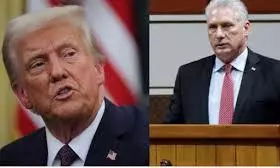
What is the most that the United States might want to achieve in Cuba? President Diaz Canel and various top officials resigning and agreeing to play no further part in government would signify regime change. The dissolution of the communist party and the unbanning of various dissident political parties would be welcome. Cuba would have to release all those the US deems to be political prisoners. There would be free elections. Cuba would have to agree to the US keeping its base on Guantanamo Bay forever. Cuba would have to pay compensation for American property sequestrated in 1959. The Cubans would probably have to agree to limit their armed forces and never to host foreign troops or form an alliance without the permission of the United States. For decades American diplomats in the American Interests Section of the Swiss Embassy have complained about Havana Syndrome – very painful headaches. The US will demand to know what is causing it and for Cuba to end this tactic.
Cuba is only 90 miles from Florida. The US is not worried by the Cuban Military. At the moment no foreign troops are stationed in Cuba. But the US wants to avoid the scenario that transpired in the early 1960s when Soviet troops and nuclear missiles were based there.