










Why does Cuba still unsettle the United States?
text_fields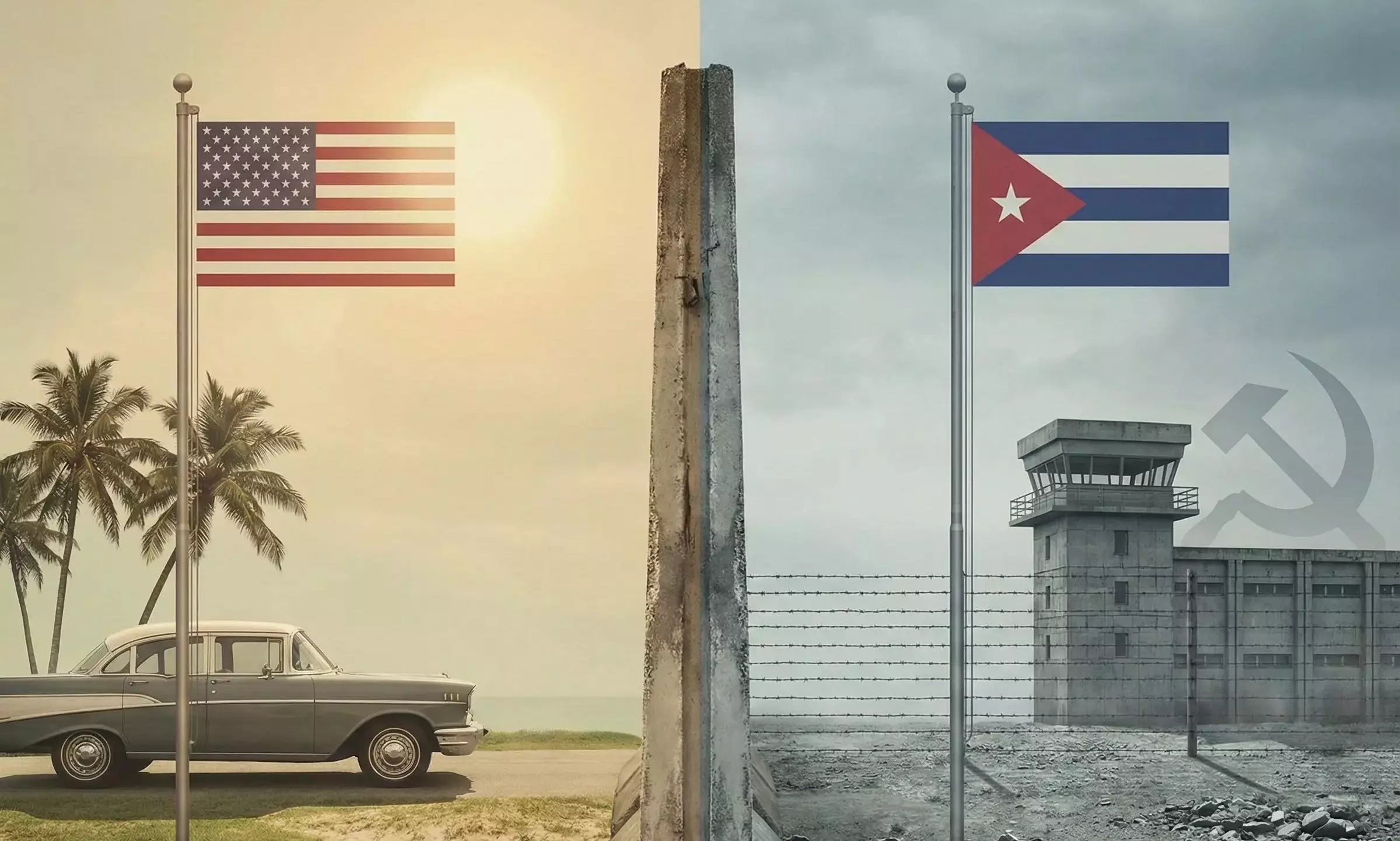

It is no secret that the United States Government has long wanted regime change in Cuba. There are Cuban-Americans who left the country after 1959 and are usually foaming-at-the-mouth right-wingers. US Secretary of State Marco Rubio is one of them. But why is it that the US has never been able to reconcile itself to the socialist government in Cuba?
Most American politicians are fiercely opposed to the socialist society in Cuba. Cuba has publicly funded healthcare, like almost every country in the developed world. The Republican Party thinks this is downright evil. Cuba has a higher life expectancy than the United States, despite being much poorer. In Cuba, education is free of charge up to the PhD level. Even the poorest have just enough to eat. Public transport is very affordable.
Notwithstanding the ugly side of the Cuban Government, it can no longer be characterised as brutal. Until the 2000s, it was. Cubans have the right to leave the country, which they did not have 20 years ago. They may go, but will other countries let them in? Those with a Spanish ancestor within the last three generations can move to Spain. Spain is far more prosperous than Cuba. Remittances from Cubans living abroad are vital to the economy.
There are many far worse governments than the Cuban one. The US has no difficulty being pally with a whole host of malevolent dictatorships.
Cuba was inhabited by indigenous Amerindian peoples when the Spanish showed up in the early 16th century. The Spanish called themselves explorers, but invaders might be more accurate.
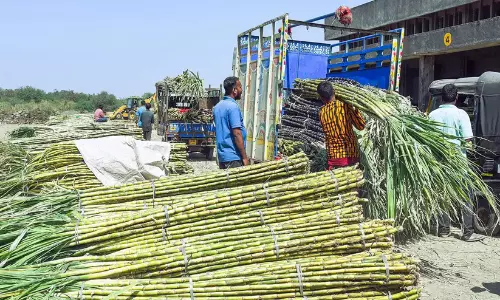
The island of Cuba was very warm and fertile as a tropical land. The Spanish cultivated tobacco and sugar cane on it, as well as other crops. The cultivation of these cash crops was labour-intensive. Not wanting to do all the toil themselves, they sailed to Africa. When one African nation defeated another, the vanquished were taken as slaves. Some Africans sold others to the Spanish as chattel.
In the 1890s, an independence movement began a revolt in Cuba. The Spanish authorities attempted to quell it. By no means did all Cubans want independence. Some Cubans regarded themselves as Spanish as well as Cuban. There were neutral people, too.
The USS Maine was an American warship anchored in Havana Harbour in 1898. It blew up, killing dozens of American sailors. Was it an accident, or did Spain plant a bomb on it? An American investigation failed to reach a conclusion.
The US Army invaded Cuba. An officer named Theodore Roosevelt distinguished himself in the Spanish–American War. The Spanish were soon routed in Cuba.
Washington DC soon recognised Cuban independence, subject to the Platt Amendment, under which the US could alter Cuba’s independence at will. Havana also agreed that the United States could lease a naval base on the eastern tip of the island: Guantanamo Bay.
In the 1920s and 1930s, American gangsters made Havana their playground. The city was notorious for its vice: prostitution, gambling, and alcoholism. Many Cubans did not like their country being used as a brothel.
Castro and others launched a leftist guerrilla campaign in 1958. This time it was much more successful. Soon they controlled an area of countryside. Batista had grown unpopular due to financial mismanagement. Socialist nostrums were spreading. President Batista had been foolish enough to fall out with the USA. Crucially, the USA refused to sell him weapons. That sealed his fate.
At the end of 1958, Batista saw the writing on the wall. He fled to the Dominican Republic, where he was warmly received by the pro-American dictator Rafael Trujillo. The road to Havana lay open. Castro was so confident that he faced no opposition that he took some days to travel there, greeted by cheering throngs. There, he had himself made Prime Minister.
Then Castro announced the nationalisation of all American property without compensation. He said that the United States had ruthlessly and shamelessly exploited Cuba since its independence. The USA was incensed. The United States, therefore, barred all trade with Cuba. This cut the Cubans off from almost all their export markets and their sources of imports.
Cuba then looked for customers. The Soviet Union offered to buy its exports. Very soon, a symbiosis began. Castro quickly decided he was a communist after all. Cuba became a fully Marxist–Leninist state. Private property was abolished, and religion was outlawed. It became a one-party state, and political prisoners were soon held by the thousand.
The USA was alarmed that there was a communist country only 90 miles from Florida. It was the height of the Cold War. The domino theory was en vogue. If one Latin American country went communist, they would all fall.
In January 1961, John F Kennedy was inaugurated and said that Americans would “face any foe, pay any price, and bear any burden to ensure the success of liberty”. This was taken to be a willingness to fight communism even if it meant very high casualties.
President Kennedy said he recognised that some American individuals and companies had mistreated Cuba badly. They had been very extractive. Kennedy observed that until 1959, Cuba had been little more than an informal American colony.
His remarks were not entirely accurate. The US had not liked President Batista, and it had been an irritation to the US Government that Cuba was a source of liquor smuggled into the US during Prohibition. The way that American mobsters operated so brazenly in Cuba until 1959 had irked US authorities. Kennedy realised that American control over Cuba had to change. However, he was still committed to rolling back communism.
In April 1961, anti-communist Cubans landed at the Bay of Pigs. The USA had masterminded the plan, and the US Air Force made two bombing raids in assistance. President Kennedy refused to send ground troops because that would have constituted a US invasion. However, the Cuban Army swiftly and comprehensively defeated the anti-communists. It was a humiliation for the United States.
Castro was wise enough not to execute the anti-communist Cuban insurgents, whom he dubbed terrorists, traitors, and hirelings of Yankee imperialism. He offered to release them in return for millions of dollars’ worth of medical aid.
In 1962, the US saw that the Soviets were placing nuclear missiles in Cuba. That put the East Coast of the USA in range. In those days, nuclear weapons did not have the range that they have now. Washington DC was horrified. There followed the Cuban Missile Crisis. For 13 days, the world stood close to nuclear Armageddon. In the end, it was resolved peacefully, and the US publicly promised not to invade Cuba nor to back any attempt to oust its government.
Cuba was a thorn in the side of the US. It backed many leftist and anti-US movements. It became part of the axis of Russia, North Korea, and Iran.
US sanctions on Cuba have really hurt Cuba. The UN General Assembly has repeatedly voted against the US sanctions, but these resolutions are not binding. The Marshall Islands and Israel are the only countries that vote for the American position on this issue.
The Cuban Government was obliged to improve its human rights situation in the 1990s, and the ban on religious observance was relaxed. Churches and other places of worship reopened. President Fidel Castro even said that Jesus Christ was a socialist. The Pope visited Cuba.
Castro went on a charm offensive towards Western countries. He invited leaders of many of them. Cuba managed to achieve a civilised relationship with Canada. Cuba also introduced small-scale capitalism. Family-owned businesses were finally allowed: shops, guest houses, and restaurants.
Many Cubans tried to escape poverty and oppression. They fled to the USA. So many came that there was some backlash. It was an opportunity to empty Cuba: if the USA had promised to welcome every Cuban trying to flee the country, there would have been few Cubans left, especially young and educated ones. But the US Government chose not to do that. President Bill Clinton instituted the “wet foot, dry foot” policy. Those who landed in the United States were allowed to stay. Those intercepted at sea were returned to Cuba.
In 2009, Fidel Castro retired. He died in 2017. When he retired, his brother Raúl became president and served until 2021, making it 62 years of rule by the brothers. There is now a president from outside the Castro family for the first time.
President Obama lifted the embargo on Cuba and normalised relations. Americans were allowed to travel freely to Cuba. Furthermore, the USA and Cuba reinstated full diplomatic ties. The Cuban-American community is heavily concentrated in Florida and is zealously anti-communist. Florida is a swing state in US elections and is usually a bellwether. Obama won it twice. Donald Trump won it by a narrow margin, partly because his Republican Party was sworn to end commerce and diplomatic relations with Cuba. He later reversed this.
The Cuban Government became less oppressive. It has not executed anyone since 2001. Torture is not rare, but there are not many political prisoners. Cubans are permitted to emigrate. The government does this partly to earn money from remittances, but it is also a pressure valve. The government does not want many malcontents at home who might foment mass demonstrations.
On the Ukraine issue, Cuba abstained. It avoids provoking the USA too much. Russia does little or nothing for Cuba. But Cuba remains a potential problem for the United States. It is the only country in the Caribbean that might host soldiers from a country hostile to the USA.