















Calls grow for Starmer’s resignation after Labour’s electoral collapse
text_fields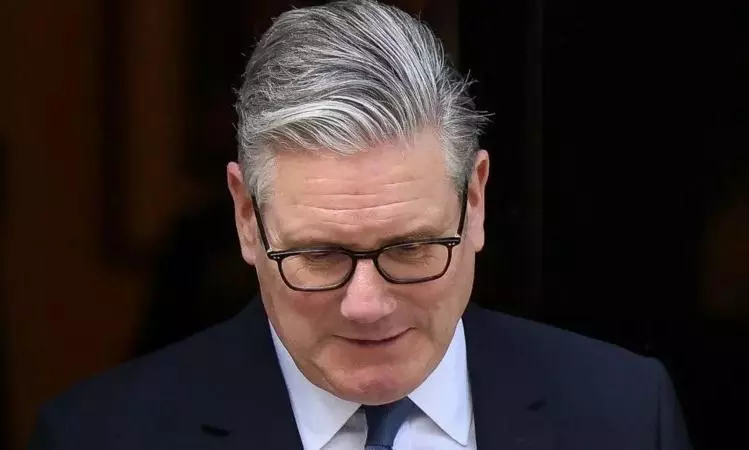

On 7 May, elections were held for the Scottish Parliament, Welsh Parliament and English local authorities (i.e. local councils). As expected, the ruling Labour Party suffered humiliating losses. People are demanding that Sir Keir Starmer resign. He is known as “Kryptonite Keir” as he is considered so poisonous for Labour. He is regarded as one of the most unpopular leaders ever.
Wales
Labour had won every single election in Wales since 1918. The party is now a disgraceful third in Wales. The First Minister for Wales, Eluned Morgan, lost her seat in the Welsh Parliament. No First Minister for Wales has ever been voted out of Parliament. It is going to be a long way back for Labour to rebuild itself as the mightiest party in Wales. There is no guarantee this will ever happen. Labour thought it had the right to rule in Scotland and lost the Scottish Parliament in 2007, assuming it would soon win it back, but it never has.
Plaid Cymru (the Party of Wales) has won for the first time ever with 43 Members of the Senedd (Senedd means ‘parliament’ in Welsh). However, Plaid Cymru does not have a majority in the Welsh Parliament. It also means a lot of totally inexperienced Plaid Cymru ministers taking the helm.
Plaid Cymru is committed to withdrawing Wales from the United Kingdom. The victory of Plaid Cymru is not so much an endorsement of their desire to break up the UK. The party won because it is a left-wing alternative to Labour.
Reform UK is the second biggest party in the Welsh Parliament (Senedd) with 34 MSs. This is a formidable performance for the party’s first outing in an election.
The Welsh Conservatives can hardly gloat at Labour’s loss, as the Conservative defeat was even more brutal. The Conservatives went from 22 MSs to merely 7, which is shocking considering the number of MSs has increased.
The Green Party of England and Wales won its first MSs in Wales. It will be a disappointment that there are only two of them.
The Liberal Democrats performed abysmally, winning a solitary MS. Each election to the Senedd is a near-death experience for the party.
Scotland
In Scotland, the Scottish National Party (SNP) won a record-breaking fifth consecutive election. Labour was pushed into third place. From the 1950s to the 2000s, Labour won everything in Scotland. It is hard to see a way back for Labour there. The SNP Government will continue under the First Minister for Scotland, John Swinney.
However, the SNP has 58 Members of the Scottish Parliament (MSPs), and that is not enough to have a majority, which would be 65. It can govern only if minor parties like the Green Party offer it confidence and supply, or else even a coalition. The SNP may be wary of coalescing with the Scottish Green Party because this harmed both parties last time it was tried.
John Swinney is the First Minister of Scotland and an SNP member. In 2024, he was seen as a lame duck with the SNP trailing Labour in the polls. The SNP had been in office in Scotland since 2007 and was failing on multiple policy fronts. Now he has pulled a rabbit out of the hat and continues as First Minister. He has been in the Scottish Parliament since it was re-founded in 1999.
The Scottish Labour Party won 17 MSPs, which is better than expected but well behind the SNP. Reform UK also has 17 MSPs, which is not as good as was forecast. Reform UK wanted to keep the United Kingdom as one sovereign state, but a third of its voters want Scotland to leave the UK. Reform UK was not helped by its leader boasting about his multimillion-pound fortune in the run-up to the election.
Scottish Labour is led by a British Pakistani dentist named Anas Sarwar. Sarwar is the son of Mohammad Sarwar, the first Muslim elected to the UK Parliament in 1997. Anas Sarwar has for months publicly demanded that Starmer resign as leader of the UK Labour Party. After Labour’s defeat in Scotland, Anas Sarwar scapegoated Sir Keir Starmer.
Starmer did not visit Scotland during the election campaign because he was known to be toxic. Sarwar is trying to divert attention from his debilities as a leader. He is really responsible for Labour’s debacle. This was an election about issues handled by the Scottish Parliament and not the UK Parliament. Perhaps it is Sarwar who should resign as well as Starmer.
The Greens won 15 MSPs – their best ever result. They previously only won regional MSPs through proportional representation. Now they have won some through First Past the Post – constituency MSPs.
The Scottish Conservative and Unionist Party have been pushed from second to fourth place in a drubbing. They now have only 12 MSPs. This is the lowest number ever.
The Lib Dems have 10 MSPs, which is a mediocre result for them. One of the takeaways is that the Lib Dems have failed to capitalise on disaffection from Labour.
How can Labour detoxify its brand in Scotland?
England
In England, Labour lost control of many local authorities. It had ruled some of them for decades. It lost some to Reform UK, which is a populist right-wing party. It lost others to the Green Party, particularly in London.
Labour lost 1,400 councillors, which is considerably fewer than the 1,800 loss projected. Labour’s losses in London were less severe than elsewhere. In Camden, the London Borough where Starmer is an MP, the party held the council against all expectations. The question is whether the result for Labour is merely a heavy defeat rather than a disaster.
The Labour Party suffered from a pincer movement: i.e. losing votes to the right – to Reform UK – and to the left – to the Green Party. Older white working-class voters were often tempted by Reform UK. Reform UK tapped into their sense of resentment and disappointment with Labour’s failure to address the cost of living, waiting lists to see a doctor, a crime wave and the rising level of illegal immigration.
Labour has lost control of local councils in Birmingham (the UK’s second city), Hartlepool, Cambridge, Leeds and Redditch. These have gone to ‘no overall control’, i.e. no single party is big enough to govern on its own, and two or more parties must cooperate.
In 2023, Reform UK had only 2 councillors out of 20,000 in the whole UK. Now it has 1,500 – virtually all of them won on 7 May. Reform UK was on 3% in the polls in 2023. Now it is on 30% in some opinion polls. This is indicative of severe disenchantment with the duopoly parties – Labour and the Conservatives. The government in the UK has alternated between these two parties since 1922. After over a century, the Labour-Conservative duopoly might be about to end.
Reform UK stormed Labour strongholds in northern English cities such as Sunderland and Barnsley. Reform UK toppled Labour in town halls that Labour has held for almost 100 years.
The Conservative Party has also suffered at the hands of Reform UK. Reform UK unseated the Conservatives in towns in the West Midlands and in East Anglia. East Anglia is the most Conservative region and indeed is where the Conservative leader, Kemi Badenoch, has her seat. Reform UK took one of London’s 32 boroughs, defying claims that it could never win anything in the capital.
Reform UK has mobilised older and less educated white voters to cast their ballots for them. These people were often Labour voters but, in many cases, stopped voting altogether several years ago. Reform UK has now motivated them to vote. Reform UK appeals to resentment, anti-intellectualism and anti-elite sentiment. It is difficult to dismiss Reform UK as a protest vote. But the yelp of pain expressed in voting for them must be heard by the major parties.
Reform UK has controlled some local authorities for a few months and has usually underperformed. Being in charge is a golden opportunity for the party, but it is also a grave risk. Reform is less popular than it was a year ago, when it was on 35% in the polls. Privately, the party is worried it will keep on dipping and fail at the General Election, which must be held by the end of August 2029.
The 2024 elections seem like a dry run for Reform UK. The party certainly made impressive gains. But if the result were translated into a General Election, it would suggest that Reform UK would get the biggest vote share of any party at 30% and 250 Members of Parliament – that is far short of the 326 needed to form a majority government.
Would the Conservative Party offer a coalition or confidence and supply to Reform UK to keep the leftists out? The Conservatives say they are going to win, so no one believes that, but the Conservative strategy would be to let Reform UK form a minority government so it can fail, and then there can be a Conservative resurgence. Even if Reform UK were defeated in the 2030s, it is likely to be a significant force in politics throughout the decade.
Mapping local elections, Scottish Parliamentary and Welsh Parliamentary elections onto a UK General Election is fraught with difficulty. People vote differently depending on whether they are voting for the Scottish Parliament or the UK Parliament, for example. Moreover, in the English local elections, not all counties and cities had an election this year.
The Green Party is not just about ecology; it is also extremely left-wing. It is the guilty conscience of the Labour Party. The Greens propose policies that Labour voters find alluring but that the Labour Party thinks are unworkable or so left-wing that they would alienate floating voters. The Green Party is vociferously anti-Zionist, and this attracts many pro-Palestinians. The party has thrived wherever there is a major Muslim community. The Green Party was regarded as a lunatic fringe until a few years ago. Until 2024, it had only ever had one MP.
The next General Election is expected in 2028 or 2029. On current projections, Labour would be smashed and pushed into third place or even fourth place. This is terrifying for Labour, which, since 1918, has either been in government or been the main opposition party the whole time.
Inevitably, these truly terrible results for Labour have led people to call for Sir Keir Starmer to tender his resignation. Starmer says he only became Prime Minister in 2024, and it is his right to see out his five-year term and even to lead the party into the next General Election. But he is so reviled that this would be cataclysmic for the Labour Party if he did so. He is regarded by some as the most unpopular Prime Minister ever.
Some in Labour are demanding that Starmer resign as leader of the party immediately. He shall remain as PM until such time as the party elects a new leader, and he or she will then be appointed PM by the King. There are others who say Starmer does not need to resign now but needs to name a date, and the party can take time to elect a new leader who will take over in a few months.
The Labour Party Conference is in September. If Starmer announced now that he will step aside as leader of the party and PM in October, then the party would be able to allow leadership candidates to address the September conference before electing a new leader afterwards. Sir Keir Starmer is 64, and some people remind him that this is almost retirement age.
For opposition parties, Starmer is the gift that keeps on giving. He is so reviled that he is dragging Labour down.
Labour did not want to change leaders before the next General Election. The previous Conservative government had five prime ministers in 14 years. One of them lasted only 49 days. Labour denounced the Conservatives for chaos and psychodrama. Labour said they offered continuity and stability by contrast.
The Conservative Party is the main opposition party. It suffered a horrific defeat in 2024. There is schadenfreude in Conservative ranks over Labour’s discomfiture. But the Conservatives can hardly crow. They too lost hundreds of councillors, but nowhere near as many as Labour.