












China warns of retaliation as Trump’s Iran tariff threat hits oil imports
text_fields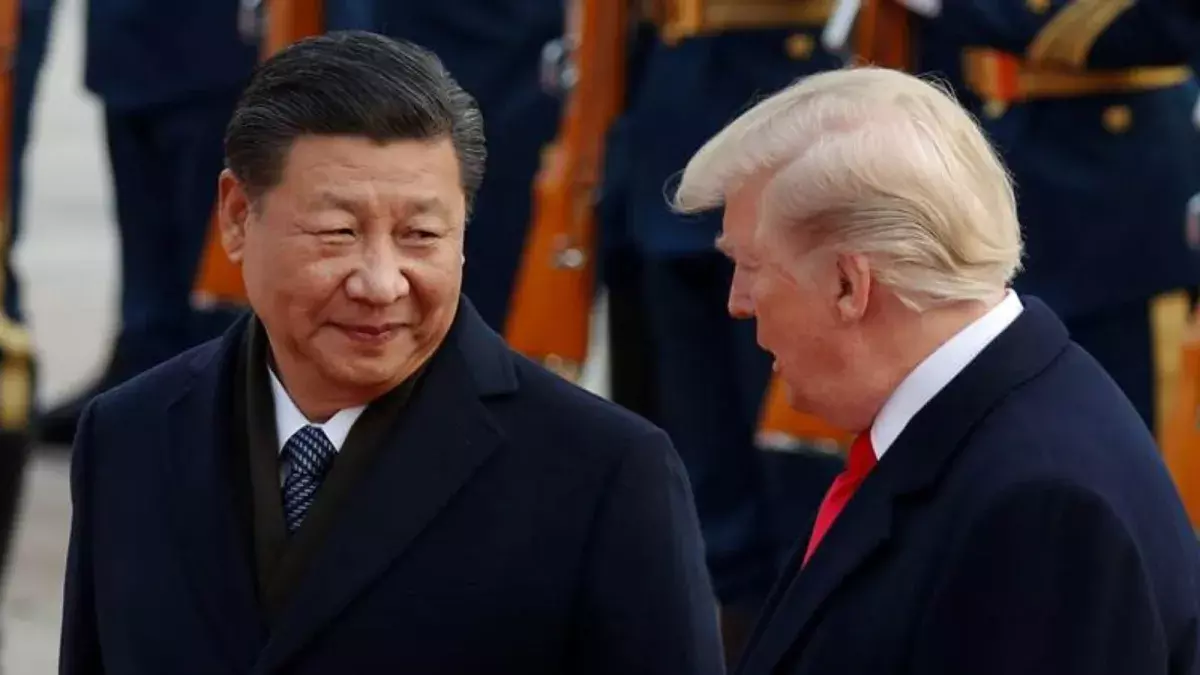

Beijing: China on Tuesday warned of countermeasures against US President Donald Trump’s decision to impose 25 per cent tariffs on countries trading with Iran, amid concerns that the move could threaten Beijing’s access to cheaper oil imports from Tehran.
China, the largest buyer of Iranian oil, reacted sharply after Trump announced on Monday that any country “doing business” with Iran would face a 25 per cent tariff on its trade with the United States. The move could affect Iran’s major trading partners, including China, India, and the United Arab Emirates.
“There are no winners in a tariff war, and China will firmly safeguard its own legitimate and lawful rights and interests,” Chinese Foreign Ministry spokesperson Mao Ning said while responding to Trump’s threat.
Analysts said Trump’s tariff warning, combined with the recent fall of the pro-Beijing government of Venezuelan President Nicolas Maduro, another key oil supplier to China, has sent a “dire warning” to Chinese policymakers, forcing them to reassess how to protect the country’s strategic interests abroad.
The Hong Kong-based South China Morning Post, quoting China watchers, said Trump’s announcement sent shockwaves through Beijing, with analysts suggesting China may have to rethink its current approach.
China has already been grappling with the political shift in Venezuela, one of its closest allies. The change in government led to an abrupt end to Venezuela’s alignment with Beijing, which, according to reports, had invested more than USD 106 billion in the Latin American nation.
Data compiled by intelligence firm Kpler showed that China imported about 400,000 barrels per day of Venezuelan oil last year at significantly lower prices. Kpler data also indicated that China bought an average of 1.38 million barrels per day of Iranian oil last year, accounting for nearly 80 per cent of Iran’s total oil exports.
With Trump pursuing a more aggressive strategy to reassert US dominance in Latin America, including threats to Chinese investments in Panama and Venezuela, as well as warnings to Cuba, analysts said Beijing is now reworking its energy strategy.
China, which is also the world’s largest importer of Russian oil, is reportedly considering shifting more towards the Persian Gulf if unrest in Iran and broader regional volatility persist, James Downes, co-director of the Italian think tank Centre for Research and Social Progress, told the Post.
According to China’s latest official statistical bulletin, the country had cumulative outbound direct investment of USD 4.5 billion in Iran in 2024, marking a 14.7 per cent increase from the previous year.
Rajiv Biswas, CEO of Singapore-based research firm Asia-Pacific Economics, said the economic impact on China could be substantial, as the proposed 25 per cent tariff would likely be imposed on top of existing US tariffs on Chinese exports.
“The actual impact will depend on whether China decides to curtail trade with Iran,” Biswas told the Post.
Liang Yan, a professor of economics at Willamette University in the United States, warned that secondary sanctions on Iran should serve as a wake-up call for Beijing.
“From Venezuela to Panama, now to Iran, China has more at stake than previously thought,” she said, adding that China will increasingly focus on protecting its overseas assets, investments, and diplomatic relationships.
With IANS inputs