










Who threatens Hindu women’s ‘mangalsutra’ today?
text_fields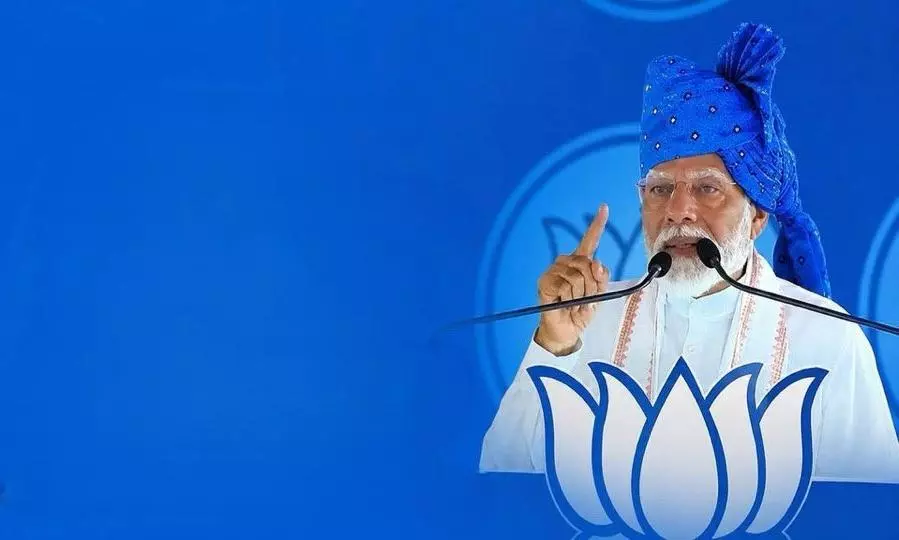
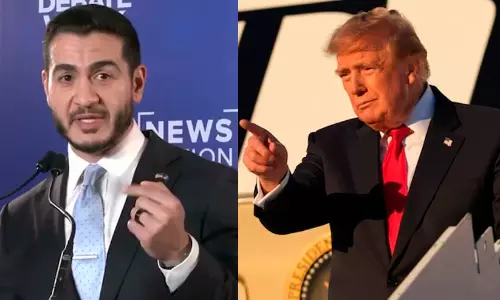
Nobody would have forgotten what Prime Minister Narendra Modi warned the nation during the 2024 parliamentary elections. While addressing a large gathering in Rajasthan, he said that if the Congress returned to power, it would take away the mangalsutra of Hindu women to enrich Muslims.
He also made remarks about Muslims that I do not wish to repeat here, as they are beneath my dignity. For a married woman, nothing is more sacred than the mangalsutra. Though it is a Hindu concept, most married Christian women in Kerala wear it. In fact, minnukettu is the most sacred component of a Christian marriage.
In some parts of the country, married Muslim women also wear a similar ornament with the crescent inscribed on it. These are all cultural practices that have little to do with religious doctrines.
The great polariser that Modi is, he made the statement to create fear among Hindus and persuade them to vote against anyone supposedly eyeing their mangalsutra. His return to power is proof that the scare-mongering had its effect.
Just a year later, a study found that there had been an increase in the number of people pawning their ornaments to take loans. For the poor, the mangalsutra is often the only gold they possess that can be pawned. Anybody familiar with gold loans, especially those offered by private lenders, knows that it is almost impossible for poor families to repay the usurious interest and reclaim their gold.
On the pretext that interest has not been paid, lenders — called blade companies in Kerala — often misappropriate the pledged ornaments. Since the economic distress has been caused by the government, Modi cannot escape responsibility for dispossessing poor women of their mangalsutra.
Now Modi has gone a step further by asking people not to buy gold for a year, even if religious festivals and personal celebrations warrant it. In North India, Dhanteras is celebrated two days before Diwali and is considered the most auspicious day to purchase gold, silver and other precious metals.
In most non-tribal communities, gold is an essential component of marriage. Modi’s appeal will adversely affect India’s gold industry. An estimated 50 lakh people work in this sector as jewellery shop owners, salespersons and artisans.
What will they do if nobody buys gold from them? Modi’s appeal amounts to pushing such a large number of people into penury for an entire year. His remarks had a traumatic impact on the stock market, where shares of companies such as Kalyan Jewellers fell sharply. The value of the rupee has also declined.
If Modi’s appeal is ignored, he has the power to increase tariffs on imported gold. Even now, gold accounts for one of India’s largest imports after oil. India and China are the world’s largest buyers of gold, while the United States has the largest gold reserves. Germany, which survived on its gold reserves after two world wars, also buys large quantities of the yellow metal.
Among Indian states, Kerala has the largest number of gold jewellery showrooms. Dubai too has massive jewellery showrooms doing brisk business, mostly with Keralite buyers. Kerala’s jewellery companies now have outlets in almost every major Indian city. Modi’s appeal will therefore hurt Kerala more than any other state.
As it is, the gold business is already sluggish because 10 grams of gold costs around Rs 1.5 lakh and one kilogram of silver costs Rs 2.5 lakh. It reminds one of the Malayalam saying: Pande durbala, ippol garbhini — weak earlier, now pregnant as well. If import tariffs are raised further, it will only benefit smugglers who understand the weaknesses of the system.
Modi’s comments on gold are part of a larger series of austerity measures he has proposed. He wants people to travel by public transport and for companies to allow employees to work from home. But what credentials does he himself possess to preach austerity?
The recent elections in Kerala, Assam, West Bengal and Puducherry saw the ruling party hiring numerous aircraft for campaign purposes. Enormous sums were spent on the Prime Minister’s travel and meetings. Even when there are no elections, he does not hesitate to flag off Vande Bharat Express trains from various places. He also makes it a point to attend celebrations whenever the BJP wins, even municipal elections, as in Kerala.
In fact, Modi appears to have waited for the elections to conclude before unveiling an austerity plan. The irony is that austerity has never been his hallmark.
While his predecessor Manmohan Singh — perhaps one of the world’s most educated leaders after Václav Havel — used a Rs 10 pen and dressed simply, wearing his trademark blue turban, Modi reportedly uses a Montblanc pen and changes attire several times a day. More often than not, he appears in costumes rather than ordinary dress.
While Indira Gandhi travelled in a Hindustan Ambassador, Modi uses a custom-made imported BMW 7 Series. While previous prime ministers chartered Air India flights for foreign visits, he now commands two custom-made aircraft comparable to Air Force One.
Yet he asks ordinary citizens to tighten their belts to face the consequences of the war imposed on Iran and supported by India. He had once promised parity between the Indian rupee and the American dollar. Today, twelve years after he became Prime Minister, the rupee has hit rock bottom. Few would be surprised if the dollar soon touches Rs 100.
Modi said that just as Indians endured COVID, they would overcome this challenge too. But the truth is that the lockdown he imposed unilaterally forced millions of poor migrant workers to walk back to their ancestral villages. Nobody compensated them. Nobody apologised for the havoc caused by demonetisation, from which the economy has yet to recover fully.
Austerity has moral force only when those in power practise it themselves. Modi may continue to move in a convoy of 35 vehicles, while the poor are told not to buy gold even for a mangalsutra and to avoid celebrating festivals. Nothing captures the irony of present-day India more starkly than this.