










What is leaking is the credibility of the system
text_fields

The medical entrance examination, the National Eligibility cum Entrance Test (NEET UG), written by 2.27 million students across the country on May 3, has been cancelled. The National Testing Agency (NTA), which conducts the exam, took the decision after credible evidence emerged that the question paper had been leaked in Sikar, Rajasthan. A revised exam date will be announced later. With this, the entrance examination, which lakhs of students had taken with great expectations, has once again become embroiled in controversy. The Special Operations Group of the Rajasthan Police found that 135 questions included in a handwritten model question paper, allegedly sent by a medical student from Rajasthan studying in Kerala to a friend in Sikar, matched the questions that appeared in the NEET UG examination paper. The questions from this model paper were reportedly circulated widely through coaching centres and messaging apps on May 1, two days before the examination. Investigators have found that the question paper was sold for amounts ranging from ₹20,000 to ₹2 lakh. The Central Bureau of Investigation (CBI) has been entrusted by the central government with conducting a detailed investigation into the matter.
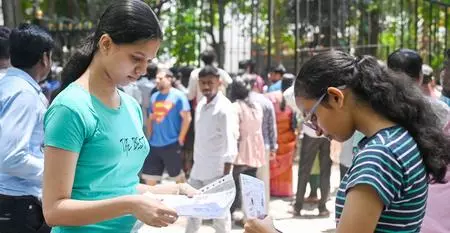
The National Testing Agency had claimed that the NEET UG examination was conducted in strict compliance with all security protocols. Question papers were transported in GPS-tracked vehicles. Watermark identification systems were also put in place. Examination halls were equipped with AI-assisted CCTV surveillance systems. All candidates underwent biometric verification. Five-G jammers were installed to prevent online malpractice. Despite such extensive and robust arrangements, the question papers of this examination circulated freely across an entire state. It was only three days after the examination that the agency received indications of malpractice. The authorities announced the cancellation of the examination only after confirming the reports with the assistance of government investigative agencies. Conducted across 551 centres in India and 14 centres abroad, the NEET UG examination is the sole entrance test for medical studies. It is with that seriousness that students and parents approach this examination. The central agency conducting the examination claims to have implemented foolproof security arrangements. Yet, experience shows that malpractice continues to occur despite these measures. A similar question paper leak took place two years ago, in 2024. In every such incident, it is the students who become the real victims. Lakhs of students who studied hard and appeared for the examination with hope are pushed into disappointment and distress by such situations. Even while announcing the cancellation of the examination, the agency itself acknowledged this fact. However, such acknowledgements are hardly enough to console those affected by the disastrous consequences of this mismanagement. The agency justifies the cancellation by saying that the credibility of the examination has been compromised. Yet, there is still no clear answer as to why the central agency has repeatedly failed to plug the loopholes that lead to such leaks. Therefore, there is no assurance that this will not happen again in the future.
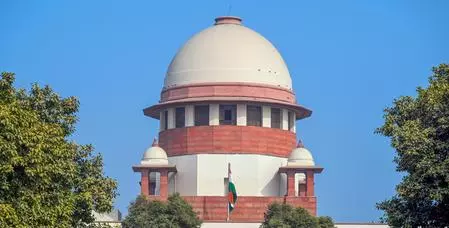
While the current leak surfaced in Rajasthan, the 2024 leak occurred in Bihar. This leak came to light only after it became evident, following the declaration of results, that many candidates had received identical scores. Initially, the agency argued that the students had been awarded grace marks and that there had been no malpractice. However, after mounting pressure and a subsequent investigation, it was discovered that sealed question papers had been leaked even before the examination began at a school in Hazaribagh. Further investigation led to the arrest of suspects from Bihar, Jharkhand, Gujarat, Rajasthan, and Maharashtra. It was found that a large network lay behind the incident, ranging from school employees and middlemen to even a medical student from AIIMS Patna. In the present leak as well, a medical student has emerged as the key accused. The question remains highly relevant: while the agency has put in place strict and meticulous systems for distributing question papers, securing examination halls, and verifying candidates, how does it fail to detect irregularities originating outside these arrangements, and what measures are being taken to prevent them? In a country where the coaching industry for competitive examinations has grown into a multi-billion-rupee business, suspicions are also being raised about whether the intense competition within the sector is contributing to such leaks, and whether high-level political or bureaucratic influence is helping to enable them. The government must be prepared to undertake an investigation capable of unravelling all these layers and restoring the credibility of the examination system.