


The Smurfification of geopolitics: what a children’s classic reveals about US power
text_fields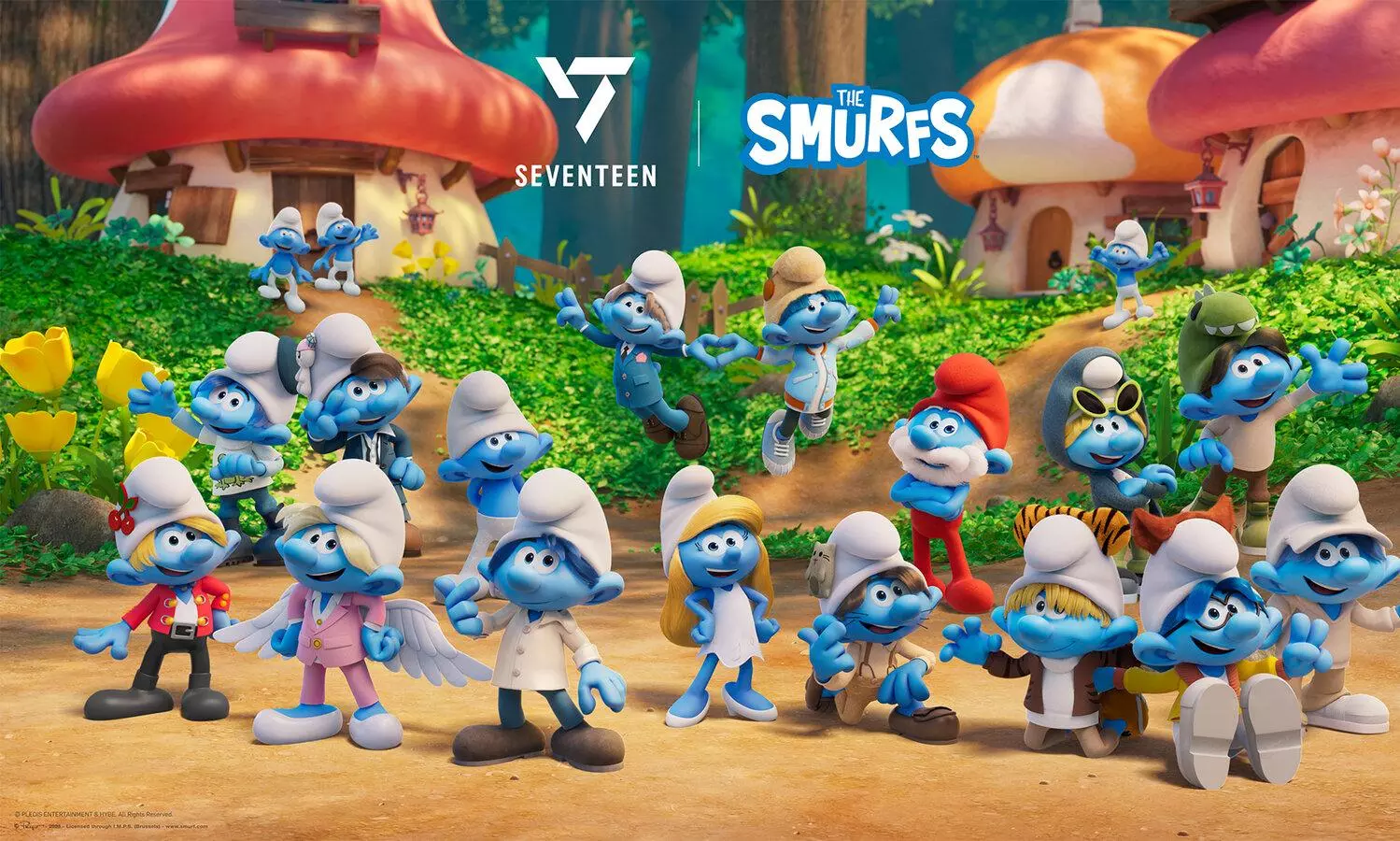
The United States approaches its 250th anniversary, its Semiquincentennial, on July 4, 2026, marking the signing of the Declaration of Independence. There will be no shortage of celebration about its founding ideals of liberty and resistance to domination. But anniversaries like this are not only about memory—they are about measurement. How does a nation born in opposition to empire come to be seen, by many, as embodying it? That question, unexpectedly, came into sharper focus for me while watching “The Smurfs” with my children.
In that world, Gargamel is certain, relentless and convinced of the legitimacy of his pursuit. His cat, Azrael, does not define the mission but helps carry it out, tracking, cornering, reinforcing. The Smurfs are small, communal, imperfect and persistently under pressure. There is no perfect mapping here, and that matters. Real societies are more complex, internally divided and politically active than any cartoon allows. But as a loose lens, the analogy reveals something about how power operates and how it justifies itself.
The Smurfs, in this sense, are not one people but many. They are communities that experience global power asymmetrically: Palestinians living under occupation, Iranians under decades of sanctions and now war, Lebanese under intermittent attacks, Cubans navigating isolation, Venezuelans enduring economic strain and many others. Each of these contexts is distinct, shaped by its own history, leadership and internal debates. But there is a common thread. They operate within global structures in which the terms of engagement are often set elsewhere and where the consequences of policy decisions made far away are felt most acutely at home. To describe this is not to flatten their differences, but to recognize a recurring pattern in how influence is distributed and experienced.
Gargamel, by contrast, represents less a country than a posture. It is a form of power that is certain of its mission, resistant to self-doubt and inclined to read resistance as illegitimate. His pursuit is not chaotic. It is methodical, justified in his mind, and endlessly rationalized. Under figures like President Donald Trump, this posture has often been expressed more openly, where diplomacy gives way to pressure, sanctions become default tools rather than last resorts, might is right and international engagement is reframed as compliance. What is presented domestically as strength is often experienced externally as coercion. The problem is not simply that the United States wields power, but that it increasingly assumes its exercise of power requires no explanation to those who experience it. Power, over time, does not only expand—it becomes accustomed to itself, and in that familiarity, less accountable to others.
What gives the analogy more weight is the role of Azrael. He reflects the wider circle of allies and aligned actors—think EU, UK, Canada, Australia, others—who may not set policy but help sustain it through cooperation, silence, complicity or habit. Their motivations vary. Some act out of shared strategic interests, others out of dependency, and still others out of inertia or fear of isolation. But the effect is cumulative. Influence is reinforced. It is not only exercised directly. It is supported, normalized and extended through relationships that make it appear natural, even inevitable. This is how modern power operates, not only through direct action, but through networks that distribute responsibility while preserving hierarchy. Over time, something more subtle takes hold. Power stops interrogating itself. Its actions are no longer questioned because they are assumed to be justified.
This reflection lands with particular force at this moment. The United States was founded in resistance to imperial overreach, animated by ideals of self-determination and a deep suspicion of concentrated authority. Figures like Thomas Jefferson and James Madison warned about the dangers of unchecked power, but those warnings were not consistently heeded. From the beginning, the country has lived with contradiction. Liberty alongside slavery. Self-government alongside dispossession. Expansion justified in the language of manifest destiny. These tensions are not new, and they remain instructive. They remind us that ideals do not enforce themselves. They require constant interrogation.
At 250, the question is not whether the United States has power. It clearly does. The more important question is whether it can still examine how that power is used and how it is experienced by others. This requires more than policy adjustment. It requires a willingness to listen, to see from the outside, and to recognize that narratives of benevolence are not always shared by those on the receiving end of policy decisions. When entire populations are treated primarily as problems to be managed rather than partners to be engaged, the range of possible outcomes narrows.
The Smurfs analogy, imperfect as it is, offers a small but telling insight. Gargamel never questions his own narrative. His certainty narrows his imagination. When his plans fail, he does not pause to reconsider. He refines, escalates and tries again. He cannot conceive of coexistence, only control. It is this inability to step outside his own framework that ensures his failure, even as he remains convinced of eventual success. In that closed loop, morality is not expressly rejected so much as it is no longer visible.
That may be the quiet warning. When power stops seeing itself from the outside, it risks becoming trapped in its own story. It becomes less capable of adaptation, less open to alternative outcomes, and more dependent on repetition. At a milestone like 250, the task is not just to celebrate founding ideals, but to take them seriously enough to measure the present against them. That requires not only confidence, but humility. Not only strength, but restraint.
At 250, the question is not only what America has become, but whether it still recognizes itself.
(Courtesy: Washington Report on Middle East Affairs)
[Faisal Kutty, J.D., LL.M. is a lawyer, law professor and regular contributor to The Toronto Star and Newsweek. He is affiliate faculty at the Rutgers University Center for Security, Race and Rights and Associate Professor of Law Emeritus at Valparaiso University. You can follow him on X @faisalkutty]