















Roberts-Smith: an Australian soldier who enjoyed killing innocent Afghans
text_fields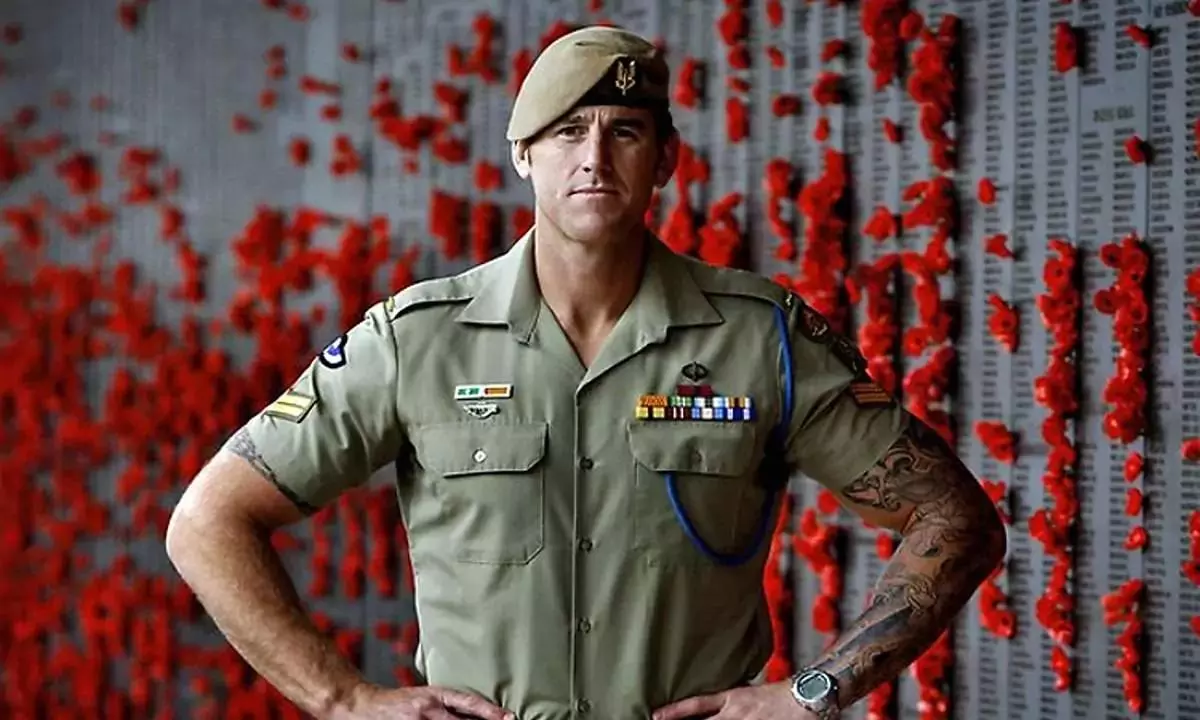

In April 2026, Ben Roberts-Smith was arrested by the Australian Federal Police and charged with five murders in Afghanistan. He has been bailed with a surety of AUD 250,000. It was a fall from grace for a man who had been loaded with medals, including the Victoria Cross – Australia’s supreme award for gallantry in the face of the enemy.
He had been congratulated in person by the Governor-General of Australia, the Prime Minister of Australia and the late Queen of Australia, Elizabeth II. For years, he had been adulated as a role model for all Australian military personnel. How did Roberts-Smith come to stand trial with a life sentence to follow if convicted? He has pleaded not guilty to all charges.
The 47-year-old Roberts-Smith was born in Perth, Western Australia, the son of an Army judge advocate. His grandparents had moved from the United Kingdom to Australia in the 1930s. Australians of British descent sometimes looked down on Australians of other ancestry and called them ‘wogs’, saying that they were not real Australians.
Roberts-Smith had a privileged upbringing, and it was a distinctly upper-middle-class upbringing in a bookish home. But Ben Roberts-Smith was short of grey matter and struggled academically. He is a veritable giant at 202 cm and excelled at sport because of his reach and astonishing muscularity.
Unusually for a boy from a bourgeois background, he did not finish school and enlisted in the army as a private aged 17. He was the tallest man in the Australian Army. His military prowess led to him being invited to try out for the Special Air Service (SAS). The SAS motto is ‘Who dares wins.’
The Australian SAS is a copy of the British SAS, which was founded in 1942. Despite the word ‘air’, it is not an aviation force. Its men and women must be able to parachute, but otherwise they are simply the ultra-elite. Their week-long selection involves extremely long runs carrying an extremely heavy rucksack under broiling sun or in subzero temperatures, often under heavy rain and in howling gales.
Hours of gruelling push-ups and sit-ups. They must prove they have seemingly superhuman endurance and explosive strength. In one exercise, they must run to the top of a hill with their rucksack on by a deadline, but they are not told what the deadline is. Some candidates cannot cope with the fact that they do not know whether they can make it or not. If they have missed the deadline, all their suffering and effort are in vain.
It is gruelling psychologically as well as physically. Part of the selection involves them being ‘captured’ by SAS soldiers who then interrogate them as an enemy would. A candidate for SAS selection is stripped naked, blindfolded, handcuffed and aggressively questioned. He is seen nude by women as well as men, and insulting remarks are made about his body. This breaks some men psychologically.
The candidate is placed in a very cold room, in stress positions, with a very high-pitched screeching sound played nonstop for 24 hours. He is given water but no food. Can he take it? The candidate is constantly reminded that he can opt out of selection at any moment and end the suffering, get warm and be given a delicious meal. Does he have the strength of character to go on suffering for a cause?
The SAS is used behind enemy lines. It is not primarily about killing people. If it were, then they would simply fire missiles at enemy combatants. The SAS is there to observe things that only a person can see. The SAS rely on stealth and surprise. They try to avoid being detected by the enemy. They only fire if something has gone badly wrong, and retreat without firing is impossible.
There are many who joined the armed forces of their country because they are attracted to the career, the camaraderie, the sense of purpose, physical fitness, patriotism and the financial benefits. Many military personnel do not want to kill people and even opt to serve in units that are not directly linked to combat, such as the pay corps, logistics or intelligence. But there are those who delight in violence and are spoiling for a fight. Every army needs a unit for those who genuinely like fighting. There is a US Army motto: ‘born to kill.’
Roberts-Smith rose up the ranks; however, he was never promoted to an officer. There was no doubting his courage, skill at arms and extraordinary athleticism. He was thought to lack leadership qualities, and he did not have sufficient literacy for the paperwork involved in officership. He served with distinction in Afghanistan. Australia had troops in Afghanistan from 2001 until the withdrawal in 2021.
Australia deemed its relationship with the US to be crucial and therefore participated in the International Security Assistance Force (ISAF) in Afghanistan, as well as the coalition of the willing in Iraq. There were some in Australia who wholeheartedly agreed with the US mission in both Afghanistan and Iraq.
By all accounts, Roberts-Smith was fearless. His comrades often commented on his reckless disregard for his safety and his contempt for danger. He was also indifferent to the deaths of his comrades. Some speculated that he was a psychopath. He may not have seen killing people as a regrettable necessity in war, but instead a treat to be relished.
He was a thrill killer. His equanimity about his own life may have extended to a disregard for the lives of others. He does not appear to have the ordinary range of emotional responses: grief, happiness, terror, tranquillity, remorse or guilt. He has some of the traits of a psychopath.
The Australian Military Police was inundated with reports about Roberts-Smith – some from his comrades in the SAS. These were not complaints about killing enemy fighters in combat – everyone accepts that that is lawful, even if they oppose Australia’s involvement in the Afghan conflict.
What Australian soldiers denounced Roberts-Smith for was deliberately killing civilians when he was certain that they were civilians. He appeared to have killed people out of bloodlust. His desire to murder the defenceless may have been tinged by racism and Islamophobia.
After 17 years of seemingly meritorious service, Roberts-Smith left the army. He had a business career but remained in the army reserve.
In 2017, Australian newspapers said that Roberts-Smith was a serial killer in uniform. Mr Roberts-Smith took out a libel action. He said they had defamed him and he had fought honourably, only killing Taliban fighters. A court found the newspaper’s statements to be substantially true. This meant that the statements were proven to a civil standard – it is more likely than not that they were true. This is not the criminal standard, which is proven beyond a reasonable doubt.
One of the allegations is that in 2012, in Afghanistan, he kicked a handcuffed Taliban suspect off a cliff to his death. The man was unarmed and was not trying to escape. He presented no threat to the heavily armed SAS, who killed him out of sheer sadism. There is another incident in 2012 when Roberts-Smith allegedly ordered men under his command to murder a geriatric imam despite the man being unarmed and posing no danger to the SAS.
Killing prisoners is expressly prohibited by the Australian Military Code. The idea is to make surrender as attractive as possible to the enemy. Moreover, a prisoner can be a fruitful source of intelligence. If Australia treats prisoners of war humanely, it is more likely that the enemy will treat Australian prisoners decently. Enemy POWs can also be exchanged for Australians.
Roberts-Smith is married with children. He had an extramarital affair and is alleged to have beaten up his mistress.
Australia is taking a long, hard look at itself. A war cannot happen without people being killed – that is accepted. But there are laws of war, and Australia has long boasted of its adherence to the Geneva Convention and the Rome Statute of the International Criminal Court. Australia has sat in judgment on others, such as at the Tokyo War Crimes Trial – the International Military Tribunal for the Far East. Therefore, Australia is obliged to hold to its own avowed standards of legality. A war does not mean that soldiers can kill anyone, anywhere, anytime or anyhow.