
















OBC creamy layer cannot be determined solely by income of parents: SC
text_fields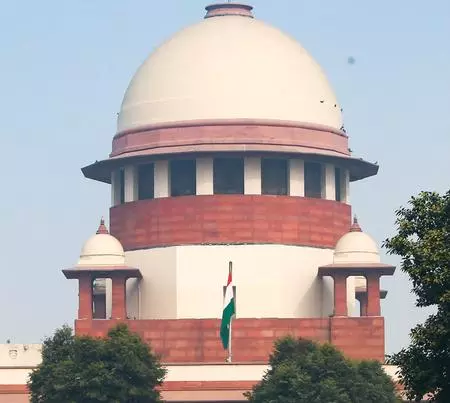

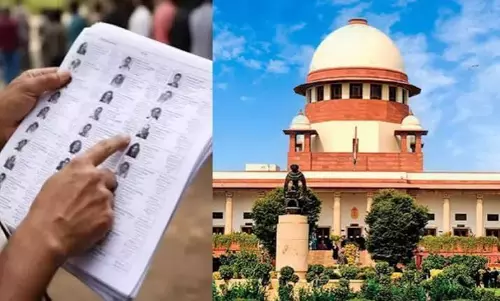
The Supreme Court of India has ruled that determining whether a candidate falls under the “creamy layer” within the Other Backward Classes (OBC) reservation category cannot be based solely on parental income and must also take into account the position or status held by the parents in their respective organisations, according to a report by Live Law.
A bench comprising Justices P. S. Narasimha and R. Mahadevan dismissed a set of appeals filed by the Union Government of India and granted relief to several candidates who had qualified in the Civil Services Examination but were denied appointments after being categorised as belonging to the creamy layer.
The Court stated that the authorities had incorrectly applied an income-based test to exclude these candidates from the OBC non-creamy layer category, rather than using the status-based criteria set out in government policy. In the judgment written by Justice Mahadevan, the bench indicated that determining whether a candidate belongs to the creamy layer cannot be decided only by examining income levels, Maktoob Media reported.
The dispute arose after several civil services candidates seeking reservation benefits under the OBC non-creamy layer category were denied these benefits when the Department of Personnel and Training (DoPT) classified them as part of the creamy layer.
Officials had relied on a clarificatory letter issued on October 14, 2004, which allowed salary income to be taken into account in cases where equivalence between posts in public sector undertakings, banks, or private institutions and government posts had not been determined. Based on this interpretation, candidates whose parents’ salaries exceeded the prescribed income threshold were denied reservation benefits.
Several candidates challenged this interpretation before the Central Administrative Tribunal as well as the High Courts of Madras High Court, Delhi High Court, and Kerala High Court. They argued that relying solely on income contradicted the government’s 1993 Office Memorandum on creamy layer determination. The High Courts ruled in favour of the candidates, prompting the Union government to move the Supreme Court.
While examining the issue, the Court referred to the 1993 Office Memorandum issued following the landmark Indra Sawhney vs Union of India judgment. The policy determines creamy layer status primarily based on the position or rank held by the parents, such as whether they serve as Group A officers, certain Group B officers, or hold equivalent posts in public sector institutions. Income is considered only as a secondary factor under a limited “Income/Wealth Test.”
The bench observed that the 1993 policy explicitly excludes salary income and agricultural income from being combined with other income sources when determining creamy layer status under this test. It further held that the government’s reliance on the 2004 clarification to make income the main criterion for exclusion was legally untenable.
The Court also noted that a clarificatory letter cannot introduce new substantive conditions into an existing policy framework. According to the bench, the government’s interpretation had resulted in unequal treatment between similarly placed individuals.
For instance, it pointed out that employees in lower government service categories such as Group C and Group D would not automatically lose reservation benefits even if their salaries increased over time. However, children of employees in public sector undertakings or private organisations could be excluded solely because their parents’ income crossed the prescribed threshold. The Court said such a distinction would violate the equality principles guaranteed under Articles 14 and 16 of the Constitution.
The bench explained that the objective of excluding the creamy layer is to ensure that relatively advanced sections within the OBC community do not monopolise reservation benefits meant for genuinely backward groups, rather than to create arbitrary distinctions within the same social class.
Upholding the decisions of the High Courts, the Supreme Court dismissed the Union government’s appeals and directed the DoPT to reconsider the claims of the affected candidates in accordance with the principles laid down in the judgment. Authorities were asked to reassess creamy layer status without including parental salary income and complete the process within six months.
The Court also noted that the government had previously informed a parliamentary committee that supernumerary posts could be created to accommodate such candidates, and it directed the authorities to create those posts where necessary.