













Centre doubles online sites’ blocking in 1 year; claims AI, deepfake
text_fields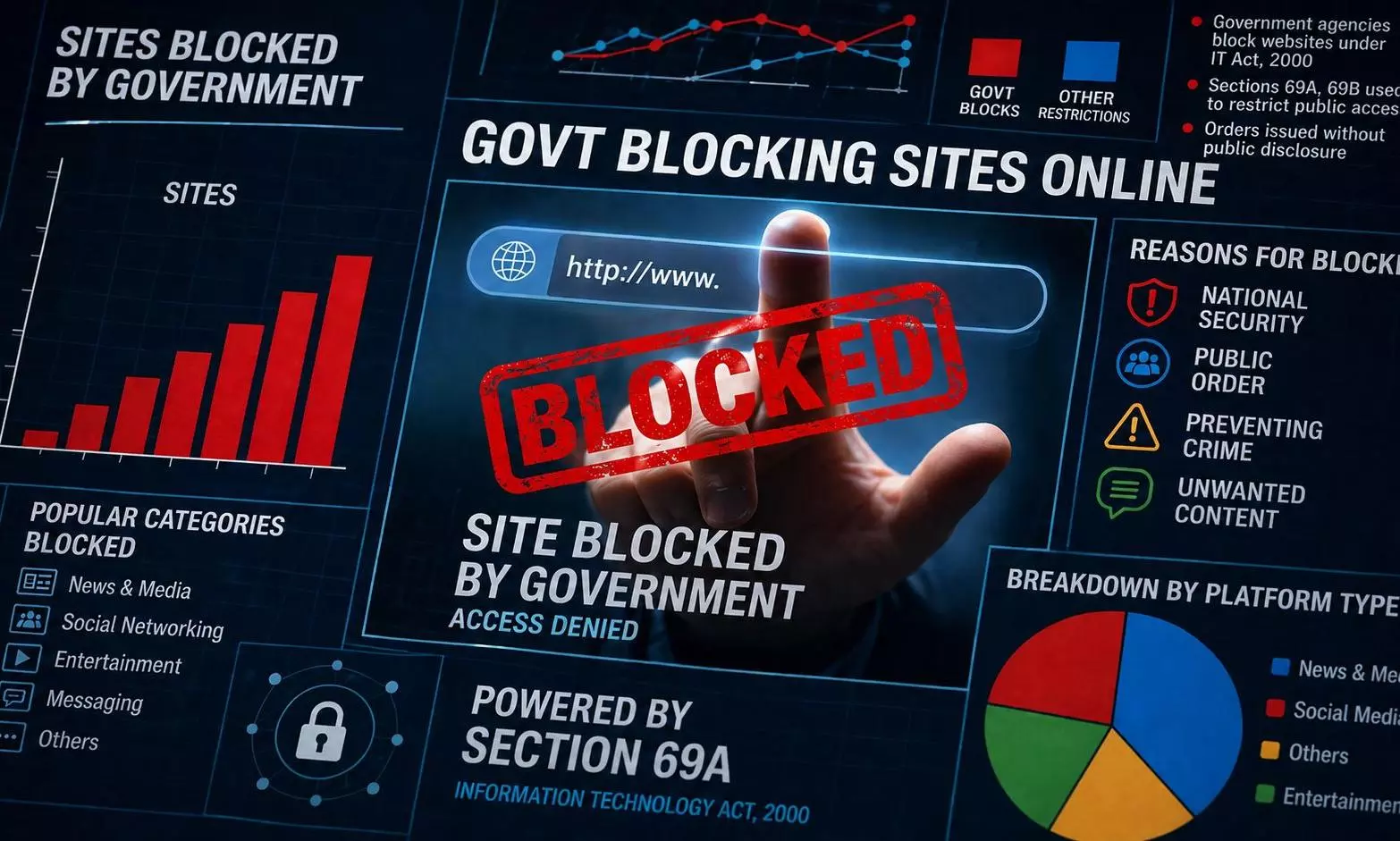
Representational.

New Delhi: The number of online content blocking orders issued by India’s Ministry of Electronics and Information Technology has sharply increased over the past two years, reflecting a growing crackdown on deepfakes, AI-generated material and objectionable posts across social media platforms, The Indian Express reported.
Data indicates that while around 6,000 blocking orders were being issued annually until 2023, the figure rose to approximately 12,600 in 2024 and surged further to about 24,300 in 2025, both counted up to December. Officials attribute this steep rise to the rapid spread of manipulated content and misleading posts, particularly those generated using artificial intelligence tools.
This escalation has also shifted focus toward specific platforms. Around 60% of blocking orders currently target content on X, formerly known as Twitter, while 25% involve Facebook and Instagram, and 5% relate to YouTube. The spike in enforcement activity peaked during Operation Sindoor in May 2025 and has remained consistently high since then, indicating sustained pressure on authorities to respond quickly to online threats.
Much of the demand for blocking content is coming from within the government itself. More than half of the requests originate from nodal officers in the Ministries of Home Affairs and External Affairs, with the remainder coming from other departments and individuals. A significant portion of these orders involves content linked to political parties and politicians, including fake posts and impersonation attempts using AI-generated media.
This issue was highlighted recently when Congress MP Shashi Tharoor flagged deepfake videos misusing his likeness. Authorities reportedly acted to block such content within India, pointing to the increasing role of cross-border sources in generating misleading material.
The surge in blocking orders is being carried out under Section 69A of the Information Technology Act, 2000, which allows the government to restrict public access to online content on grounds such as national security, public order and sovereignty. The process involves a “Blocking Committee” comprising senior officials from multiple ministries, with each order requiring approval from the MeitY Secretary.
However, the frequency of these interventions has intensified. The committee, which earlier met once a week, now convenes virtually several times a week, while emergency provisions allowing immediate blocking without prior review are being used more frequently. These interim orders must still be cleared within 48 hours, but their rising use reflects the urgency created by the flood of AI-driven misinformation.
At the same time, concerns persist over transparency. The government has released only limited data on blocking actions, even to Parliament and through RTI requests. Meanwhile, discussions are underway to extend blocking powers under Section 69A to four additional ministries—Home Affairs, External Affairs, Defence, and Information and Broadcasting—potentially expanding the scope of state control over online content.