












2020 Delhi riots: Court acquits 12 accused in murder of Muslim man
text_fields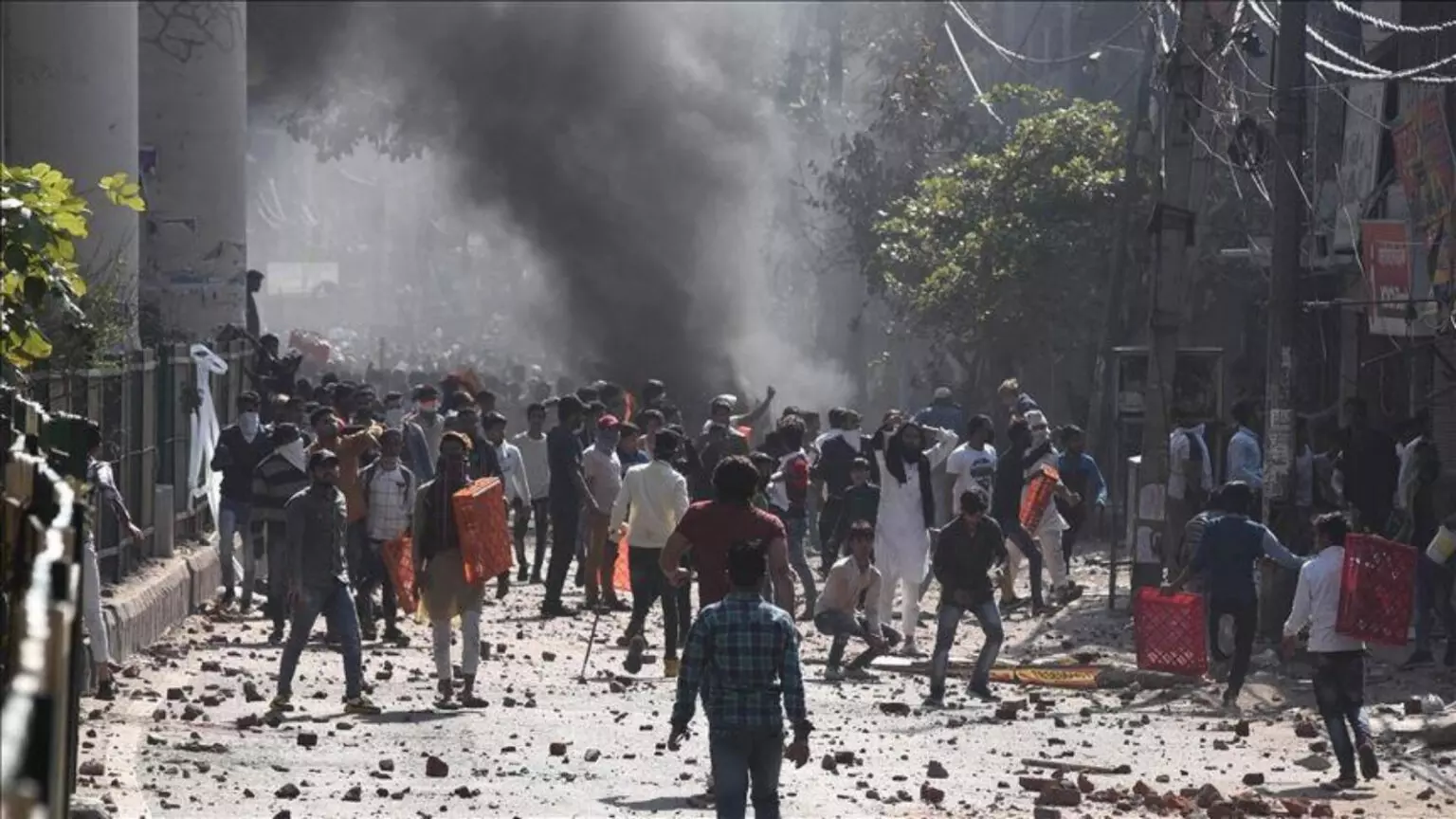

New Delhi: A Delhi court has acquitted 12 men accused of abducting and murdering a man during the 2020 northeast Delhi riots, holding that the prosecution failed to establish guilt beyond a reasonable doubt due to significant contradictions in eyewitness accounts and lack of strong corroborative evidence.
Additional Sessions Judge Parveen Singh delivered the verdict while hearing the case against Lokesh Solanki, Pankaj Sharma, Sumit Chaudhary alias Badshah, Ankit Chaudhary alias Fauzi, Prince alias DJ Wala, Rishabh Chaudhary alias Tapas, Jatin Sharma alias Rohit, Vivek Panchal alias Nandu, Himanshu Thakur, Sahil alias Babu, Sandeep alias Mogli and Tinku Arora. All were accused in connection with the killing of Musharraf.
In its order dated April 21, the court stated, “The prosecution has failed to prove its case against the accused beyond a reasonable doubt and they are entitled to the benefit of doubt.” Accordingly, all 12 accused were acquitted of the charges framed against them.
The case pertains to the death of Musharraf, whose body was recovered from a drain in Bhagirathi Vihar on February 27, 2020, during the communal violence that swept parts of northeast Delhi. According to the prosecution, on the night of February 25, a mob of around 150–200 people allegedly stormed Musharraf’s residence, dragged him out, assaulted him, and later disposed of his body in a drain.

The accused had been charged under multiple provisions, including murder, rioting, unlawful assembly, kidnapping, destruction of evidence, and promoting enmity.
The court noted that the prosecution’s case largely depended on the testimonies of the deceased’s wife and daughter, who claimed to have witnessed the incident. However, it found serious inconsistencies in their statements.
“There are material contradictions regarding the sequence of events leading to the death. While individually these may appear minor, collectively they render the testimonies unreliable on crucial aspects,” the court observed.
The judge also described the conduct of the deceased’s wife as “wholly unnatural,” noting that despite allegedly witnessing the killing, she neither contacted the Police Control Room nor informed relatives for nearly two days.
“It is highly improbable that in such circumstances she would not inform anyone, not even her daughter, about the alleged murder,” the court said.
On the call detail records (CDRs) presented by the prosecution, the court observed that they merely placed the accused in or around their residential areas and did not establish their involvement in the crime.
“Presence in the vicinity, without further evidence, cannot be treated as proof of participation. Hence, no substantial weight can be given to the CDR evidence,” the court held.
Regarding WhatsApp chats recovered from accused Lokesh Solanki, the court noted that while they indicated an intent to spread hatred, he had already been convicted in a separate case based on the same chats and could not be punished again for the same offence.
In view of these findings, the court acquitted all the accused of all charges.
With PTI inputs