









BJP busy making laws to implement agenda
text_fields

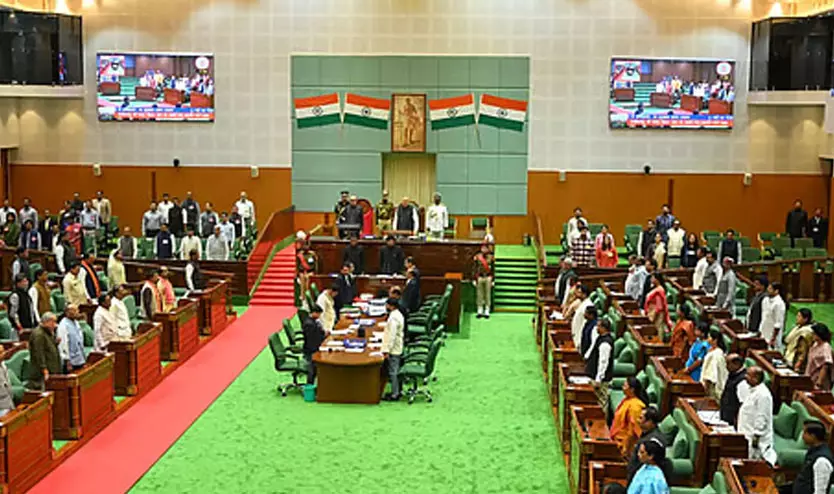
The Bharatiya Janata Party is reportedly moving to reshape institutional frameworks and legal structures in the country to advance its Hindutva agenda. While some of these changes are being passed in Parliament, measures that may face obstacles there are being introduced through state legislatures. One of the key initiatives is the implementation of a Uniform Civil Code across the country, as part of the party's effort to replace minority personal laws and dismantle systems that preserve their distinct identity. Even before a nationwide rollout, BJP-ruled states have begun adopting such laws within states. Apart from Goa, which has had a civil code since the pre-independence period as a colonial legacy, Uttarakhand implemented a Uniform Civil Code in January 2025. More recently, the Gujarat Assembly passed similar legislation and is preparing to enforce it. States such as Assam, Madhya Pradesh, Uttar Pradesh and Haryana have also set up committees and are reportedly taking steps towards introducing similar measures. A question that is being raised is how separate laws passed by individual states could amount to a truly uniform civil code. However, the broader objective of the Sangh Parivar is denying Muslim and Christian communities the ability to follow personal laws aligned with their religious teachings and cultural practices.
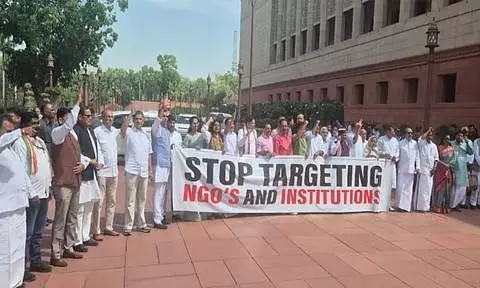
Another major concern highlighted is the recent attempt to restrict or block the functioning of minority-run religious, educational, and cultural institutions, along with charitable and human rights organisations. In this context, the Centre is moving to tighten regulations on foreign funding by introducing amendments to the Foreign Contribution Regulation Act (FCRA). Although the 2026 bill was introduced in the Lok Sabha on March 25, efforts to take it up for discussion on Wednesday were postponed due to protests by opposition parties. The delay is also being viewed as politically expedient, possibly linked to the Kerala Assembly elections 2026, with suggestions that it may be aimed at addressing concerns among Christian voters. This is also seen as an attempt to create an impression that the government is responding to objections raised by various Christian groups opposing the proposed amendments. One of the most contentious provisions in the proposed amendments to the FCRA is that if an organisation violates its clauses, delays registration, renewal, or submission of accounts, or fails to satisfy the designated authority, its assets could be transferred as decided by the Designated Authority - to the government or any other body decided by it. Critics view this as a serious concern, arguing that it acts as the sword of Damocles hanging over any organisation. If an organisation’s registration renewal is denied, it could lead to a complete halt in its functioning and result in the loss of its assets. Going by past experience, actions taken in the name of legal violations are most likely to be potentially one-sided. Since such authorities are appointed by the executive, they may function in line with political decisions of the ruling establishment. In such a scenario, even allegations against organisations receiving foreign funds could lead to punitive measures through executive overreach and result in its extinction. The ruling BJP is also seen as attempting to pass the controversial bill without allowing adequate parliamentary debate. The bill contains a surfeit of references to provisions from the 2010 law governing foreign contributions, along with amendments introduced to those clauses. Therefore, even reading and understanding these provisions side by side would require several days, yet the Union government is attempting to pass them within hours after only nominal discussion.
Another example cited in this context is the enactment of anti-conversion laws, which are seen as part of the broader agenda of the BJP. Such laws have already been introduced in 12 states at different times, with Maharashtra and Chhattisgarh being the most recent to enact them. These legislations are often justified by Hindutva proponents with the contention that forced religious conversions, particularly from Hinduism to Christianity or Islam, are taking place and disturbing communal peace. At the same time, they also argue that the laws do not interfere with voluntary conversions, a claim critics describe as misleading at best and hypocritical at worse. A common feature of these laws, it is noted, is that they allow individuals to file complaints against others alleging violations, based on which authorities can, and mostly do, initiate prompt action. And this is happening in a country whose constitution contains provisions that guarantee individuals the freedom to practise and propagate any religion of their choice. Despite this, BJP-ruled states are continuing to pass these laws one after another. It is true that ptitions challenging these state laws are currently pending before the Supreme Court . Meanwhile, in certain states where these laws are in force and the rule of law is hardly in force, have been instances of people taking matters into their own hands and assaulting those who convert to other religions. In this context, What needs to be emphasised is that the Supreme Court should take up these petitions with urgency and ensure that constitutional principles are upheld across the country. There is also a broader expectation that the judiciary will exercise similar vigilance in other matters of such legislation as well, just as in the issue of religious conversions.