









Street violence in Bengal politics
text_fields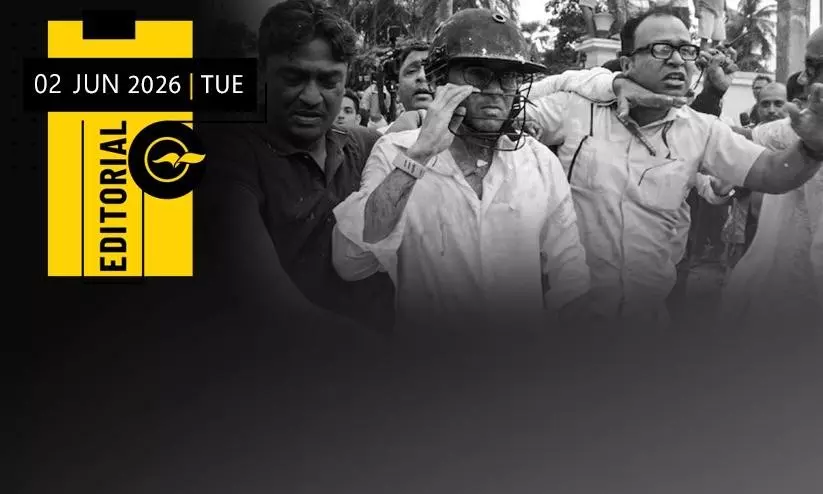

The crude practice of directly confronting and targeting political rivals on the streets, which has gained ground in West Bengal under the leadership of Suvendu Adhikari and the Bharatiya Janata Party (BJP), has opened the door to fresh political tensions in the state. On May 30, a group of individuals assaulted and hurled eggs at Trinamool Congress (TMC) General Secretary Abhishek Banerjee in Sonarpur of South 24 Parganas district. While the TMC was carrying out statewide protest programmes against the attack on Abhishek, considered the right-hand man of Mamata Banerjee, senior party leader Kalyan Banerjee was attacked with sticks and stones near Chanditala Police Station in Hooghly district on Sunday. While the TMC has alleged that the BJP was behind the incidents, the BJP has denied any involvement, claiming that the attacks were the result of public dissatisfaction with leaders of the former ruling party. This statement, issued after the attack on Abhishek Banerjee, appears to have emboldened BJP cadres further, as evidenced by the assault on Kalyan Banerjee on the very next day. In West Bengal, where post-election violence has become a recurring phenomenon, concerns have been raised over whether these political clashes could escalate into worse confrontation.
The Opposition alleges that the BJP's strategy is to create an atmosphere of unrest in the state and intimidate TMC workers into submission. Physically confronting and sidelining political rivals with every change of government has long been a feature of Bengal's political culture. This became the prevailing practice since the tenure of Siddhartha Shankar Ray. It continued when the CPI(M) came to power and later when the TMC ousted it and assumed office. Those who fell out of the ruling political fold had to face the consequences. That history continues to repeat itself. Moreover, those in power have often succeeded in achieving whatever objectives they pursue through this politics of bullying. The latest evidence of this is that, of the 86 legislators expected to attend the meeting convened by Mamata Banerjee, only 20 reportedly turned up. The political drift that was once witnessed from the CPI(M) to the BJP, and now the TMC, appears likely to be repeated from within the TMC itself in the near future. Even while denying any role in the attacks, the essence of the statements made by the BJP's state leadership and ministers is that Abhishek Banerjee and Kalyan Banerjee somehow deserved such treatment. The ruling party appears unconcerned about the possibility of this evolving into a law-and-order issue that could push the state towards insecurity. Rather, as in other states governed by the Sangh Parivar, Suvendu Adhikari's BJP seems focused solely on its own political gains. Since the path of retaliatory politics is seen as a means to achieve those gains, there is a possibility that the situation could deteriorate further.
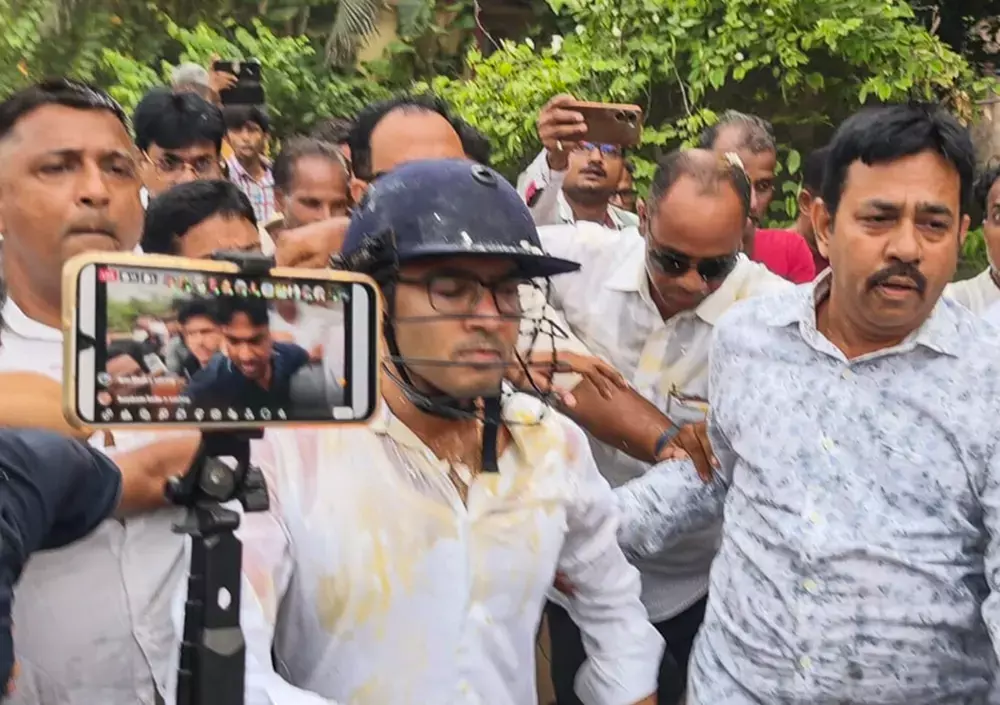
Abhishek and Kalyan were attacked while visiting party workers who had allegedly been subjected to post-election violence and while attempting to approach the police regarding the matter. Abhishek was attacked in his own stronghold. "Those in power have turned into killers. It is a disgrace," was the reaction of TMC chief Mamata Banerjee. Abhishek has stated that the attack on him was pre-planned and that the assailants intended to cause him serious harm. Kalyan Banerjee has likewise alleged that the attack on him was an attempt to kill him. Mamata also alleged that private hospitals in the vicinity refused to treat Abhishek because of pressure from the BJP government. The police have arrested five persons in connection with the incident. However, the TMC and other Opposition parties allege that the state government has not taken any action commensurate with the seriousness of the matter. Mamata's plan is to take the protest to the streets. In addition to organising block-level protest programmes on Monday, the party is also holding a day-long sit-in protest in the state capital today.
Mamata rose to the corridors of power through street politics. Now, after her third term, and when the BJP seeks to push her out of power and crush her party on the streets, drawing strength from its position at the Centre, Mamata's strategy is still to confront and defeat it on the very same terrain. The peace and sense of security of not only Mamata and her party, but also the people of Bengal themselves, now depend on whether she can withstand Suvendu Adhikari, who, critics allege, has initiated a politics of suppression in Bengal on the model of Uttar Pradesh and Assam by targeting political leaders through attacks and using the police machinery to carry out arrests.