








We need AI as a servant, not as a killer
text_fields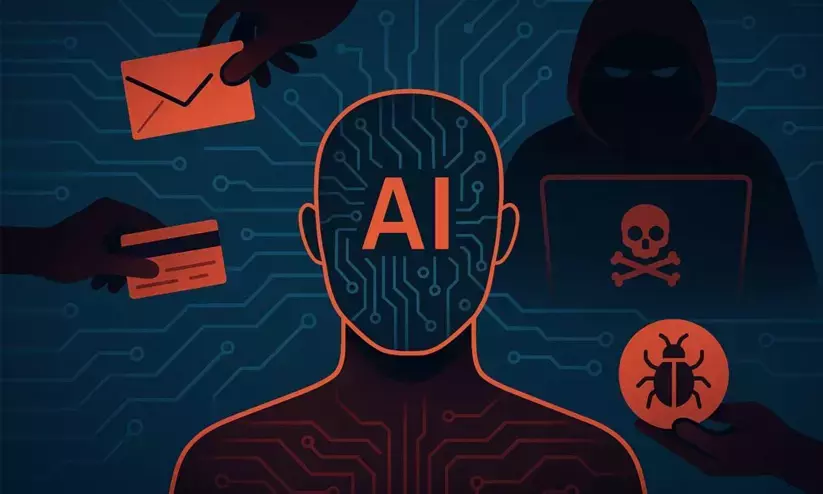

The chief financial officer of a British engineering company, Arup, sends an email to an employee; he has to transfer 20 million pounds in instalments to some secret accounts in Bangkok. The employee becomes suspicious. However, soon the officer and other officials came to the video conference and discussed in person and explained. The employee, whose doubts have been cleared, transfers the money in 15 instalments. However, it later transpires that not only the email but also the video was fake. That incident in 2023 is a confirmation of how artificial intelligence can cripple human intelligence. Today, online impersonation has become easier and more effective thanks to artificial intelligence. Such frauds have only increased since then. Not only fraud, but more devastating impacts are being made by AI. When artificial intelligence becomes a part of everyday life, it also creates a situation that surpasses science fiction. Elections are being sabotaged; hatred is being spread; economic fraud is being committed by imitating the appearance and voice. In the field of war, unmanned drones that make their own decisions and operate on their own create hell. Algorithms designed in a hurry are a threat to justice and humanity.

In the early stages of AI technology, relevant scientists warned that we should be careful not to go too far. Jeffrey Hinton, a “godfather of AI”, warned that AI could surpass human intelligence. They all warned that AI poses the same danger as nuclear war and epidemics that could wipe out humanity. In addition to such serious threats to the very existence of humanity, there are cybersecurity issues, data privacy concerns, environmental damage (six hundred thousand pounds of carbon dioxide are released just to prepare a single language model), job loss, lack of transparency, monopolisation, centralisation of power, and so on. The benefits of artificial intelligence are not small. They are spread across various fields such as health, education, agriculture, security, and governance. The achievements of AI in the health sector alone are endless. It helps in speeding up drug discovery and early detection of deadly diseases like cancer. It can help in predicting the weather and finding solutions to the climate crisis. It can be used to solve major problems facing humanity. At the same time, it plays a major role in the genocides and wars that are taking place today. Like nuclear energy, artificial intelligence can be used for creative purposes. But both of these are mainly used by human society for destructive purposes. In other words, the problem is one of moral stance. The technology of “remote” warfare is being used on a large scale in Gaza and Lebanon.

Whether it is a weapon, nuclear power, or artificial intelligence, none of them is good or bad in itself. It is the choice of the human being who uses it that makes it good or bad. As Pope Leo XIV suggested in his encyclical, artificial intelligence needs to be “disarmed.” The Catholic Church itself, which collaborates with large companies such as Meta and Microsoft, can play a role in this. We need to force large companies to cooperate in good use and to turn away from destructive profiteering. Like the climate crisis, this threat can be addressed only through planned and coordinated global initiatives. Instead of isolated legislation by individual countries, a unified global framework must be urgently prepared. In order to set moral boundaries in this regard and to monitor their compliance, a global mechanism is necessary like the International Atomic Energy Agency (IAEA) in the nuclear field. In addition, governments should formulate an AI policy that sets moral boundaries. The use of AI in weapons, including military equipment, should be prohibited. AI can be a tool for human progress, dignity, and well-being. It cannot continue to be a force for destruction. The decision on which to choose is up to the human community of the world.