A lesson from Bengal
text_fields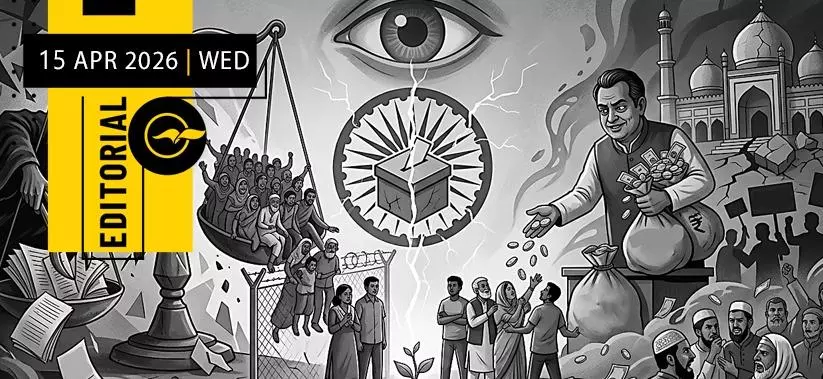

Ahead of the West Bengal Assembly elections scheduled in two phases on April 23 and 29, campaigning has intensified with the active participation of top BJP leaders, including Prime Minister Narendra Modi and Union Home Minister Amit Shah. Amid this, serious concerns continue to be raised over whether the elections will be conducted in a free and fair manner. According to the SIR (Special Intensive Revision) list announced on February 28, the total number of voters in West Bengal stands at 7.04 crore. However, complaints have been raised that around 91 lakh voters have been excluded from the rolls. Additionally, 60.66 lakh voters have been placed under the “under adjudication” category, accounting for about 8.3% of the electorate. Chief Minister Mamata Banerjee described the situation as deeply unfortunate and inhumane, but the Election Commission did not take action on these concerns. Subsequently, the matter reached the Supreme Court of India, which directed that the complainants be heard and relief measures explored by appointing judicial officers. Upon preliminary examination, the officials found merit in complaints from around 27 lakh people and advised them to approach designated tribunals. However, it has become evident that these legitimate complaints are unlikely to be properly examined before the polling dates, effectively preventing many from exercising their right to vote.
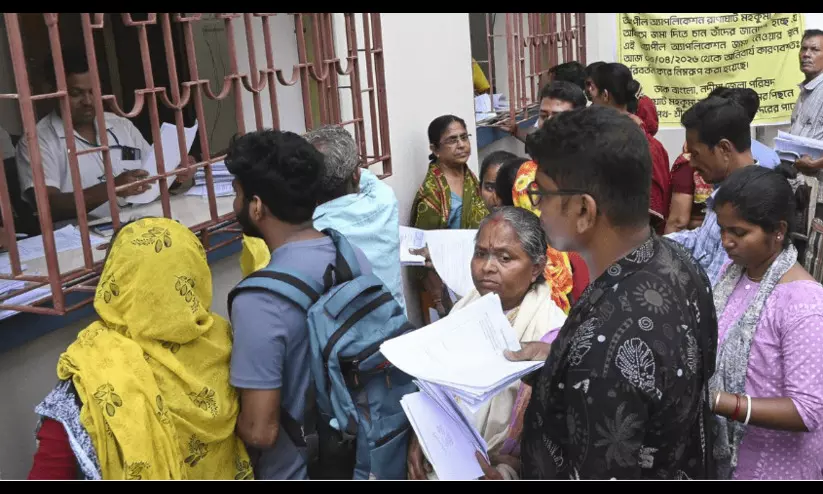
The large-scale deletions have been concentrated in Muslim-majority districts along the Bangladesh border, which points to a systematic and deliberate “purification” exercise. Repeated statements by Narendra Modi and Amit Shah about expelling so-called infiltrators from the country if the BJP comes to power have been seen as reflecting a broader ideological agenda linked to Hindutva extremism. The developments are also being viewed as part of a larger political strategy to end the 15-year rule of the Trinamool Congress and bring the state under BJP control. Historically, West Bengal had been governed for over three decades by the Left Front led by the Communist Party of India (Marxist), largely with the support of minority communities. Despite this, many within these communities continued to face socio-economic marginalisation, which led a significant section, around 27% of the population, to shift their support to Mamata Banerjee’s Trinamool Congress. The latest news is that not only is the BJP not content with 'purifying' the comprehensive voters' list, which is inhumane and a blatant violation of the secular democratic constitution, but it is also devising and implementing strategies to divide minority votes through other immoral practices and reduce the TMC's chances of victory.
The developments began in December when Trinamool leader Humayun Kabir launched a mosque construction project named after the Babri Masjid in Beldanga, Murshidabad, drawing large crowds for its foundation ceremony. Subsequently, he is said to have announced the formation of a new political party, Aam Janata Unnayan Party (AJUP), and declared an alliance with All India Majlis-e-Ittehadul Muslimeen led by Asaduddin Owaisi, with plans to contest 150 seats in the elections. Observers expressed surprise at how quickly Kabir was able to mobilise significant resources, including hiring helicopters for campaign travel across constituencies. Amid this, members of the Trinamool Congress released a video that they claimed captured a private conversation involving Kabir and another individual, suggesting possible political manoeuvring behind the scenes. The controversy further intensified after a revelation by Humayun Kabir alleging a ₹1000 crore deal with the Bharatiya Janata Party came to light. Following this, Asaduddin Owaisi announced that his party would end its alliance with Kabir and contest independently. Given the BJP’s electoral strength backed by substantial corporate funding, many people may not find such allegations entirely implausible, despite official denials. They also pointed to past instances, including allegations of cash-for-votes in elections in states like Kerala, as contributing to public scepticism. Bengal itself is a witness to the fact that there are enough Mir Jafars to betray their own community to opposing forces. The lesson to be learned is that if community organisations and true community lovers are not vigilant and fall into politically motivated traps, the consequences will be dire.