














West Bengal: Split in minority votes fuels BJP surge in Muslim-majority seats
text_fields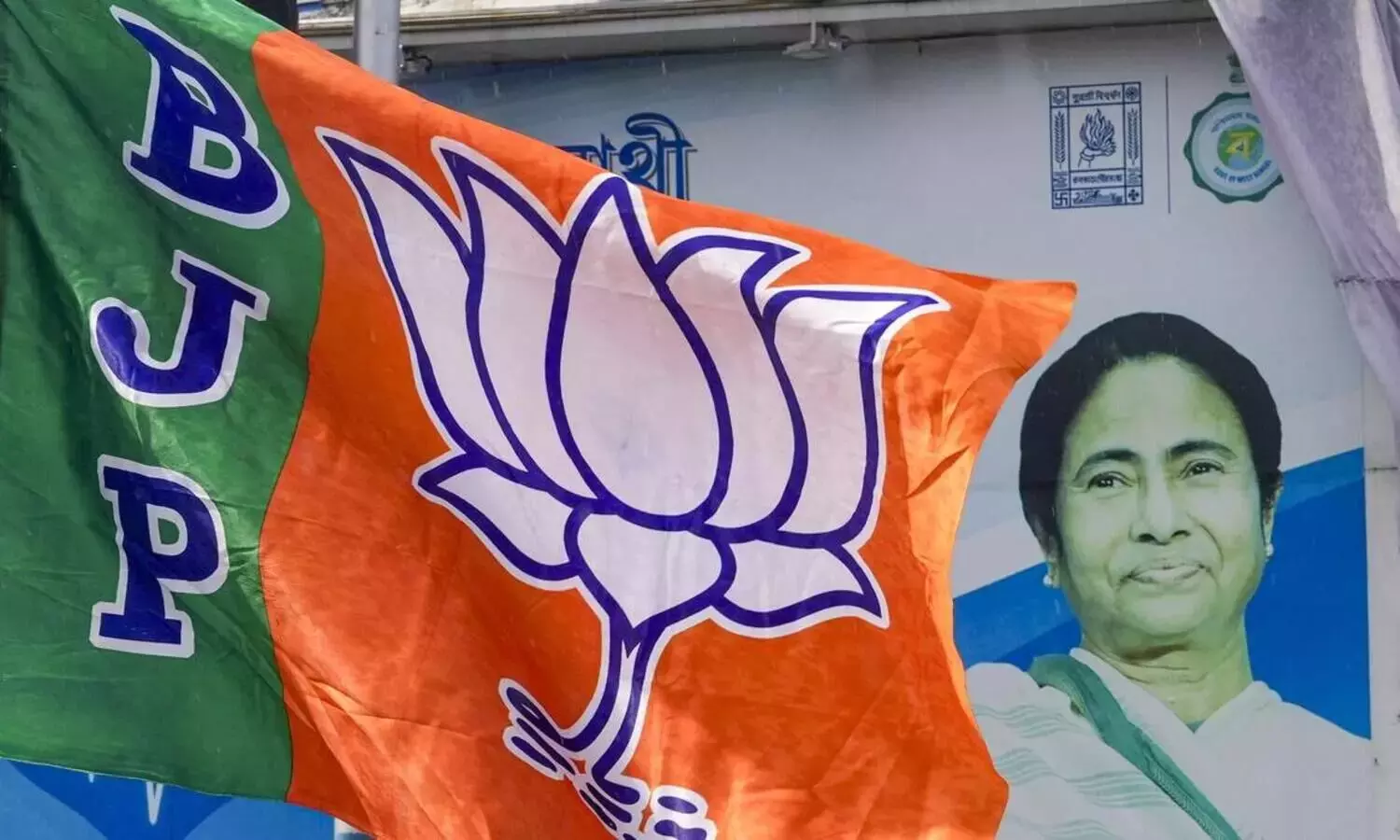

West Bengal: In a political development that has significantly reshaped West Bengal’s electoral arithmetic, the Bharatiya Janata Party’s (Bharatiya Janata Party) sweeping performance has been driven not only by its traditional strongholds but also by unexpected gains in Muslim-majority districts, where a fragmented minority vote has altered long-standing voting patterns in favour of the ruling Trinamool Congress (TMC).
For over a decade, the TMC’s dominance in districts such as Murshidabad, Malda and Uttar Dinajpur was anchored in the near-total consolidation of Muslim votes, which make up 50 per cent or more of the population in large parts of these regions. This voting bloc, shaped after the decline of the Left Front in 2011 and reinforced during the highly polarised 2021 elections, appears to have fractured this time with significant electoral consequences.
The numbers highlight the shift clearly. Across 43 Assembly seats in these three districts, the BJP has surged from 8 seats in 2021 to 19 seats now. The TMC, which earlier held 35 seats, has dropped to 22. The remaining seats have been distributed among the Congress, CPI(M), and smaller parties, including Humayun Kabir’s Aam Janata Unnayan Party (AJUP), indicating a clear diffusion of minority votes that weakened the ruling party’s hold.
Contrary to pre-election expectations that the Special Intensive Revision (SIR) of electoral rolls—marked by large-scale deletions—would consolidate Muslim voters behind the TMC, the outcome suggests the opposite. Instead of unified tactical voting, the minority vote split across multiple opposition parties, reducing the TMC’s advantage in closely contested constituencies.
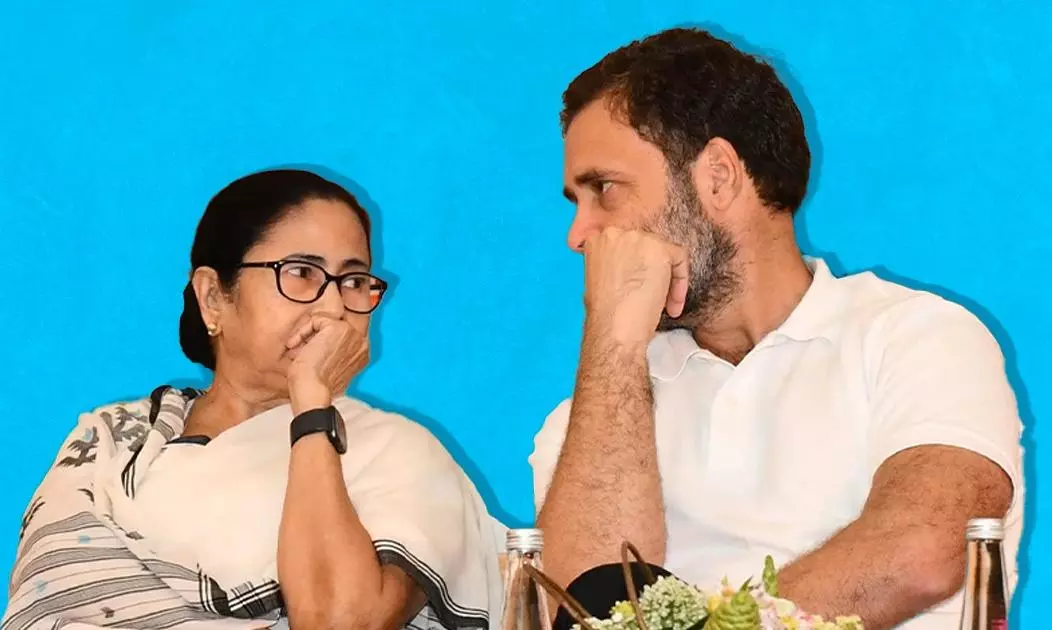
In Murshidabad, where Muslims account for over 66 per cent of the population, the shift has been particularly striking. Once a stronghold for the TMC, which won 20 of 22 seats in 2021, the party has now been reduced to nine seats. The BJP, meanwhile, has made a dramatic rise to match that tally, climbing from just two seats in the previous election.
The SIR exercise, which reportedly led to the deletion of nearly 7.8 lakh names in the district, has emerged as an important backdrop. Political analyst Biswanath Chakraborty noted that while the TMC claimed the deletions disproportionately affected its support base, the data indicates that fragmentation of votes among Congress, CPI(M), and AJUP significantly amplified its losses.
In Raninagar, the Congress narrowly defeated the TMC, while the CPI(M) secured a substantial vote share, collectively cutting into the TMC’s consolidated support base. In Domkal, the CPI(M)’s victory highlighted a revival of Left influence in minority-dominated areas. In Rejinagar and Nowda, AJUP leader Humayun Kabir translated local influence into decisive wins, drawing significant Muslim support that may otherwise have gone to the TMC.
At the same time, a contrasting consolidation among Hindu voters in certain constituencies also benefited the BJP. In seats such as Kandi and Nabagram, a unified Hindu vote helped the party secure victories in tightly contested battles where opposition votes remained divided.

A similar pattern played out in Malda, where the BJP improved its tally from four to six seats. The TMC’s position weakened amid divided minority votes and the continued organisational presence of the Congress, which, despite limited wins, managed to split crucial vote shares in several constituencies.
In Uttar Dinajpur as well, the BJP doubled its seats from two to four, while the TMC slipped from seven to five. In multiple constituencies, the combined vote share of Congress and Left candidates exceeded the TMC’s margin of defeat, underlining the decisive impact of vote fragmentation.
Beyond these districts, similar trends were observed in parts of South 24 Parganas and Birbhum, where minority populations are significant though not dominant. The BJP recorded notable gains here too, benefiting from fragmented minority votes alongside consolidation of Hindu votes.
The outcome marks a clear departure from the 2021 Assembly elections, when the TMC successfully positioned itself as the principal challenger to the BJP, securing overwhelming minority support amid heightened polarisation over the National Register of Citizens (NRC) and the Citizenship Amendment Act (CAA).
According to a senior TMC leader, that pattern of unified minority voting appears to have weakened, with sections shifting towards Congress and CPI(M), while others moved to emerging regional formations such as AJUP and the Indian Secular Front.
Political observers suggest the latest results reflect a shift from fear-driven consolidation to fragmentation influenced by local issues, candidate appeal, and the revival of legacy parties. A Kolkata-based psephologist noted that even a 10–15 per cent diversion of minority votes in key seats was enough to alter outcomes, especially where the BJP’s core vote remained stable.
Collectively, the five districts of Murshidabad, Malda, Uttar Dinajpur, South 24 Parganas, and Birbhum account for 85 Assembly seats, making them crucial to any statewide political outcome. The BJP’s performance in these regions has not only strengthened its overall tally but also expanded its presence in areas once considered electorally out of reach.
For the TMC, the verdict serves as a warning that its traditional support base is no longer uniformly consolidated. While the erosion is not yet complete or irreversible, it is significant enough to have reshaped the electoral outcome in this cycle.
With PTI inputs