












Ujjain original global centre of time, not Greenwich: Union minister
text_fields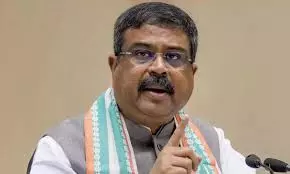

Ujjain: Union Education Minister Dharmendra Pradhan has claimed that Ujjain is the original global centre for time calculation, while calling for a decisive break from colonial-era educational influences. Addressing a gathering in Madhya Pradesh, he claimed that India must move beyond what he described as the lingering impact of colonial policies, shedding the ‘Macaulay mindset’ within the next decade, according to The Indian Express.
Pradhan said India’s major spiritual centres—including Kashi, Kanchipuram and Puri—should be viewed not merely as religious destinations but as comprehensive knowledge hubs. He claimed that they are spaces where science, culture, literature and spirituality intersect, forming what, according to him, are living embodiments of India’s intellectual tradition.
Expanding on his claim regarding timekeeping, Pradhan claimed that Ujjain’s historical and geographical significance is rooted in its alignment with key global coordinates. He claimed that colonial powers displaced this centrality by imposing Greenwich Mean Time, effectively shifting the global reference point to Europe. According to him, this represented a broader pattern of appropriation and marginalisation of Indian knowledge systems.
The minister emphasised that such claims must be backed by evidence, cautioning that critics would otherwise dismiss them as unscientific. He called for a renewed effort to substantiate India’s intellectual heritage through rigorous study and demonstration.
On education, Pradhan set a ten-year target to reverse what he described as the damage inflicted by colonial frameworks introduced in the 19th century. He claimed that these policies disrupted indigenous systems of learning and fostered a mindset of subjugation. Linking this to ongoing reforms, he highlighted the implementation of the National Education Policy as part of a broader push to reclaim intellectual autonomy.
He also rejected the dominance of Western languages in defining knowledge, asserting that intellectual traditions exist across Indian and global languages, including local and folk systems.