













Ebola spreads rapidly in Congo, Uganda; WHO raises alarm
text_fields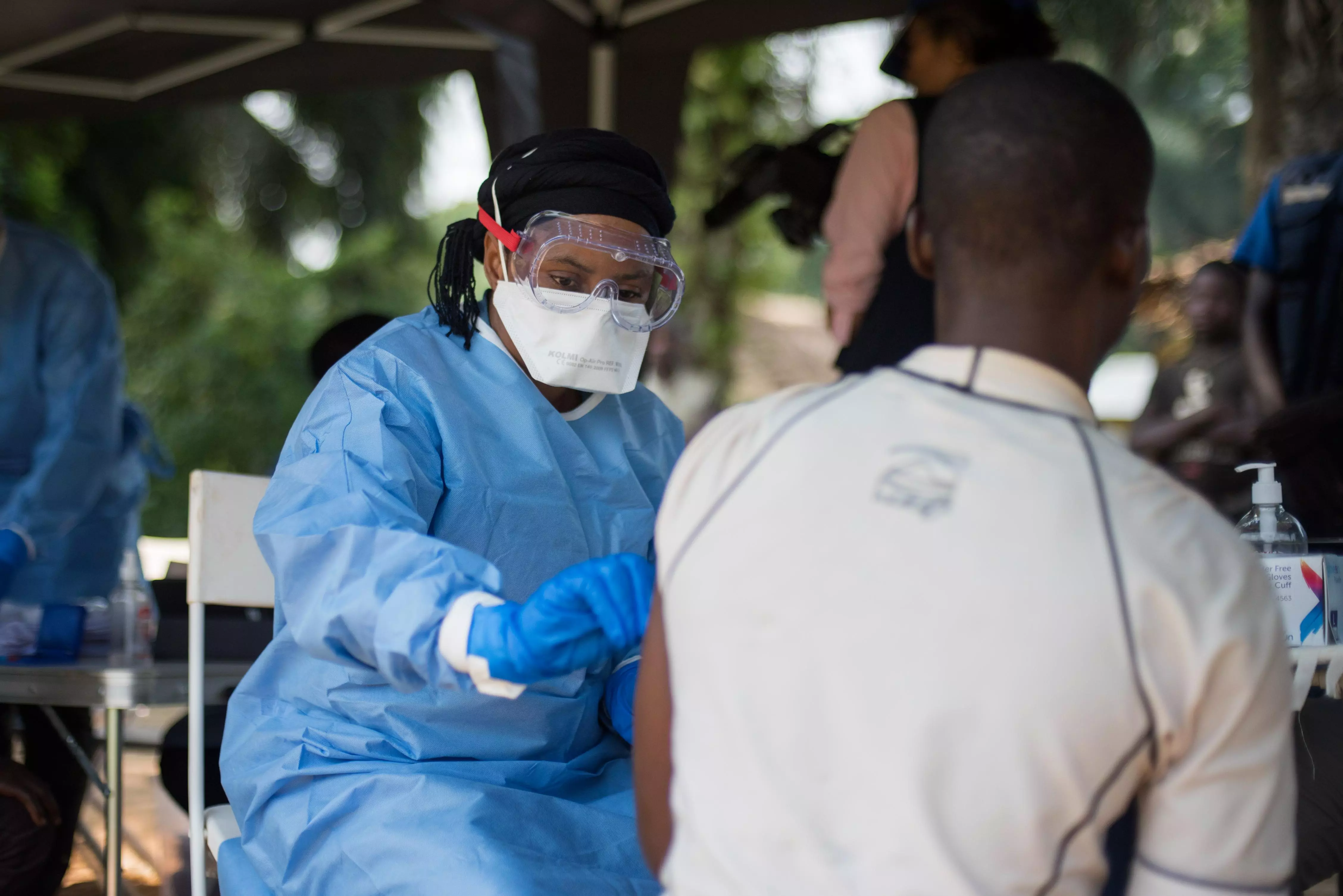

Congo: The World Health Organisation on Wednesday warned that the risk of the Ebola outbreak spreading in Congo and Uganda remains high at the national and regional levels, though the global risk is currently considered low.
The assessment came as WHO officials said the outbreak, which has already caused 134 suspected deaths, could continue for at least another two months despite intensified international response efforts.
WHO has declared the outbreak a public health emergency of international concern and earlier expressed alarm over the “scale and speed” of the spread.
The outbreak involves the rare Bundibugyo strain of the Ebola virus, for which there are currently no approved vaccines or medicines. Health experts and aid workers said the virus spread undetected for weeks after the first known death because authorities initially tested for a more common Ebola strain, with results returning negative.
WHO Director-General Tedros Adhanom Ghebreyesus said 51 confirmed cases have been recorded in Congo’s Ituri and North Kivu provinces, along with two confirmed cases in Uganda. In addition, authorities are investigating nearly 600 suspected cases and deaths.
“We know that the scale of the epidemic is much larger. We expect those numbers to keep increasing,” Tedros said.
Experts said delayed detection, mass population movement, and the ongoing humanitarian crisis in eastern Congo have severely complicated containment efforts. Several parts of the region remain under the control of armed rebel groups, making aid delivery difficult.
Congo confirmed that the first known Ebola patient died on April 24 in Bunia, but official confirmation of the virus took weeks. The body was later repatriated to the Mongbwalu health zone, a densely populated mining region.
“That caused the Ebola outbreak to escalate,” Congo Health Minister Samuel Roger Kamba said.
Dr Anne Ancia, who leads the WHO team in Congo, said authorities have still not identified “patient zero”. She warned that funding cuts have had “a marked detrimental effect on humanitarian actors” responding to the outbreak.
Meanwhile, Congo is expecting shipments of experimental Ebola vaccines from the United States and Britain. The vaccines, developed by researchers at the University of Oxford, are designed for different Ebola strains.
Jean-Jacques Muyembe, a virus expert at Congo’s National Institute of Biomedical Research, said health authorities would administer the experimental vaccines to assess their effectiveness.
The United States has also stepped up support for the response. US Secretary of State Marco Rubio said the Trump administration would prioritise funding for 50 emergency clinics in affected areas. The US has already contributed USD 13 million towards containment efforts, with more assistance expected.
In Bunia, schools and churches remained open on Wednesday, though some residents were seen wearing face masks. Locals reported sharp increases in the prices of masks and disinfectants amid growing fear of the outbreak.
“It’s truly sad and painful because we’ve already been through a security crisis, and now Ebola is here too,” Bunia resident Justin Ndasi said.
Aid workers described hospitals as overwhelmed. Trish Newport, emergency programme manager for Doctors Without Borders, said suspected Ebola patients identified at Salama hospital could not be transferred because health facilities across Bunia were already full.
“Every health facility they called said, ‘We’re full of suspected cases. We don’t have any space,’” she said.
In Mongbwalu, the epicentre of the outbreak, border crossings with Uganda remain open and gold mining operations continue.
Local civil society leader Cherubin Kuku Ndilawa said people were continuing their daily routines while gradually becoming more aware of the risks. However, efforts to contain the virus have been hampered by a shortage of handwashing stations in public areas.

Dr Didier Pay, former director of Mongbwalu General Hospital, said his clinic was treating around 30 Ebola patients and confirmed that a student from the local medical technology institute died from the disease on Wednesday morning.
With PTI inputs