









BMS plans nationwide agitation over contested labour code provisions
text_fields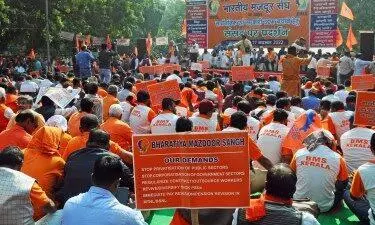

The Bharatiya Mazdoor Sangh (BMS), one of India’s largest trade unions, has threatened to launch a massive nationwide protest against specific elements of the Central government's new labor reforms, arguing that the provisions compromise workers' rights and dilute the power of trade unions.
Speaking at the launch of the BMS’s two-day Kerala state committee meeting in Ernakulam, All India General Secretary Surendra Kumar Pandey announced that the organization is mobilizing for a major movement primarily targeting the Industrial Relations (IR) Code and the Occupational Safety, Health and Working Conditions (OSH) Code.
The Central government originally introduced the four comprehensive Labor Codes to consolidate and modernize 29 existing central labor laws, aiming to boost the ease of doing business and simplify regulatory compliance. While the BMS actually supports the Code on Wages and the Code on Social Security for expanding social safety nets and strengthening wage protections, it holds significant concerns regarding the IR and OSH codes.
Pandey specifically called out new restrictions placed on the right to strike, tighter rules around trade union recognition, and hurdles affecting the daily operations of labor organizations. He stated that the BMS cannot accept measures that make trade union activities more difficult without safeguards for workers. According to the General Secretary, the union has repeatedly submitted formal complaints and held discussions with the Union Labor Ministry, but their objections were largely ignored when the final rules were drafted.
The BMS has urged the Centre to introduce parliamentary amendments to safeguard constitutional labor rights and job security. If the government fails to take corrective action, the BMS warned it will rally allied unions across the country to launch a coordinated mass protest. The state committee meeting was led by Kerala BMS President B. Shivaji Sudarsanan, alongside key addresses from senior leaders including Unnikrishnan Unnithan, M.P. Rajeevan, and C. Balachandran.