















Non-starter: the Saudi-US nuclear deal and the Abraham Accords
text_fields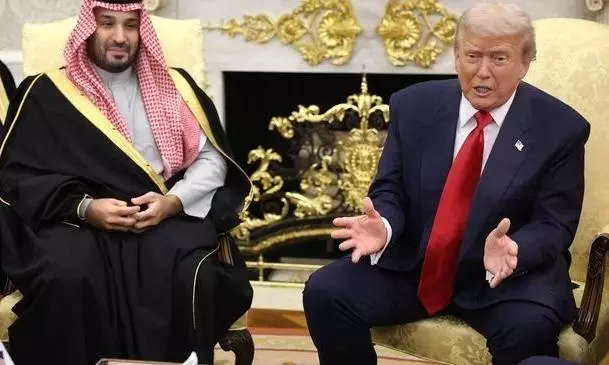

Even zs the war against Iran continues without a definitive end, the United States signed an agreement with its regional ally Saudi Arabia on July 22. The civilnuclear deal agreement, which can be described as a milestone in the history of West Asia, was signed by US Energy Secretary Chris Wright and Saudi Energy Minister Prince Abdulaziz bin Salman. It included a civil nuclear cooperation agreement and a bilateral nuclear security agreement. Through the agreement, Saudi Arabia hopes to secure nuclear energy cooperation with the United States through projects spanning 30 years and to develop into a nuclear power in which US companies will play a key role. According to Vision 2030, envisioned by Crown Prince Mohammed bin Salman, who leads the Saudi government, the goal is to transform Saudi Arabia from a petroleum-dependent economy into a diversified one. As part of this plan, the Kingdom intends to develop nuclear energy, reserve most of its oil resources for export, and use nuclear power to meet growing domestic energy needs, in addition to developing tourism, financial markets and such other spheres of economic activity.
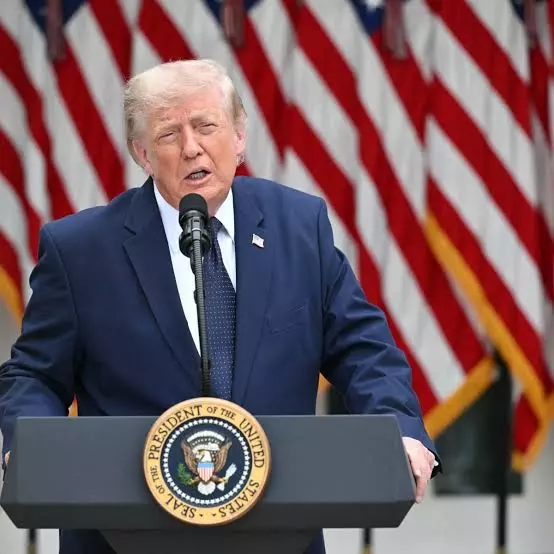
However, the cooperation agreement is not as simple as it appears. First, US President Donald Trump has linked it to relations with Israel. During Trump's first term, the UAE and Bahrain, followed by Morocco and Sudan, signed agreements with Israel under US auspices known as the Abraham Accords. These agreements established normal diplomatic and trade relations with Israel and paved the way for free trade by ending mutual boycotts or such restraints. The United States had been making strenuous efforts to include Saudi Arabia in this package, but in vain. As of September 2023, it was widely expected that Saudi Arabia would establish relations with Israel during the administration of President Joe Biden. In the same month, the United States also announced the India-Middle East-Europe Economic Corridor, which had as key players Saudi Arabia and Israel. However, after the October 7, 2023 Hamas attack on Israel, and Israel's genocidal military campaign in Gaza, widely criticised for violating international norms, prompted Saudi Arabia to change its position. Saudi Arabia, which had maintained that it would establish relations with Israel only if it recognised Palestine as a state with East Jerusalem as its capital, found it impossible to reach an agreement with Israel, which rejected the two-state solution and remained deeply hostile to Hamas. The United States, on the other hand, maintained that a two-state solution would be accepted only if Israel and the Arab states reached a consensus through negotiations. As a result, negotiations on the Abraham Accords stalled. However, the very next day after the signing of the nuclear cooperation agreement on July 22, Trump said that the implementation of the nuclear deal was hinged to Saudi Arabia joining the Abraham Accords. Trump had not previously made such a condition. Nor was it included in the nuclear agreement. The reason Trump made this statement could be domestic criticism of the Saudi cooperation agreement within the United States or opposition from Israel. And a verbal understanding of that implication with the Saudi authorities appears unlikely too. Saudi Arabia's position on the establishment of a Palestinian state along the 1967 borders has been uncompromising.
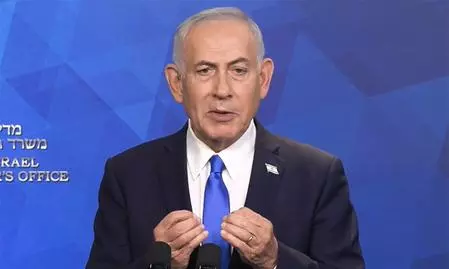
In this context, the American position in the nuclear talks with Iran also needs to be examined. The public narrative promoted by the anti-Iran camp is that Iran has made significant progress in uranium enrichment and has reached 60 per cent enrichment, just below weapons-grade level. However, since Iran is a signatory to the Nuclear Non-Proliferation Treaty, it has the right to enrich uranium for peaceful purposes. Saudi Arabia is rich in uranium reserves. The agreement with the US stipulates that nuclear fuel will initially be imported from the United States and that uranium enrichment will be undertaken if it proves feasible through a study for the purpose within two years. However, the enrichment technology will not be transferred to Saudi Arabia.
The United States is seeking to support Saudi Arabia in this venture in the hope that it will eventually join the Abraham Accords. American companies will also receive priority in the development of nuclear energy infrastructure. In addition, Washington seeks to retain control over the spread of nuclear capability in the region by ensuring that any programme outside Iran remains under its influence. It also aims to prevent China from expanding its role as a major power in the region through any gaps created by non-participation of the US in the nuclear business. However, all things considered, we are left with what White House Press Secretary Karoline Leavitt said: If Saudi Arabia does not join the Abraham Accords, 'the deal is off'. And that also means that the Palestinian issue and the Iran crisis will continue to cast a long shadow over Saudi-US relations.