


Thousands of seafarers stuck in Gulf for weeks amid Hormuz tensions
text_fields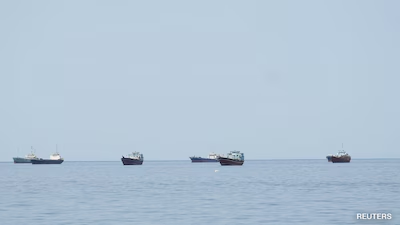

Dubai: Around 20,000 seafarers aboard hundreds of vessels, including oil and gas tankers and cargo ships, remain stranded in the Persian Gulf for weeks, unable to pass through the strategic Strait of Hormuz, a key global energy corridor through which nearly one-fifth of the world’s oil and liquefied natural gas typically transits.
According to maritime data firm Lloyd's List Intelligence, only about 80 vessels crossed the strait during the week of April 13–19, a sharp decline from the usual daily traffic of approximately 130 or more ships before the conflict escalated.
The situation has been compounded by escalating hostilities, with dozens of vessels reportedly attacked since the onset of the war. The United Nations has confirmed that at least 10 seafarers have been killed.
Despite US President Donald Trump extending the ceasefire indefinitely last week, the United States has continued its blockade of Iranian ports. In retaliation, Iran has opened fire on ships in the strait and seized two vessels, further intensifying tensions in the region.

Meanwhile, military expenditure in the Middle East plateaued in 2025 even as global defence spending increased, according to a report released on Monday by the Stockholm International Peace Research Institute (SIPRI).
The report noted that overall regional spending rose marginally by 0.1 per cent, but declined in both Israel and Iran.
Israel’s defence expenditure fell by 4.9 per cent to USD 48.3 billion, reflecting a relatively less intense year of conflict compared to 2024. This followed ceasefires in Lebanon in November 2024 and in Gaza in October 2025. However, Israel continued to carry out lethal strikes and maintained a ground presence in both regions. Despite the decline, military spending remains significantly elevated—up 97 per cent compared to 2022—and has placed considerable strain on public finances, with widening deficits and increased borrowing.
Iran’s military spending dropped by 5.6 per cent to USD 7.4 billion. SIPRI attributed the decline to inflation and broader economic pressures, while cautioning that official figures may not fully reflect actual expenditure.
“Iran also uses off-budget oil revenues to finance its military, including the production of missiles and drones,” SIPRI researcher Zubaida Karim said.

With PTI inputs