












David Attenborough at 100: the broadcaster who taught the world to cherish nature
text_fields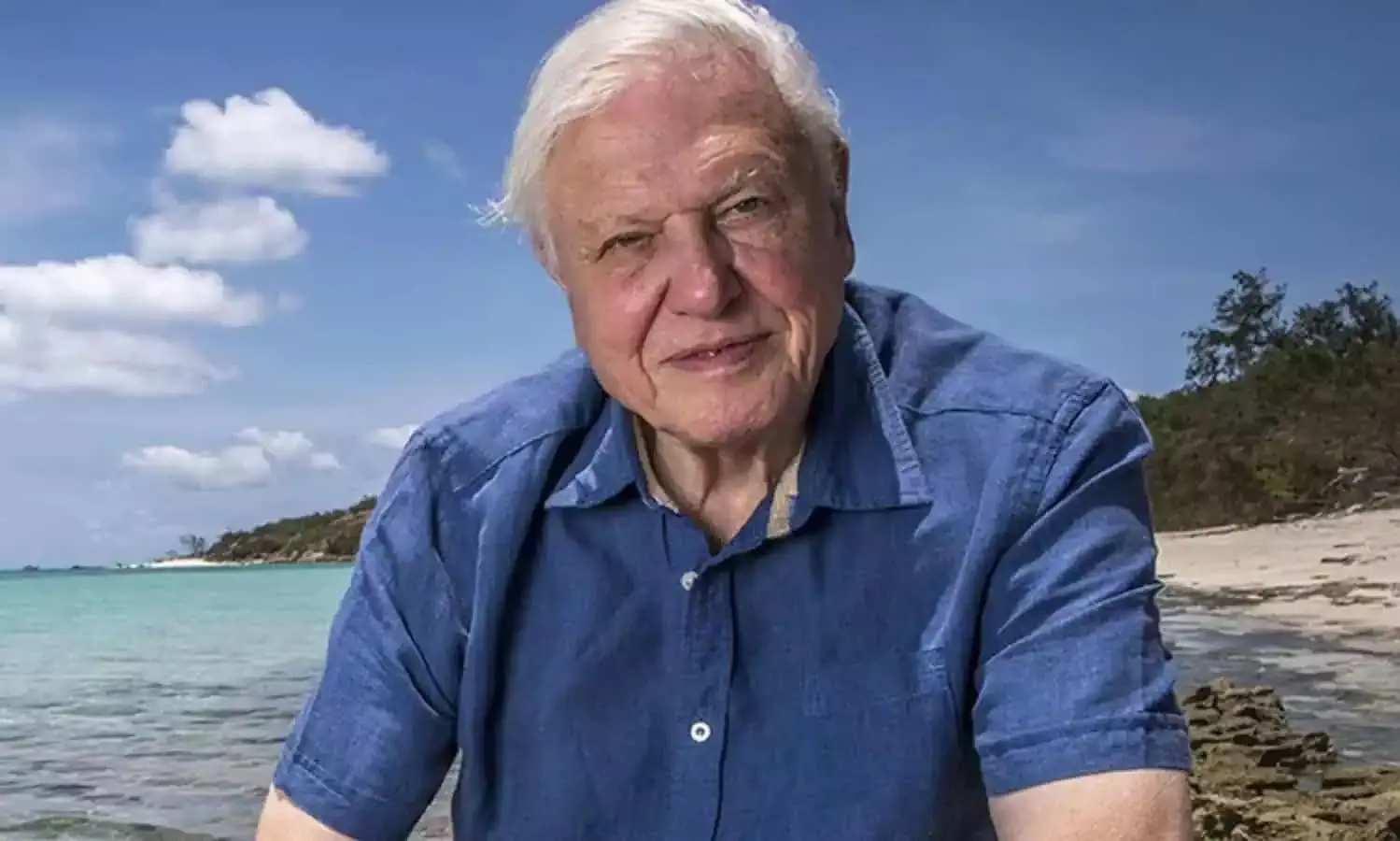

At 100, Sir David Attenborough stands not just as a broadcaster, but as one of the modern era’s most influential communicators. For decades, he has helped audiences see the beauty, complexity and fragility of the natural world, while also underscoring the urgent need to protect it for the future.
Born David Frederick Attenborough on May 8, 1926, in Isleworth, UK, he grew up on the campus of the University College of Leicester, where his father served as principal. He was the middle of three brothers; his elder brother Richard became a celebrated actor, while his younger brother John rose to prominence in the automobile industry.
After studying natural sciences at Cambridge University, Attenborough began his career at the BBC, where he gradually moved into wildlife and cultural programming. His early work revealed both his sharp eye for storytelling and his deep affection for the natural world, qualities that would define his long career.
Over the years, Attenborough became the trusted voice guiding generations of viewers through forests, oceans, deserts and polar landscapes. With landmark series such as Life on Earth, The Living Planet, Planet Earth, Blue Planet and Frozen Planet, he transformed wildlife documentary-making into a rich visual and emotional experience.
What set his work apart was not only the scale of what he showed, but the way he showed it. His narration was marked by curiosity, warmth and restraint, allowing viewers to feel as though they were exploring the world alongside him rather than being lectured from a distance.
As filmmaking technology advanced, so did his documentaries. High-definition cameras, aerial shots, underwater sequences and microscopic close-ups opened up new ways of seeing animal behaviour and ecosystems, making his programmes more immersive than ever before.
In later years, Attenborough’s role expanded beyond broadcaster to environmental advocate. As he witnessed habitat loss, climate change and biodiversity decline, his message grew sharper and more urgent: humanity must act before the damage becomes irreversible.
Yet his outlook has remained fundamentally hopeful. He has consistently argued that nature can recover if people choose to protect it wisely and collectively. That balance of scientific realism and optimism has given his work lasting power across generations.
At 100, Attenborough remains a towering figure whose influence extends far beyond television. He has deepened public understanding of nature, inspired conservation and helped millions feel a stronger connection to the planet we share.