














NFHS-6 shows gains in health, nutrition, and social indicators across India
text_fields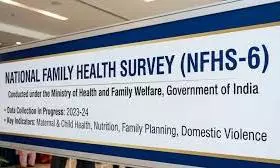

India has recorded improvements across several health, nutrition, and social development indicators, according to the National Family Health Survey 2023-24 (NFHS-6) released by the Union Ministry of Health and Family Welfare.
Conducted by the International Institute for Population Sciences, Mumbai, the survey provides data on population, health, and nutrition across India and all States and Union Territories except Manipur. The survey was carried out between May 2023 and December 2024, and also introduced new topics such as direct bank transfers, self-help groups, digital literacy, and financial transactions.
The survey found that India's population is ageing, with the share of people aged 60 and above rising to 12.9 per cent from 11.8 per cent in the previous survey.
Financial inclusion and health coverage also improved significantly. The proportion of households with at least one member covered by a health insurance or financing scheme increased to 60.2 per cent from 41 per cent, while 98.2 per cent of households reported having a bank or post office account.
Digital literacy saw substantial growth. The percentage of women who had used the internet nearly doubled from 33.3 per cent to 64.3 per cent, while internet use among men rose from 51.2 per cent to 80.5 per cent.
The survey recorded a decline in underage marriages. Among women aged 20-24, the proportion married before the legal age of 18 fell to 20.1 per cent from 23.3 per cent. India's total fertility rate remained stable at 2.0 children per woman, while urban areas recorded a lower rate of 1.6.
Maternal healthcare indicators improved, with 65.2 per cent of mothers receiving at least four antenatal care visits during pregnancy, up from 58.5 per cent. The share of mothers consuming iron folic acid supplements for at least 180 days increased to 37.8 per cent from 26 per cent.
Among children aged 12 to 23 months, full immunisation coverage rose to 82.6 per cent from 76.6 per cent. Coverage of the three-dose rotavirus vaccine increased sharply from 36.4 per cent to 85.4 per cent.
Child nutrition indicators also showed progress. Stunting among children under five declined from 35.5 per cent to 29.3 per cent, while severe wasting fell from 7.7 per cent to 5.2 per cent. However, exclusive breastfeeding during the first six months dropped to 55.8 per cent from 63.7 per cent, and only 15.1 per cent of children aged six to 23 months received an adequate diet.
The survey also recorded a rise in Caesarean deliveries, which increased to 27.2 per cent nationally from 21.5 per cent, with private healthcare facilities accounting for a majority of such births.