











Border points with India closed for 72 hours ahead of Nepal polls
text_fields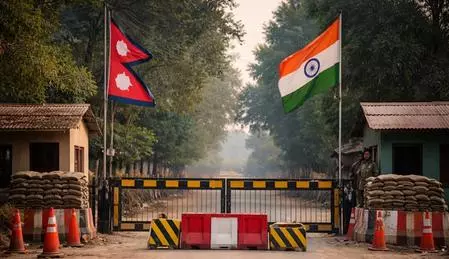

Kathmandu: Nepal-India border checkpoints have been blocked for 72 hours, beginning at midnight Monday, as part of election security preparations ahead of Nepal's parliamentary elections on Thursday.
There is a tradition of blocking border points between the two nations to prevent 'unwanted elements' from disrupting elections in Nepal or India.
"The cross-border movement of people and goods, except essential items, has been halted for 72 hours starting from Monday midnight," Deputy Inspector General Bishnu Prasad Bhatta, spokesperson for the Armed Police Force (APF), told IANS.
He mentioned that it will last until Thursday midnight.
The APF has been tasked with ensuring border security.
The decision to close all border points with India was taken in line with the Integrated Security Plan 2025 for the elections. Local administrations in Nepal's bordering districts have also notified the public that the Indo-Nepal border will remain closed for 72 hours.
DIG Bhatta announced that during the closure, essential goods such as fuel will be permitted for transportation, IANS reported.
Additionally, arrangements will be made to assist foreign nationals stranded at border areas in reaching their destinations within Nepal.
Nepal is holding fresh parliamentary elections to elect 275 members to the House of Representatives, the lower house of Parliament.
The government led by former Prime Minister K.P. Sharma Oli was overthrown by the violent Gen Z movement in early September last year, leading to the formation of an interim government headed by Prime Minister Sushila Karki, with a mandate to hold elections within six months.
Ahead of the elections, local administrations in border districts have also banned the use of vehicles with foreign number plates. It is common practice in Nepal's border regions to use vehicles with Indian number plates.
DIG Bhatta said coordination has been established with India's Sashastra Seema Bal (SSB) to prevent infiltration by unwanted groups.
"We have to be more vigilant because weapons and ammunition looted during the Gen Z movement have not yet been recovered," he said.