















Blue micromoon to light up the night sky this weekend
text_fields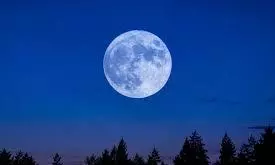

Skywatchers will have a chance to witness a rare blue micromoon this weekend, a phenomenon that combines a blue moon and a micromoon.
Despite its name, the moon will neither appear blue nor dramatically smaller than usual.
A blue moon most commonly refers to the second full moon occurring within a single calendar month. Since the lunar cycle lasts about 29.5 days, most months have only one full moon, making a second full moon relatively uncommon.
A micromoon occurs when a full moon coincides with the moon being near the farthest point in its elliptical orbit around Earth. Although it appears smaller than a supermoon, the difference is modest. A micromoon looks about 14% smaller than a supermoon and roughly 6% smaller than an average full moon.
Blue moons occur every few years, while micromoons happen two or three times annually. The combination of the two is much rarer, occurring only about once every couple of decades.
The full moon will reach its peak on May 31 at 9:45 am BST. However, astronomers say the moon will appear full throughout the night before and the night after the exact peak, making Saturday and Sunday night the best times for viewing.
In the Northern Hemisphere, the moon is expected to remain relatively low in the sky, while observers in the Southern Hemisphere will see it much higher overhead.
Astronomers note that the moon can occasionally appear bluish due to atmospheric conditions caused by large forest fires or volcanic eruptions, but that effect is unrelated to the term "blue moon."
The next blue micromoon using the same definition is expected in the UK in 2066, while some regions, including the United States, are projected to see the phenomenon again in 2053.