














Farewell, Franco Baresi: the eternal guardian of San Siro
text_fields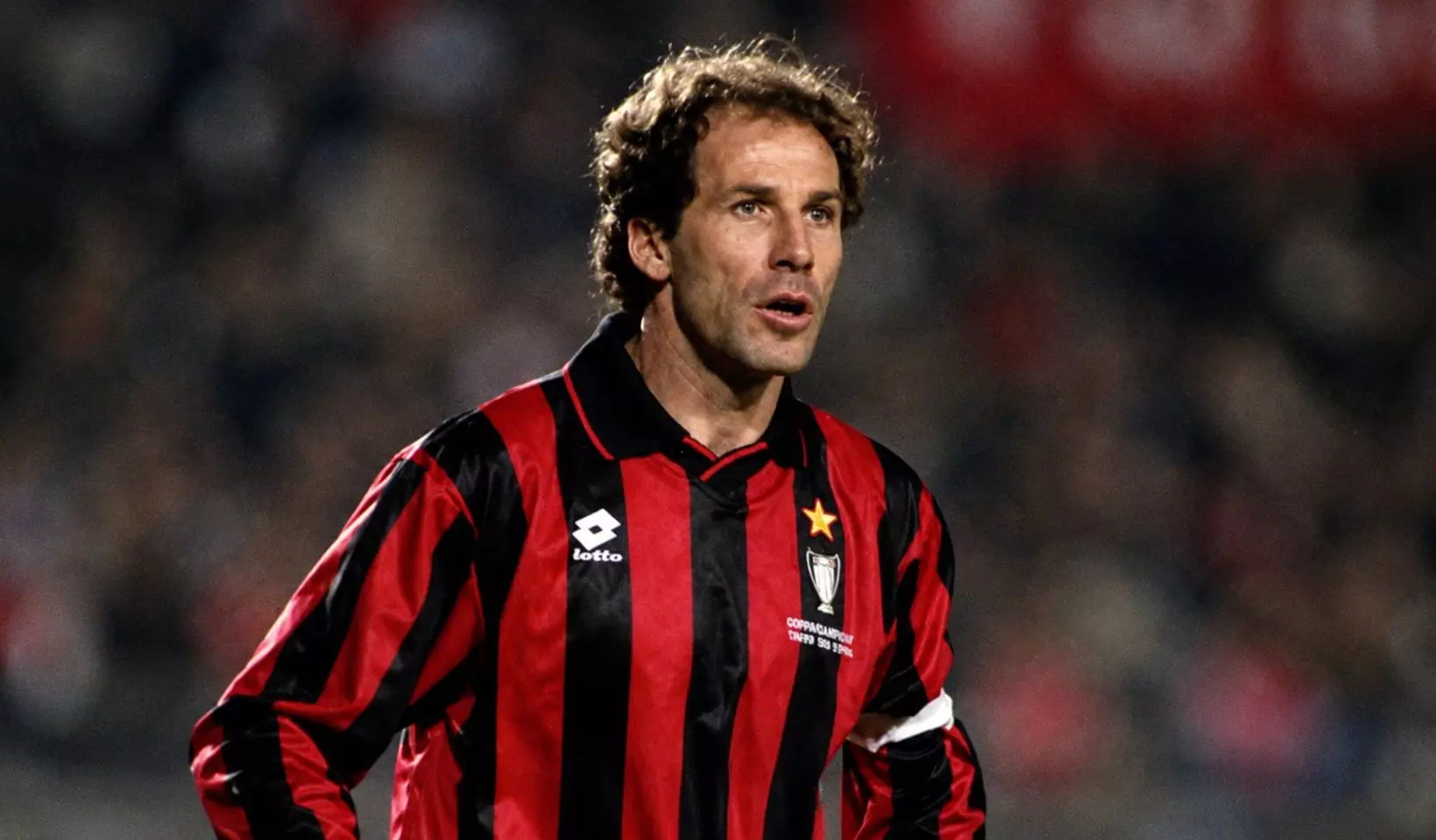

When AC Milan walked onto the San Siro pitch in the 1990s, there was always one figure who embodied the club's spirit before a ball was even kicked. Wearing the captain's armband and leading from the front without theatrics, Franco Baresi represented a rare blend of authority, composure and unwavering loyalty. His passing at the age of 66 marks not merely the loss of one of football's greatest defenders, but the end of an era that redefined defensive excellence.
Baresi's association with Milan began in 1977 when he joined the club as a 17-year-old. Over the next two decades, he remained devoted to the Rossoneri, never wearing another club's jersey despite opportunities elsewhere. In an era increasingly defined by transfers and lucrative offers, his loyalty became as iconic as his football.
For 15 years, Baresi captained Milan through one of the most successful periods in the club's history. He made 719 appearances, scored 33 goals despite playing as a defender, and lifted six Serie A titles, three European Cups, four Supercoppa Italiana trophies, two UEFA Super Cups and two Intercontinental Cups.
Yet statistics alone cannot explain Baresi's greatness. Alongside Paolo Maldini and Alessandro Costacurta, he formed a defensive line that came to symbolise tactical perfection. Possessing an extraordinary ability to read the game, Baresi rarely relied on reckless tackles or physical intimidation. Instead, anticipation, positioning and intelligence made him one of football's finest sweepers and one of the greatest defenders the game has ever produced.
His influence on Milan became so profound that after his retirement in 1997, the club permanently retired the No. 6 jersey. It remains one of the rarest honours in world football, reserved for a player whose contribution transcended generations.
Baresi's legacy extended well beyond San Siro. He represented Italy 81 times and was part of the squad that lifted the 1982 FIFA World Cup. However, it was the 1994 World Cup in the United States that best captured his character.
Early in the tournament, Baresi suffered a serious knee injury that appeared to end his campaign. Undergoing surgery, he returned in a remarkable time to captain Italy in the final against Brazil. Battling through pain, he marshalled the defence for 120 minutes against the attacking threat of Romário and Bebeto, helping force the match into a penalty shootout.
Football, however, delivered one of its cruellest moments. Baresi stepped forward to take Italy's opening penalty but sent the ball over the crossbar. Brazil went on to win the World Cup, and the image of the Italian captain kneeling in despair became one of the defining photographs in football history. Despite the missed penalty, his courage to return from injury for the final remains one of the sport's greatest displays of resilience.
Baresi's rise to greatness was anything but straightforward. As a boy, he was considered too small and physically weak. Inter Milan, where his elder brother Giuseppe played, rejected him during trials. That rejection became football's gain. AC Milan recognised the potential others overlooked, and the slight youngster evolved into the club's greatest defensive leader.
His quiet personality often contrasted with the brilliance of Milan's attacking stars, including Marco van Basten and Ruud Gullit. While they dazzled supporters with goals and flair, Baresi remained the team's emotional and tactical anchor, commanding respect through consistency rather than spectacle.
Recognition followed. In the 1989 Ballon d'Or voting, he finished second behind teammate Marco van Basten—an extraordinary achievement for a defender at a time when attacking players overwhelmingly dominated football's highest individual honour.
In recent years, Baresi continued to serve as an ambassador for Milan and remained closely connected to the club that defined his life. Despite undergoing lung surgery in August 2025, he made one of his final major public appearances during the Winter Olympics ceremony held in Milan earlier this year, receiving a warm reception from supporters.
Franco Baresi leaves behind a legacy built not only on trophies but on values that have become inseparable from AC Milan's identity—discipline, humility, leadership and absolute commitment to the badge. His career proved that greatness is not measured solely by goals or moments of glory, but by the trust a team places in the figure standing quietly at its heart.
Long after the cheers at San Siro fade, the No. 6 jersey will remain untouched, a permanent reminder that some players do not simply represent a club—they become part of its soul. For generations of football lovers, Franco Baresi will endure not merely as a Milan legend, but as one of the greatest defenders the game has ever known.