


















ChatGPT introduces interactive visual learning for over 70 math and science topics
text_fields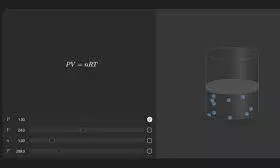

OpenAI’s ChatGPT has introduced new interactive visual features designed to help users better understand math and science concepts.
The update adds dynamic visual explanations that allow learners to see how formulas, variables, and relationships change in real time.
In a blog post announcing the feature, OpenAI said the goal is to make complex concepts easier to grasp, especially for students who struggle with abstract ideas.
“For many learners, math and science concepts feel abstract and hard to understand,” the company said.
It cited a recent survey by Gallup in which more than half of US adults said they struggle with math, while many parents reported they do not feel confident helping their children learn the subject.
The new feature will initially cover more than 70 core math and science topics, including concepts such as the Pythagorean theorem, the Ideal Gas Law, and the Mirror equation.
According to OpenAI, the aim is to improve conceptual understanding by letting learners interact directly with the material. When users ask ChatGPT about certain topics, the platform can now display an interactive module alongside its explanation. Learners can adjust variables, modify formulas, and instantly see how those changes affect graphs and results.
The feature is being rolled out globally across all ChatGPT plans as part of the company’s push to make the platform more interactive and useful for learning.
With more than 140 million weekly users, ChatGPT has increasingly focused on education tools while facing growing competition from AI developers such as Google and Anthropic.
OpenAI said research suggests visual, interaction-based learning can lead to stronger conceptual understanding than traditional instruction for many students.
Early testing of the feature also produced positive feedback from students, parents, and educators. High school and college students reported that the visuals helped them better understand how variables connect, while parents said it provided a more engaging way to work through problems with their children. Educators added that such tools could help students focus on understanding concepts rather than simply memorising formulas.