









No, Akhlaq has never lived!
text_fields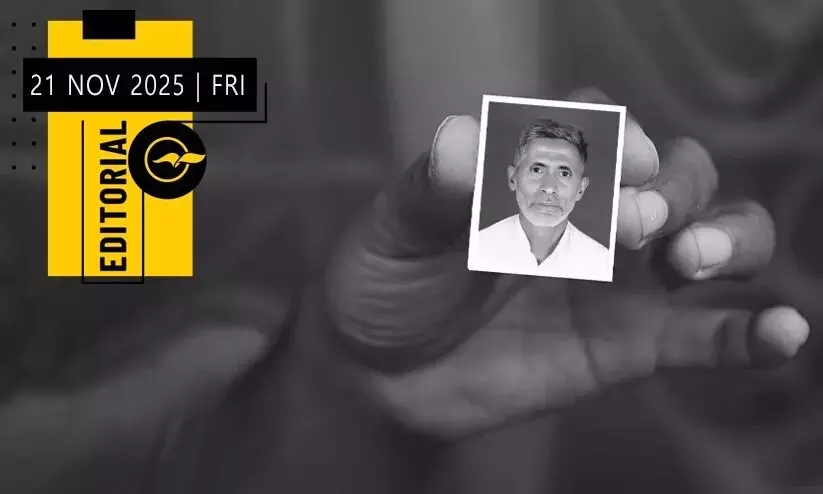

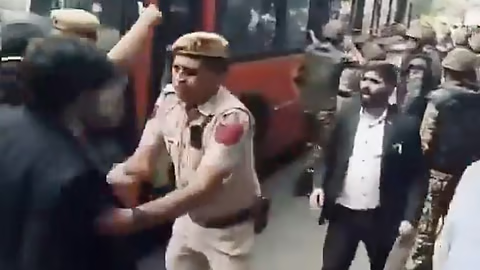
What is the first image that comes to mind when you hear the name Dadri? It is the face of Shaista, a young woman sobbing uncontrollably with her head resting on a relative’s shoulder. Her father, Mohammad Akhlaq (52), who lived in Bisada village in Dadri in Uttar Pradesh’s Gautam Buddha Nagar district, was dragged out of his home and beaten to death by a communal mob during the 2015 Bakrid festival after being accused of storing beef. Akhlaq’s mother Asgariya and his son Danish, who tried to stop the attackers, were also brutally assaulted. Under the rule of the NDA government led by Narendra Modi, which came to power in 2014, Hindutva groups have consistently been using the pretext of the cow to begin a campaign of Muslim persecution. The entire country, except for the Sangh Parivar and their supporters, was shaken by the incident. Civil rights activists and secular media have sounded the alarm about the intolerance that has been hidden in the country and the brutality of the Sangh Parivar agenda. Prominent cultural voices of India including Nayantara Sahgal, Uday Prakash, Ashok Vajpeyi, and Prof. Sarah Joseph returned their Sahitya Akademi awards in protest, and even some BJP ministers were forced to condemn the violence. Although several people were arrested, the accused enjoyed every form of protection from the ruling dispensation. One of the murder accused, who died in jail after contracting chikungunya, was given a public funeral where his body was even draped in the national flag in the presence of a Union minister. Soon, all the accused were released, and many of them were given government jobs facilitated by BJP leaders. After Yogi Adityanath became Chief Minister, the case was turned against Akhlaq’s own family.
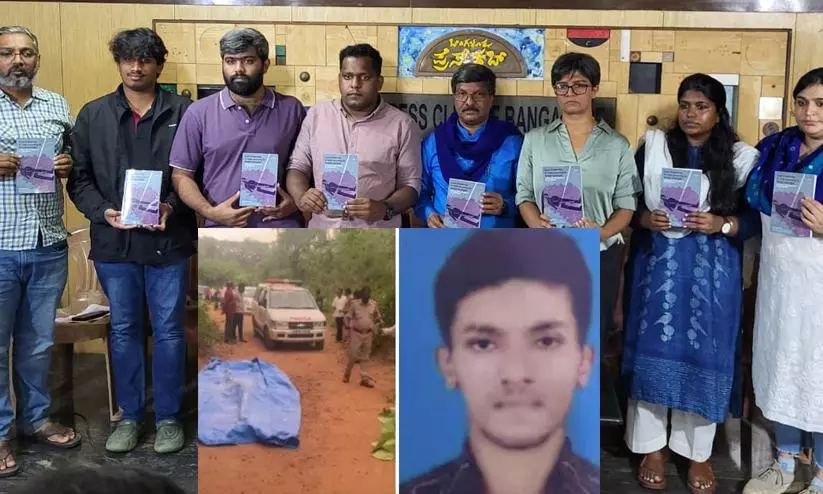
Ten years later, the Adityanath government in Uttar Pradesh has now filed an application in court seeking the withdrawal of all charges against the accused, including murder. The case, already weakened long ago through tactics such as turning the funeral of the accused who died in jail into a political spectacle, issuing threats through khap panchayats, tampering with meat samples sent for testing, and destroying evidence, is now on the verge of being formally erased. This case stands as one of the clearest examples of how the rule of law can be subverted in a democratic country. Akhlaq’s murder was not the first lynching after the Modi government came to power, but it was from that moment that such incidents spread across the country like an epidemic. If one counts the names of a few people who were martyred in the lynchings, it will show names of Hafiz Junaid, Alimuddin Ansari, and Pehlu Khan, but then the killings became so numerous that we lost count. Near Mangaluru, Karnataka, Sangh Parivar activists fabricated a false story and beat a young Malayali man to death. The latest in this long chain of tragedies is a 17-year-old boy from Maharashtra’s Ahilya Nagar who was accused of cattle smuggling and was brutally assaulted by communal vigilantes, left grievously injured, and eventually died by suicide after the mob trial and the social-media humiliation. On the third anniversary of Akhlaq’s murder, his daughter Shaista addressed a public meeting organised in Delhi by the All India Democratic Women’s Association. She told the nation: “They snatched my father away from me. Am I supposed to remain silent? Are you all going to stay silent too? Three years ago, they killed my Abbu. Tomorrow it could be anyone. If humanity dies, nothing else will remain. I believe in justice, and I stand here because I am determined to fight for it.”
Describing mob assaults and lynchings as a brutal form of “mob rule,” the Supreme Court had once directed both the Central and State governments to urgently put preventive measures in place. Yet nothing changed. This anti-people war tactic, which keeps the minority community in fear of ethnic violence and the saffron army in high spirits through small riots, is even being used to win elections. Akhlaq was the father of an Air Force personnel who served the nation in uniform. In the days following the Dadri incident, senior Air Force officials publicly stated that they would not allow the family of a serving airman to be hunted down and that they stood firmly with them. The Air Force even stepped in to arrange safe accommodation and support for the family. Yet no official institution has come forward to protect a family that has gone through the legal system seeking justice from being betrayed in broad daylight. Once the Akhlaq case is quietly closed, the same fate will await all similar cases. Those who are prepared to rewrite even the assassination of the Father of the Nation, Mahatma Gandhi, as merely a “death,” will hardly hesitate to rewrite the histories of Akhlaq and Junaid. The day is not far when they may even claim that a man named Akhlaq never existed on this earth at all. Justice is being denied not only to the martyr Akhlaq or his family, but to every Indian who believes in the rule of law.