















Drone attack on British base in Cyprus: Cui bono — Iran or Israel?
text_fields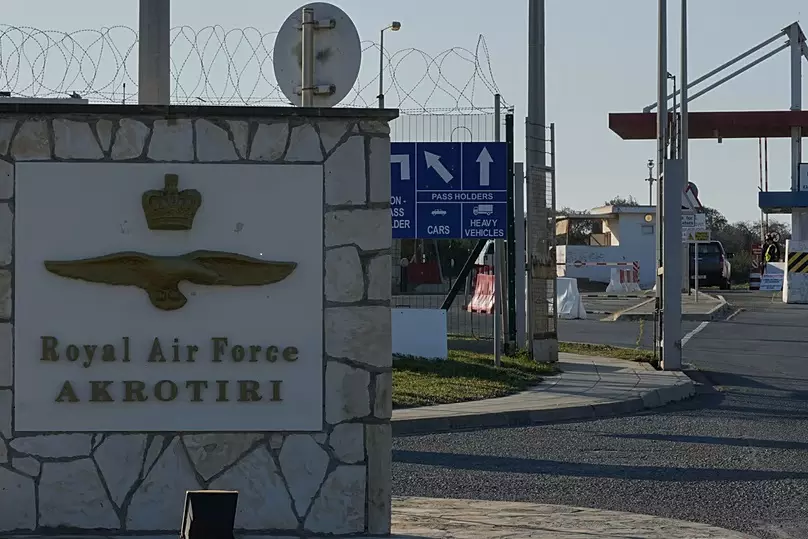

Since Israel and the US began their illegal war against Iran on 28 February, three drones were fired at the British air bases on the Mediterranean island of Cyprus. The Royal Air Force (RAF) shot down the drones, and no one was injured.
Iran has not said it fired drones at the bases: RAF Akrotiri and RAF Dhekelia. Usually, Iran boasts that it is behind drone attacks because Tehran wants to let its foes know that it can hit them. There is no proof that Iran fired these drones. Iran does not need more enemies. Why on earth would it provoke the United Kingdom when the UK had said it was determined to stand aloof from the conflict?
British Prime Minister Sir Keir Starmer refused to let the United States use British air bases for these attacks on Iran. President Trump expressed his displeasure and said that Starmer is no Churchill. The United States Air Force has planes in the United Kingdom, and RAF Fairford has a very long runway, which is needed for some of the USA’s stealth bombers. Starmer also declined to allow the USAF to use RAF Diego Garcia in the Indian Ocean for such attacks.
Since the Shaheed drones were fired towards Cyprus, the UK changed its tune. London has granted permission to the USA to use its air bases to destroy Iranian missile sites. Starmer claims this is solely defensive. Defence would involve shooting down missiles in the air. Aerial bombardment of missile sites in Iran will kill Iranian military personnel and civilians.
It is far from clear what the targets of the drones fired at Cyprus were. It is very possible that the real target was a US Navy warship in the Mediterranean Sea or perhaps an Israeli one. A Ukrainian drone recently struck a Russian oil tanker in the Mediterranean, leaving open the possibility that the Shaheed drones shot down over Cyprus were fired by Ukrainians as a false flag or were indeed aimed at Russian assets in the Mediterranean. Ukraine has captured unfired Shaheed drones in its recent counter-offensive against Russia.
The claim that Iran launched these drones against the British bases on Cyprus does not stand up to a moment’s scrutiny. Who would want to draw the UK into the war against Iran? One always asks of a crime: cui bono? (Latin for ‘who benefits’). The country with the motive, means, and opportunity is Israel. Israel is the master of false flag operations. The State of Israel is only 150 km from Cyprus. Of all its neighbours, it has the warmest relations with Cyprus. This is especially so since Turkish-Israeli relations turned sour ten years ago.
Cyprus is an island nation of only 10,000 square km. It is a member of the European Union but has refused to apply for NATO membership. That is because Turkey (a NATO member state) is occupying a third of the country. Seventy per cent of Cypriots are of Greek Christian heritage, and many aspire to absorption into Greece. About 20% of Cypriots are Turkish Muslims. There is a significant immigrant community in Cyprus from Britain, India, China, Nigeria, Romania and elsewhere.
Because Cyprus is not in NATO, it needs allies, and Israel could be one. The Cypriots fear that, despite the presence of United Nations peacekeepers, the Turks may invade again to ‘finish the job’ and take the entire island. The United Nations has proven itself feeble, and the USA is not even paying its dues.
International law is in abeyance, and Turkey may say that, as Russia and the US can attack other nations with impunity, then Turkey can take the whole of Cyprus and get away with it. The Israelis would like to convince the Cypriots to allow them an air base and a naval base on the island. Cyprus might be persuaded to agree in return for an Israeli promise to defend the country.
When Cyprus was granted independence from the United Kingdom in 1960, it was stipulated that Cyprus acknowledge the British Sovereign Base Areas. These two British bases are British in perpetuity, and Cyprus has no say over them whatsoever. Some Cypriots are unhappy about this. Drones have been fired at their country only because of the British presence.
Drones could easily miss the British bases and land in Cyprus proper, killing people. Even when the British shoot down drones, the debris will fall to earth and could kill Cypriots. A foreign power could even launch a ground invasion to get at those two RAF bases, and this invasion could go through Cyprus proper. The United Kingdom did not defend Cyprus when it was invaded in 1974.
Cyprus is outside the range of Iranian drones. The drones that were shot down over the island were said to be Shaheeds, i.e. of Iranian manufacture. But Russia also manufactures them. Russia could have sold them on to other countries. Or indeed they could have been Shaheed drones captured from Iran or Russia in Syria, Ukraine or other places where these countries have been fighting over the last several years.
Another theorem has been postulated. Could it be the pro-Iranian Shia militia in Lebanon, Hezbollah, that fired the drones? Lebanon is close to Cyprus. Again, it does not make sense. Is there a Hezbollah commander foolish enough to do that?
Command and control seem to have broken down in Iran. Since the Supreme Leader was slain, a replacement has not been announced. The commander of the Islamic Revolutionary Guard Corps, the Defence Minister and other top echelon military and political leaders have been liquidated. President Pezeshkian is not in public.
It is said by people in the military and intelligence services of other countries that Pezeshkian and others are probably not communicating by phone and email. If he does so, he allows the Israelis and Americans to track him. He does not want to be geolocated because that would spell doom. The Iranians may have gone back to handwritten notes as a means of communication, just as Hamas did before the 7 October attacks. Snail mail is slow but almost impossible to intercept.
Is the President even in command of the Iranian Armed Forces? This may mean an uncoordinated campaign, but it also means an unpredictable one. That is, therefore, harder for Israel and the US to counteract, along with their Gulf Arab allies.