


Is a ceasefire imminent?
text_fields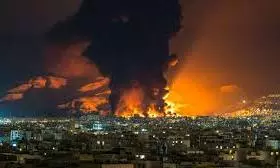

What the world is witnessing today is what happens when the people of the world’s most economically and militarily powerful nation elevate a bizarre figure who embodies sheer recklessness to absolute authority. As the firestorm unleashed on February 28 by the Donald Trump–Benjamin Netanyahu alliance against the sovereign nation of Iran enters its twenty-fifth day, the consequences are becoming ever more devastating for countries across the globe. The campaign, which rides roughshod over all norms of international conduct and the principles of the United Nations, is aimed not only at securing the survival of America’s close ally Israel, but also at disarming and subjugating neighbouring nations it perceives as obstacles to its absolute security and development. According to assurances reportedly made by Trump on Tuesday, Iran has been given five more days to reopen the Strait of Hormuz — a route critical to maritime traffic towards the East and the West of the Gulf region. Iran has also reportedly been told that its energy facilities will not be targeted until this deadline expires. However, Iranian officials maintain that no such discussions have taken place with Trump, asserting instead that their firm warning has forced the U.S. President to step back. In the absence of credible evidence, it is difficult to believe that any sincere and meaningful engagement is currently underway between the two sides. Addressing the Indian Parliament for the first time since the outbreak of war in West Asia, Narendra Modi acknowledged that the continuing conflict is deeply concerning and has posed an unexpected challenge to India. Given his government's continued alignment with Trump and its close strategic ties with Israel, hardly anything more can be expected from him. At a time when even the very existence of Iran — a nation that has historically maintained close ties with India and has generously met the country’s oil needs during times of crisis — is under threat, questions are being raised about why the Indian government has been unable to pursue meaningful diplomatic interventions. This concern becomes even more urgent when one considers the severe and destructive impact of the war on the Arabian Gulf, where millions of expatriate Indians live and work. Under these circumstances, it is imperative that India take the lead in pursuing swift and peaceful efforts to resolve the crisis.
Also read: Trump’s Iran strikes test the limits of law- and risk unraveling the region
It is a fundamental reality that the severe crisis triggered by Iran’s closure of the Strait of Hormuz has led to fuel shortages, scarcity of cooking gas, and spiralling inflation in countries including India. However, what compelled Iran to take this step was the series of airstrikes launched by the Zionist-US alliance against its key energy infrastructure and oil storage facilities. Iran had already warned that if such attacks continued, it would have no option but to target oil fields and gas reserves across the Gulf region. That warning is now turning into reality. A country that has made it clear that it is prepared to fight until the very end for its survival, Iran cannot be forced into retreat merely by a chorus of global condemnation. Tehran’s position remains firm: the conflict can only come to an end if it is granted adequate compensation for the extensive damage it has suffered, along with a credible guarantee that such attacks will never be repeated. In the present circumstances, however, it appears unlikely that either the United States or Israel would be in a position to offer such assurances. At the same time, Iran too must be willing to commit to a framework of non-aggression and peaceful coexistence, backed by a credible assurance that it will not pursue the development of nuclear weapons. The prospects for an immediate ceasefire in West Asia now hinge on the swift and active diplomatic interventions of countries such as Russia, China, and Turkey, which are widely seen as maintaining close ties with Iran. Meanwhile, with anti-war sentiment intensifying by the day within his own country, Donald Trump may find it increasingly difficult to sustain a prolonged course of action driven by untenable obstinacy.
Also read: Tehran choked by toxic oil fires after Israeli strikes, health fears mount for millions