












Granting permission for euthanasia
text_fields

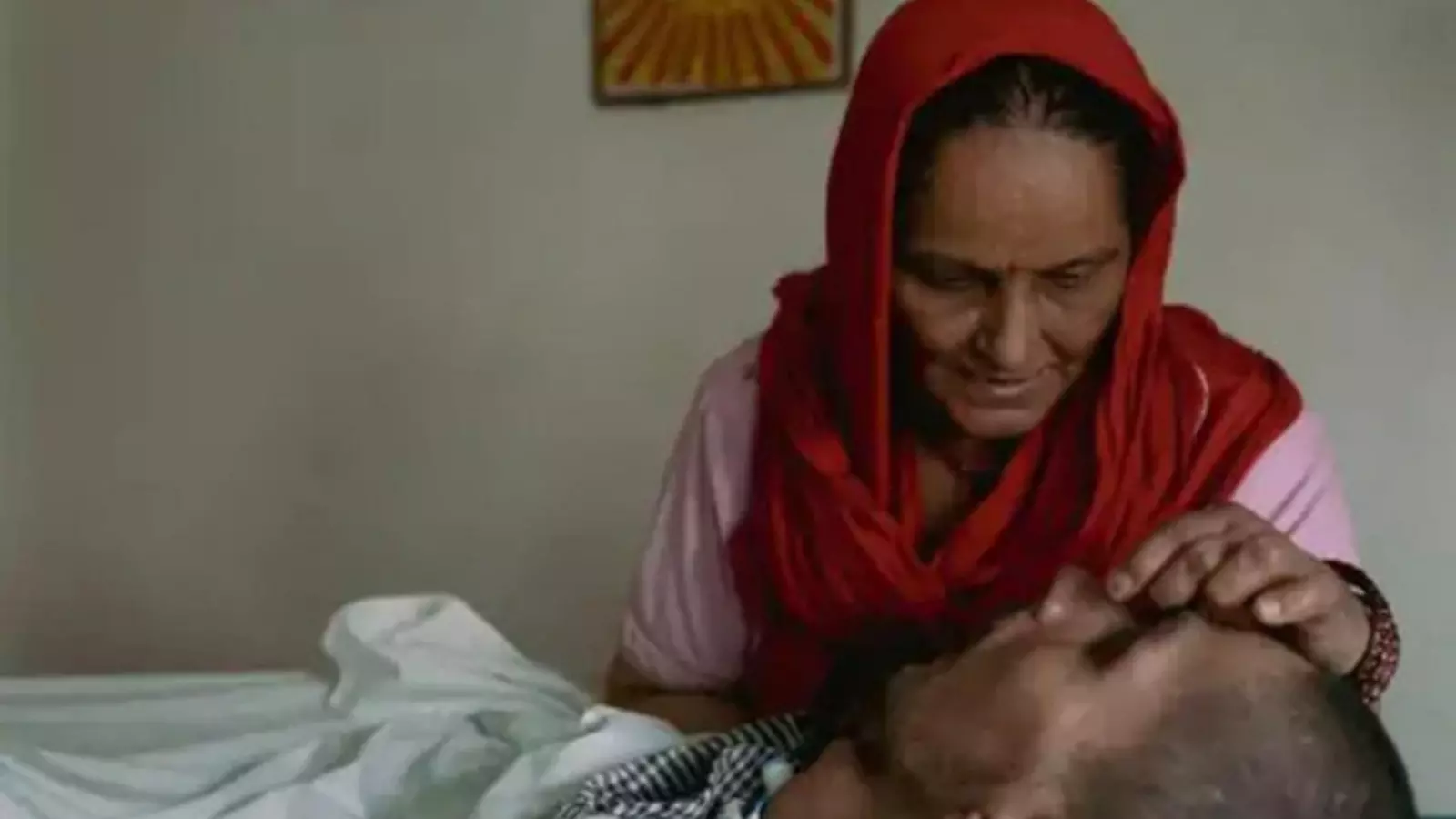
The Supreme Court has granted permission for euthanasia for the first time in India. A bench of Justices J.B. Pardiwala and K.V. Vishwanathan ruled that passive euthanasia can be allowed for Harish Rana of Noida, who has been unconscious and unable to move for 13 years after suffering a serious head injury following a fall from a building. Harish, a B.Tech student, had been undergoing treatment since he suffered serious injuries after falling from the fourth floor of a building, but as there was no improvement in his health condition, his parents approached the Supreme Court seeking permission for euthanasia. Harish Rana is being kept alive through tube-fed nutrition and water (Clinically Administered Nutrition and Hydration - CANH). The apex court ruled that this life-sustaining system can be removed, treatment stopped and Harish can be allowed to die a natural death. Apart from the parents, two medical committees had also taken the stand that Harish could be euthanised. The court also considered this. However, it has been suggested that Harish, who is undergoing treatment at home, should be shifted to AIIMS, New Delhi, and that the life support system should be removed there under strict supervision of doctors.
The concept of euthanasia dates back centuries. Both Plato and Lucius Seneca have explained euthanasia on different occasions. While Plato criticised the unnecessary prolongation of treatment for patients whose death is certain, Seneca held the view that individuals can choose death as well as life. The basic principle of euthanasia is that once medicine and doctors have accurately assessed that the patient has no option other than death, he should be allowed to die ‘comfortably’ and not be kept alive artificially. However, the question of how even medicine can accurately determine that someone’s death is certain is also raised often. The moral and religious dimensions of euthanasia have also been discussed in society for ages. It was amidst these discussions that the first euthanasia in the world took place in 1915. A doctor named Harry J. Haiselden, who had decided that it would be better for a baby born with a genetic defect to die than to live, performed euthanasia in a hospital in the US. His decision to declare treatments, including surgery, unnecessary and to leave the baby to die sparked major controversy. It was also a time when demands were being made to legalise euthanasia in the US. More than a hundred years since then, euthanasia is now legal in many countries around the world.
There are two types of euthanasia: active euthanasia, which involves administering drugs to the patient to cause death, and passive euthanasia, which consists in withholding treatment, as is being attempted in cases like that of Harish Rana. Neither type of euthanasia is legal in India. However, many people have approached courts in the country in the past seeking permission for passive euthanasia. Even then, no favourable verdict was given by the courts. The general reason for this was that there was no specific law on euthanasia. However, every time the issue was discussed in the courts, steps were taken towards legislation by the judiciary. No one can forget Aruna Shanbaug, the Mumbai nurse who was brutally sexually assaulted in a hospital in 1973 and remained unconscious for four decades. Aruna’s friend approached the Supreme Court in 2009 seeking permission for passive euthanasia. The court, which heard the case, rejected the request in 2011. However, the court had then commented on issuing guidelines for euthanasia subject to the approval of the high courts. In 2018, the Supreme Court reiterated the same opinion in another case and asked the government to legislate on the issue. It is another matter that even after seven years there is still no law or provision on the issue.
Meanwhile, the Central government prepared guidelines for passive euthanasia the following year, based on the Supreme Court’s 2023 directive. According to this, the treating doctor must first confirm that the patient has no other option but death. After that, a primary committee consisting of the same doctor and two other experts must approve the euthanasia. Then the family’s permission must be obtained. After that, another expert committee headed by the Chief Medical Officer must also approve it. This committee must reach a decision within 48 hours and inform the district magistrate about it. It was only after Harish Rana’s family followed all these guidelines that they approached the Supreme Court and obtained a favourable verdict. In Harish Rana’s case, the assumption that there was no way for him to return to life according to the physical standards of medical science may be correct. However, the mentality and intentions of all relatives who approach the court seeking permission for euthanasia may not necessarily be the same as those of Harish’s parents. This is where the crucial question related to the medical ethics of euthanasia arises. The Central government’s euthanasia guidelines limit the process largely to the recommendation from a single doctor. If such a doctor abandons the basic ethics of medicine, it could lead to serious danger. This is where the relevance of the legislation repeatedly pointed out by the Supreme Court becomes crucial. In the wake of Harish Rana being granted euthanasia, it is certain that more petitions with similar demands will reach the courts. It is also worth considering whether death is the only option for those declared to be terminally ill. By making palliative care systems more scientific and extensive, it may be possible to support patients who have been declared ‘certain to die’. Therefore, it is imperative to urgently enact a flawless and comprehensive law on euthanasia that takes such matters into account. Even then, the question remains as to who has the authority to take life.