














A mirror view of the administration of justice
text_fields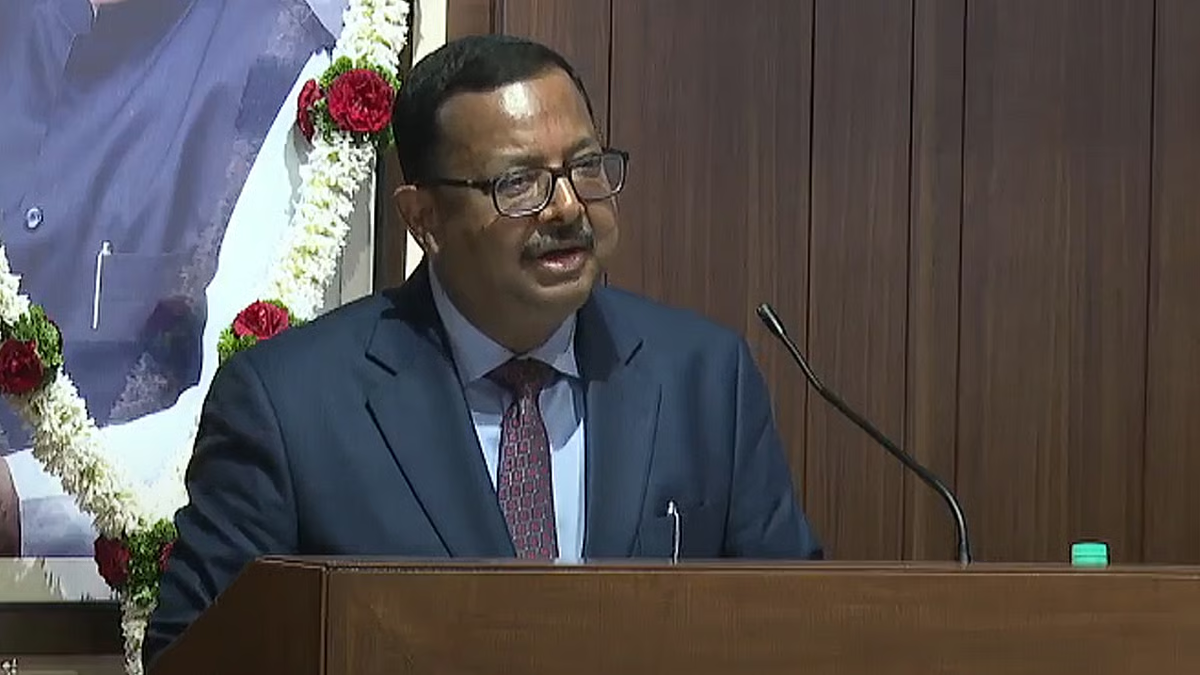

The observations of Justice Ujjal Bhuyan on Sunday in Bengaluru, at the first National Conference of the Supreme Court Bar Association, offer reassurance to defenders of democracy, while also highlighting issues that demand careful scrutiny of democratic institutions. Speaking on “The Role of the Judiciary in Viksit Bharat", Justice Bhuyan revealed that the functioning of the country’s legal and administrative systems is moving in a direction directly opposite to the vision of a developed India. He reminded that the judiciary must recognise its own position, not for constant criticism or applause, but to take proactive steps in safeguarding democracy and protecting citizens’ rights.
The government’s vision of India becoming a developed nation by 2047 is commendable. However, economic growth should not come at the expense of citizens’ freedom and dignity. In a truly developed India, there must be greater space for dissent and dialogue, and disagreements should never be treated as crimes. Justice Bhuyan observed that within the judiciary, many individuals suffer from a “More loyal than the king" syndrome. He noted that this syndrome is responsible for the prolonged imprisonment of accused persons without trial.
The sitting judge of the Supreme Court is not raising allegations lightly. Drawing on his extensive experience in judicial office, Justice Bhuyan presented precise data to open a path for self-auditing within the judiciary. He also criticised the Prevention of Money Laundering Act (PMLA) and the Unlawful Activities (Prevention) Act (UAPA), which are often used to detain individuals for long periods without trial. “The PMLA is a potent weapon. But like any weapon, if it is overused, it will lose its potency,” he said adding that the same applies to the Unlawful Activities Prevention At (UAPA).
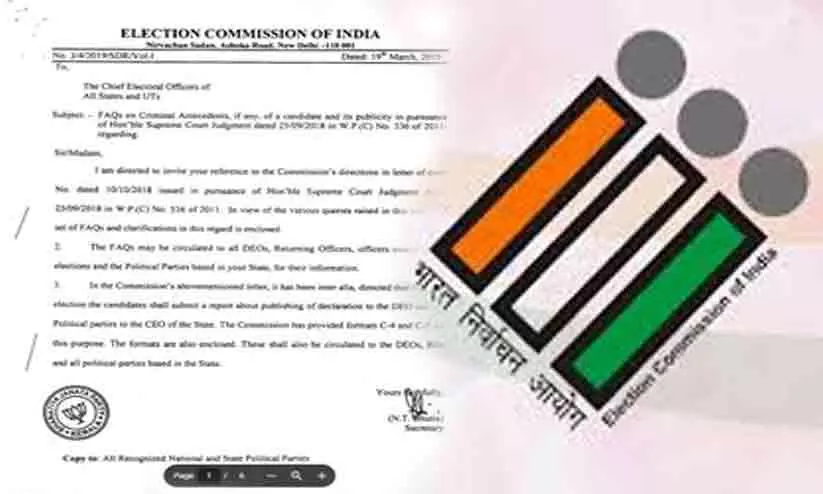
Under this provision, which incarcerates thousands of people, charges are filed in only one to six percent of cases. These figures were presented by the Ministry of Home Affairs in Parliament for the period from 2019 to 2023. Accordingly, it is constitutionally extremely serious that in cases where there is a higher likelihood of no charges being made, people are detained for several years. Even students are being arrested for trivial reasons such as a demonstration, a protest, or a social media post. The procedures, including the FIR and investigation, are prolonged, and ultimately the case reaches the Supreme Court. From there, a special investigation team has to be appointed. Justice Bhuyan also criticises the judiciary’s inability to provide effective defence in such situations. He notes that those who are excessively devoted to the ruling dispensation worsen the system. Political actors may have their objectives, but Justice Bhuyan raises the question of whether the judiciary should yield to them.
The speech also highlighted that even three quarters of a century after gaining independence, India has not achieved social equality. Justice Bhuyan asked what kind of “developed India” is represented by parents who teach their children not to eat food prepared by Dalit women, or by upper-caste individuals who urinate on members of the Scheduled Castes. The point he makes strikes at the very heart of the concept of a “viksit Bharat.” Justice Bhuyan emphasised that the establishment of a developed nation depends on the freedom for citizens to live dignified lives. There is nothing new in his words; they are all universally accepted statements of truth. However, as he himself pointed out, in present-day India, where all official mechanisms have increasingly become instruments for singing the praises of the government, it is highly reassuring that such observations and critiques with self-awareness are being made from the higher echelons of the judiciary.

That the diagnosis should be objective is the first step toward treatment and remedy. In an environment where even self-reflection that leads to self-diagnosis is considered unthinkable, it is reassuring that such awakenings are emerging from responsible quarters. A developed India can only be realised through the development of its human resources as well. Among its essential conditions is the right to live as dignified human beings. The country is currently at a critical juncture where this fundamental right has been severely undermined. Justice Ujjal Bhuyan holds up a mirror to present-day India, where caste and religion are invoked to serve vested political interests, taking lives and robbing citizens of their dignity and pride. What is to be known is whether through this, those who lead the nation have the conscience and humanity to recognise the harm inflicted on the country and to remedy it.