











What a prayer! A letter to Billy Graham’s son
text_fields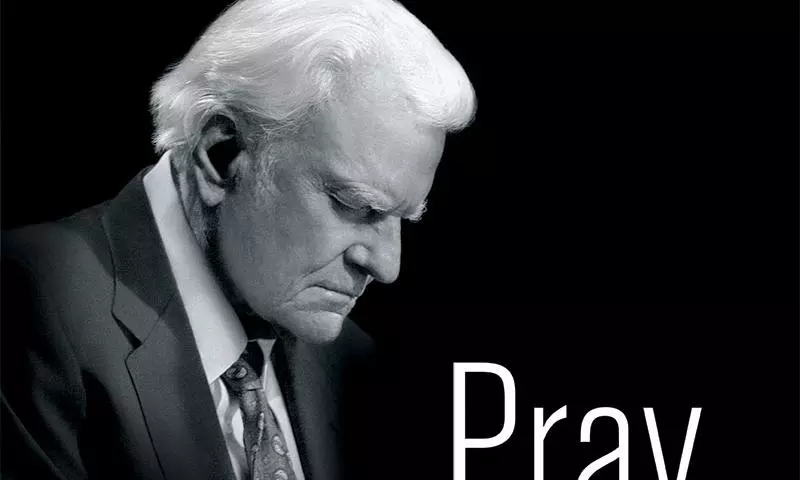
Dear Mr Franklin Graham,
When your father, Billy Graham, visited Kottayam in Kerala, my father travelled from Pathanamthitta to hear him. He later told me that he would have taken my mother and me along, but feared a stampede. I was only three. The only other time the city saw such a great Christian figure was when Pope John Paul II visited in 1986.
Billy Graham was my hero. I followed every piece of news about him. I read his writings and books about him. When I bought Great Souls by journalist David Aikman, it was the chapter on your father that I read first.
As a young man, I was even annoyed with Jawaharlal Nehru for not showing great enthusiasm in meeting Billy Graham. Yet, to their credit, Jawaharlal Nehru and Graham had a long and meaningful conversation beyond the allotted time. Nehru, though an agnostic, believed deeply in India’s cultural traditions and chose to have his ashes immersed in the Ganges.
A few years ago, when my wife and I had the chance to visit Atlanta, I readily agreed to my host’s plan to drive to North Carolina to see the Billy Graham Library. The journey took us through the gentle hills and green countryside of the American South. Tall pine trees lined the highways, small towns appeared at regular intervals, and the quiet beauty of the land gave a sense of peace that is rare in busy cities.
We did, however, wonder if the trip was wise. My host had to do all the driving, while I could only keep him awake with my endless stories. At one point, he dozed off for a second, and the car drifted away from the road. It was a close call. By then, we had returned to Atlanta, just a mile away from the car rental office.
When I visited your father’s home and saw the simple furniture he used, I was deeply moved. The place was modest, almost austere, reflecting a life of discipline and faith. Inside the Library, the atmosphere was calm and prayerful. Visitors walked quietly, reading about his life, listening to recordings of his sermons, and watching videos of his crusades that drew thousands across the world. The surrounding grounds were beautifully kept, with flowers, pathways, and a cross that stood as a reminder of his message. It felt less like a museum and more like a place of reflection.
Of all my visits to the United States, this remains the most memorable. Once, I saw your sister Anne Graham Lotz speak at the Maramon Convention of the Mar Thoma Church on the banks of the Pampa. She held a thick Bible which, she said, belonged to your father.
That Bible reminded me of another moment. While accompanying Prime Minister Manmohan Singh to South Africa, I had the privilege of holding a Bible used by Mahatma Gandhi when he was a young lawyer. I turned to the Sermon on the Mount in the Gospel of Matthew. It speaks of humility, mercy, love for enemies, and the blessedness of peacemakers. It calls on believers to turn the other cheek, to forgive, and to seek righteousness not through power but through compassion. Gandhi found in it a moral force that shaped his philosophy of non-violence. His notes in the margins showed how deeply he had reflected on those words.
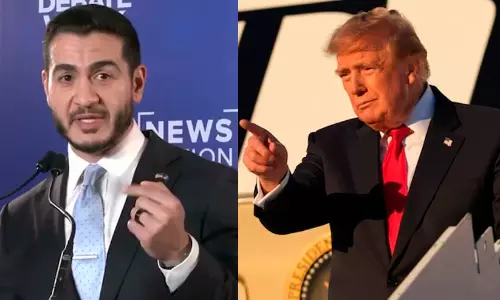
It is against this background that I watched, with shock, your prayer at the White House around Easter, with President Donald Trump standing behind you. Your prayer was brief, but the President seemed restless, unable to keep his eyes closed. At least once, he appeared to glance around, as if distracted by thoughts of power and conflict rather than reflection. The moment felt uneasy rather than solemn.
I never imagined that an evangelist of your standing would use what we in India call unparliamentary words against Iran and its leadership in a prayer heard by millions of people. You repeated claims that Iran seeks to destroy the Jews. If Iran truly intended to possess a nuclear bomb, it would have built one by now. After all, countries like India, Pakistan and North Korea developed nuclear weapons, in some cases without the United States even knowing in advance. Why then assume that Iran, with its scientific capacity, is both uniquely intent and yet somehow incapable?
Yes, Iran uses harsh rhetoric against America and Israel. But rhetoric is not the same as action. Soon after your prayer, the same President spoke of wiping out an entire civilisation. That would mean not just soldiers, but civilians, children, poets, scholars, books, and centuries of culture. It would mean the destruction of language, art, memory, and identity—everything that makes a people who they are.
In your prayer, you praised Trump as God’s chosen instrument. But God is all-powerful. He does not need any leader or army to act. To present a political leader as a divine instrument of destruction is to reduce faith to politics. It is troubling that you do not see the violence carried out by Trump and his ally, Benjamin Netanyahu, but focus only on a threat that has not materialised.
Donald Trump failed to achieve any of the objectives of his Epic Fury. Iran survives; there is no regime change and no popular uprising against the regime. All of Trump’s bombs could not destroy the “enriched uranium” supposedly in Iran’s possession.
Iran, which earlier could not sell oil, can now do so, and it now controls the Strait of Hormuz. Now, nobody believes in the invincibility of America. Trump has exposed himself as reckless and has antagonised everyone, including those in the North Atlantic Alliance. At no time in its history has America felt so isolated.
Would this have been the case if America had truly stood in the position of David against Goliath?
Your father understood Iran better. In his autobiographical book Just As I Am, he wrote about his visit to Tehran and how he encountered protesting students. He admitted that he did not know enough about their politics to argue with them. Instead, he spoke gently, even recalling Queen Esther, a Jewish queen in ancient Persia (modern Iran) who saved her people through courage and diplomacy. Hers is an example of wisdom and restraint when engaging with a culture not one’s own. He recognised how difficult it is for an outsider to judge another country.
That humility is missing today.
Mr Graham, your calling is to preach the Gospel of love, mercy, and peace. It is not to support war or justify the destruction of nations. Faith should be a bridge, not a weapon. Please preach the Gospel, not lend support to those who threaten to wipe out entire civilisations.