











Court rejects prince Harry’s unlawful information-gathering claims
text_fields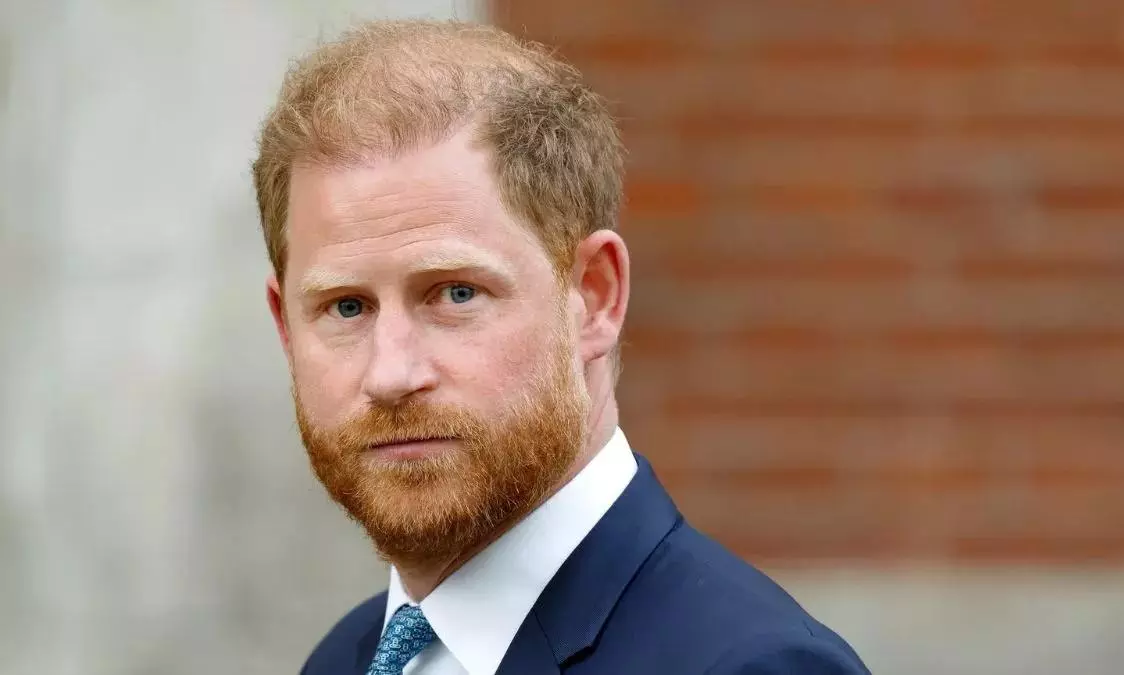

On July 7, the British prince's civil case against Associated Newspapers failed. Associated Newspapers owns the Daily Mail and the Mail on Sunday. Prince Harry and six others had sued because they claimed that information had been gathered about them unlawfully. In all 97 cases where unlawful obtaining of information was alleged, the court found this had not been proven. Fourteen of the cases concerned articles about the prince.
The judge was Mr Justice Nicklin, and he ruled that the prince and the other claimants had not provided sufficient evidence that the information had been obtained illegally. The case was decided by Mr Justice Nicklin on the balance of probabilities, i.e., the claimants had to show there was a greater than 50% chance that what they were alleging was true. Note that, in the UK, judges of a certain rank use "Justice" before their surname.
The media has hailed the ruling as a victory for free expression. The prince is notoriously litigious, whereas other members of the British Royal Family almost never take legal action and maintain their decorum by not commenting on media tittle-tattle. Prince Harry has won other legal actions against media outlets. This has worried many because, they argue, it has eroded free expression.
Prince Harry is a sworn enemy of the free press. He has a vendetta against the media in general, which he blames for his mother dying in a car accident in 1997 when paparazzi on motorbikes pursued her vehicle until her driver crashed into a pillar in a tunnel in Paris.
Associated Newspapers vigorously defended the action. Naturally, they are elated and say they shall seek to recover their costs. The case cost approximately GBP 50 million in legal fees. If claimants fail, they sometimes have to pay some or all of the other side's legal costs.
Prince Harry lives in California but was back in London for the ruling. He was due to attend the Invictus Games, which he founded for disabled former military personnel from various countries.
A Labour Party politician, Doreen Lawrence, was part of the prince's action, as was a Liberal Democrat politician. The Daily Mail was previously very supportive of Doreen Lawrence. The musician Sir Elton John was also a claimant, along with the others. The actress Liz Hurley was another party to the claim.
Newspapers obtain information that wealthy and powerful people do not want them to have. Some newspapers have hacked into the phones of celebrities to do this. There is no proof that the Daily Mail or the Mail on Sunday did this.
Just because the newspapers garnered confidential information does not prove that it was obtained by unlawful methods. The newspapers were able to explain how they had accessed this information, and they maintained that it had been obtained lawfully.
The Leveson Inquiry examined the behaviour of media outlets that had gained access to private information about celebrities. The claimants in the court case asserted that the editors of the newspapers had perjured themselves during this inquiry. Those accusations were not proven.
Mr Justice Nicklin noted that the claimants considered the reporting intrusive, but that did not make it illegal. He reiterated that suspicion that information had been obtained illegally did not amount to proof.
His Royal Highness Prince Harry testified in court, as did many others. The trial had been ongoing since January.
Advocates of free expression are delighted by the ruling. They argue that wealthy and powerful people will no longer be able to hide their activities from the public.
If Prince Harry wants privacy, he could, of course, step out of the media spotlight. He could stop making public appearances and issuing press releases. He could stop being newsworthy and start being boring. He is not a working royal but receives far more media coverage than his uncle and aunt put together, despite their carrying out royal duties.