
















Saudi: Omar Yaghi receives 2025 Nobel Prize in Chemistry
text_fields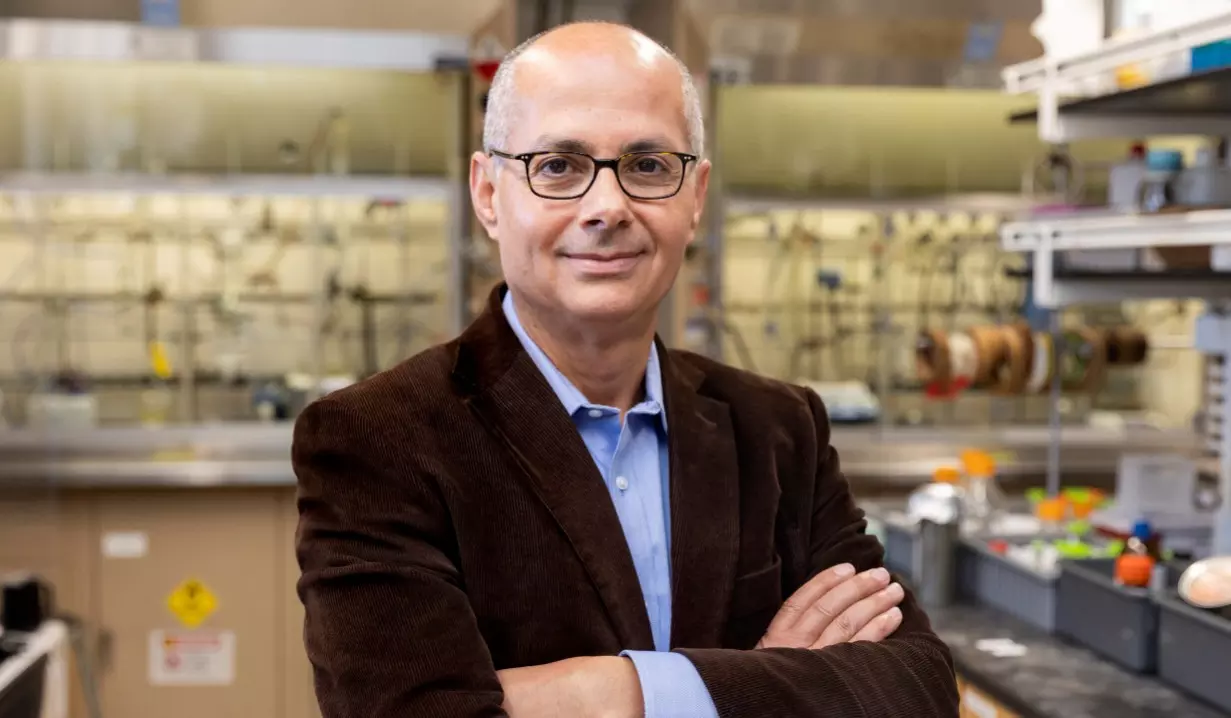

Saudi scientist Professor Omar Yaghi has been awarded the 2025 Nobel Prize in Chemistry by the Royal Swedish Academy of Sciences for his pioneering work in reticular chemistry and the development of metal-organic frameworks (MOFs) and covalent organic frameworks (COFs).
Yaghi is the first Saudi national to receive a Nobel Prize. His research in building molecular frameworks has transformed materials science and enabled advances in clean energy, water harvesting and environmental technologies.
Yaghi has published more than 300 scientific papers that have collectively received over 250,000 citations. He has also helped establish international companies and initiatives focused on clean energy and advanced materials.
His scientific career has been recognized with numerous international awards, including the King Faisal Prize in Science, the Albert Einstein World Award of Science, the Wolf Prize in Chemistry, the Eni Award, the Gregori Aminoff Prize, the VinFuture Prize, the Ernest Solvay Prize and the Great Arab Minds Award.
President of King Abdulaziz City for Science and Technology (KACST) Dr. Munir Eldesouki praised the achievement, expressing gratitude to King Salman bin Abdulaziz and Crown Prince Mohammed bin Salman for their continued support of Saudi research and innovation.
“Dr. Yaghi’s Nobel win reflects the leadership’s vision to make the Kingdom a global hub for science, knowledge and innovation,” Eldesouki said.
“His innovations in nanomaterials capable of extracting water from air show how science can transform passion into real-world solutions".
Yaghi, who was granted Saudi citizenship in recognition of his contributions to science, serves as co-director of the KACST–UC Berkeley Center of Excellence for Nanomaterials for Clean Energy Applications, advisor to the KACST president and board member of the Research, Development and Innovation Authority.
His recognition aligns with Saudi Vision 2030’s goal of attracting exceptional global talent to drive innovation and scientific progress in the Kingdom.