












Under judicial shadow and election pressure, Sarma softens stance on Miya Muslims
text_fields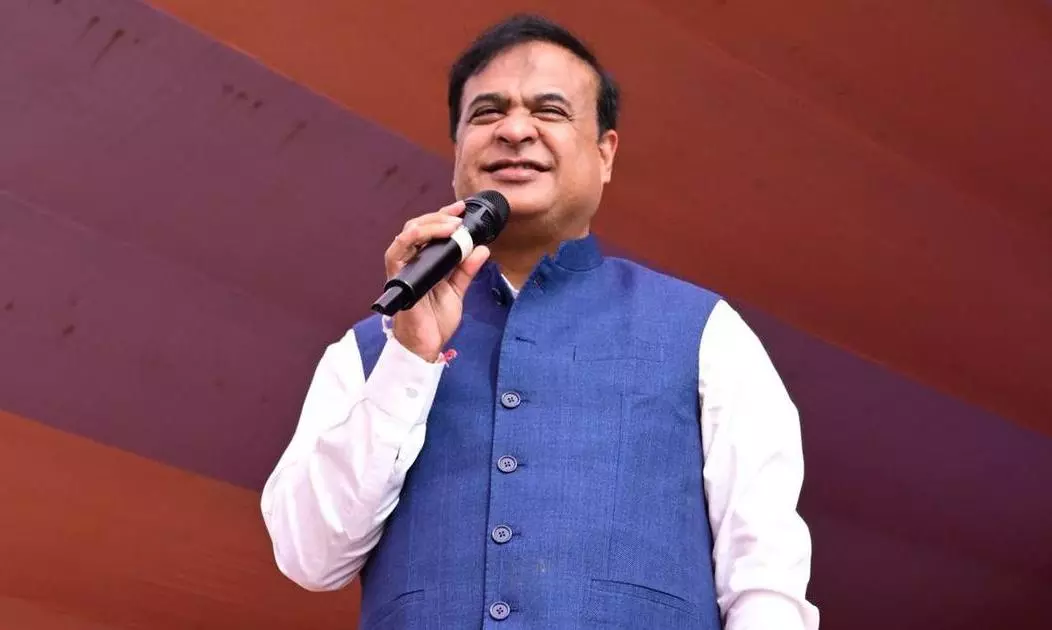

Days after the issuance of notices to the Centre and the Assam government by the Gauhati High Court over a cluster of complaints against Chief Minister Himanta Biswa Sarma for his conspicuous and dehumanising rhetoric, and his alleged public urging that “Miya” Muslims be dealt with harshly on the streets, the otherwise firebrand leader appeared to temper his tone, asserting that the BJP does not regard “Miya” Muslims—Bengali-origin Muslims in Assam—as its enemies.
This sudden pivot towards a more conciliatory posture suggests a strategic recalibration, as the Chief Minister now asserts that the party’s historical friction with the community is predicated not upon ontological enmity, but rather upon a staunch opposition to specific socio-political phenomena he categorises as “love jihad,” child marriage, and the contentious allegation of “fertiliser jihad.”
Addressing the press on Thursday, Sarma articulated a vision of inclusionary politics contingent upon cultural assimilation and patriotic fealty, stating that the saffron party remains open to any individual who espouses nationalistic fervour and vocalises allegiance through traditional slogans.
When interrogated regarding the possibility of the BJP fielding a Miya candidate in the forthcoming April Assembly elections, he maintained that the party’s electoral machinery would prioritise winnability and merit over sectarian identity, thereby ostensibly decoupling religious affiliation from political candidacy.
Sarma added that the party would not bar any aspirant on religious grounds, while emphasising that ideological alignment and expressions of patriotism remained significant considerations.
He added that the party’s posture towards the Miya community would not be antagonistic were these concerns addressed, although his remarks came amid heightened scrutiny following a succession of statements in recent weeks that had drawn sharp criticism from civil rights groups and political opponents.
He indicated that the party would be comfortable with candidates who demonstrated allegiance to national slogans such as “Bharat Mata Ki Jai” and “Vande Mataram”, although he simultaneously underscored that the ultimate criterion for candidature would be electoral viability rather than religious identity.
Outlining the party’s electoral calculus ahead of the Assembly elections scheduled for April, Sarma stated that the BJP intended to contest only a limited number of constituencies where Muslims constitute a demographic majority, and that the party would select candidates principally on the basis of their perceived ability to secure victory.