















Toxic air killed over 17 lakh Indians in 2022: Lancet report
text_fields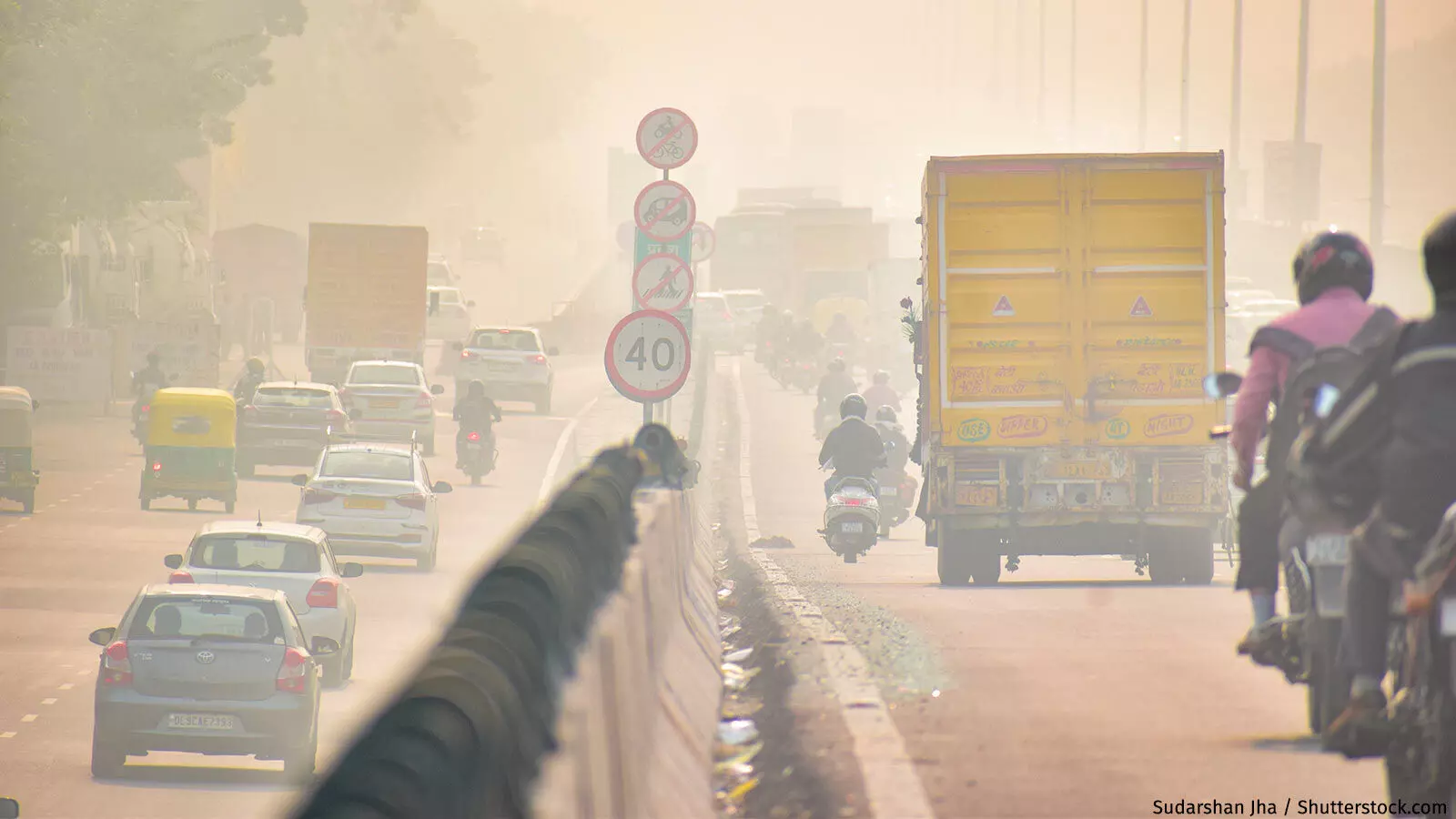

New Delhi: More than 1.7 million people in India died in 2022 due to exposure to fine particulate matter (PM2.5), one of the most dangerous air pollutants, according to The Lancet Countdown on Health and Climate Change 2025 report.
The study revealed that 1,718,000 deaths were attributable to anthropogenic air pollution in 2022, marking a 38% rise since 2010. Of these, fossil fuel use — including coal and liquid gas — was responsible for 7,52,000 deaths (44%). Coal alone accounted for 3,94,000 deaths, largely from its use in power plants (2,98,000 deaths). Meanwhile, petrol-powered vehicles contributed to another 2,69,000 deaths, releasing PM2.5 particles and toxic gases such as nitrogen oxides and carbon monoxide.
The report estimated that premature deaths caused by outdoor air pollution led to an economic loss of US$339.4 billion, equivalent to 9.5% of India’s GDP in 2022.
It also warned that extreme heat is emerging as a major health threat. Compared to 1990–99, people in 2024 were exposed on average to 366 additional hours of heat at moderate or higher risk of heat stress — the highest ever recorded — posing severe risks to those working or spending time outdoors.
Indoor pollution remains another leading cause of death. The use of polluting fuels inside homes led to 113 deaths per 1,00,000 people — 125 per 1,00,000 in rural areas and 99 per 1,00,000 in urban areas.
India, along with China, was identified as one of the most affected countries by climate-related health impacts, particularly among infants and the elderly. The report attributed this to the countries’ large populations and high levels of exposure to pollution and heat.

The study also highlighted the rising toll of wildfires, with PM2.5 emissions from wildfire smoke causing an average of 10,200 deaths annually between 2020 and 2024, up by 28% compared with 2003–2012.
Addressing the country’s agricultural emissions, the report noted that red meat and dairy production accounted for 65% of all agriculture-related emissions in 2022. Total agricultural greenhouse gas emissions increased by 13% between 2000 and 2022, driven by livestock rearing, fertiliser use, and land-use changes.
Between 2001 and 2023, India lost a cumulative 2.33 million hectares of tree cover, including 1,43,000 hectares in 2023 alone, mainly due to forestry activities.
Urban areas also showed worrying trends. Of India’s 189 most populous cities, 14 had exceptionally low levels of green cover, 110 had very low, 42 low, and only 22 had moderate levels of urban greenness. Only Tamluk was classified as having a high level. Overall, urban greenness declined by 3.6% between 2015 and 2024, raising concerns about livability and heat resilience.
The report further observed that public and scientific engagement on climate-health issues, though improving, remains limited. In 2024, Indian newspapers published 296 articles linking climate change and health — a 19% increase from 2023 — yet such stories formed only 15.3% of all climate-related coverage.
Among the scientific studies reviewed, 208 papers (75%) focused on health impacts of climate change, while only one study (0.4%) examined effects on indigenous communities, highlighting a significant research gap.