














TMC grapples with existential crisis after BJP's Bengal breakthrough
text_fields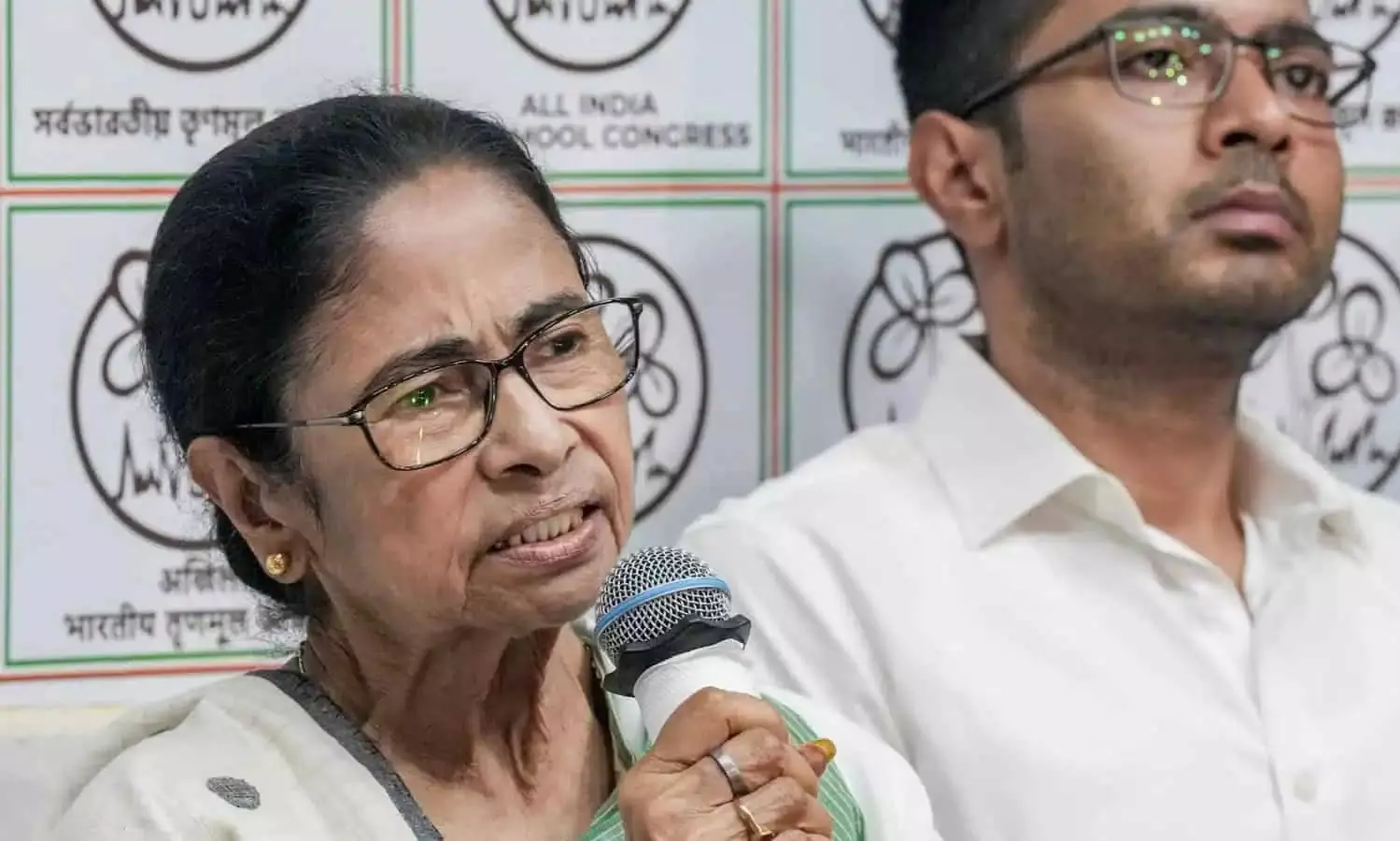

Kolkata: Hours after Suvendu Adhikari's swearing-in as West Bengal's first BJP chief minister at Brigade Parade Grounds on a humid Saturday evening, TMC offices buzzed with disbelief. Workers stared silently at screens replaying saffron triumphs, questioning the fate of Mamata Banerjee's 28-year political machine—13 years in opposition, 15 in power.
TMC's turmoil is structural, psychological, and existential. Post-verdict, leaders once unified now diverge: veteran Asit Mazumdar decries arrogance and paralysis from factional rivalries; MP Kalyan Banerjee fingers I-PAC consultants for "sabotage" in ticket distribution. "TMC was defeated by TMC itself," he said, warning of internal decline.
Blame targets I-PAC-led strategies, with complaints that every gram panchayat member felt entitled to tickets, fueling sabotage.
TMC operated as a centralised ecosystem orbiting Banerjee, prioritising loyalty over autonomy. This toppled the Left in 2011 but now breeds vulnerability. "Once that chain weakens, fragmentation becomes inevitable," says analyst Biswanath Chakraborty. Lacking ideology or expansion beyond Bengal, the party risks panchayat defections—ironically, a tactic it once wielded.
Nephew Abhishek Banerjee, the party's strategist and de facto No. 2, faces heat over candidate shifts that disrupted local networks and over-reliance on consultants.
Observers caution against dismissing Banerjee, 71, who rebounded from 2004-06 lows via Singur-Nandigram. Yet, age, scams, corruption claims, and BJP's entrenchment complicate recovery. Her call for Left-Congress unity signals pragmatism amid shrinking options.
For TMC, survival means halting organisational drift before the inevitable aura fully cracks.
(Inputs from PTI)