















SC sets timelines for reserved verdicts, stresses speedy bail decisions
text_fields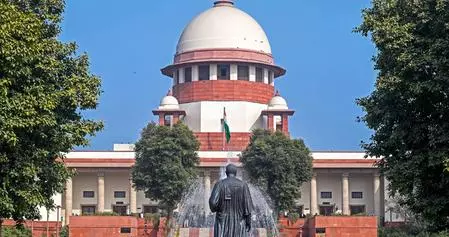

The Supreme Court of India on Friday directed that judgments in cases where orders have been reserved should ordinarily be delivered within three months. The court also issued a set of binding guidelines for High Courts aimed at reducing delays in the pronouncement and publication of judgments, particularly in cases involving personal liberty.
A Bench led by Chief Justice Surya Kant observed that prolonged delays in delivering judgments could seriously affect litigants and erode public confidence in the justice system. The Bench stated that bail applications should normally be heard, decided and pronounced on the same day. If an order is reserved, it should be pronounced and uploaded no later than the following day, Maktoob Media reported.
Highlighting the significance of personal liberty, the court directed that matters relating to regular bail, anticipatory bail and other liberty-related issues be treated with urgency. It further ordered that bail and sentence-suspension orders be communicated immediately to prison authorities after pronouncement. According to the directions, undertrials or convicts granted relief should ordinarily be released the same day or, at the latest, the next day, unless they are required in another case or there is a delay in fulfilling bail conditions.
The Bench also laid down timelines for reserved judgments, stating that cases in which judgments remain pending for more than three months should be placed before the Chief Justice of the concerned High Court for appropriate action. The court emphasised that litigants are entitled not only to a fair hearing but also to a timely decision.
The directions were issued while the Supreme Court was considering an application concerning delays in the release of a judgment by the Jharkhand High Court. The petitioner alleged that although the High Court had pronounced its verdict in December 2025, the written judgment had neither been uploaded to the court’s website nor given to the parties and their lawyers for several months.
Taking note of the complaint, the Supreme Court observed that such delays undermine the purpose of judicial pronouncements, particularly when litigants are unable to pursue further legal remedies without access to the written judgment. The Bench therefore used the case to frame broader guidelines intended to improve accountability, transparency and the timely delivery of justice across High Courts.
The directions come amid continuing concerns about delays within the judicial system, including cases in which undertrials have spent years in prison while awaiting trials, bail decisions or appeals. Among the examples often cited are cases arising from the 2020 anti-CAA protests and the subsequent 2020 Delhi riots, where several accused charged under the Unlawful Activities (Prevention) Act have remained in custody for more than five years as undertrials while legal proceedings have moved slowly through the courts.