
















Rain, floods, and Kerala
text_fields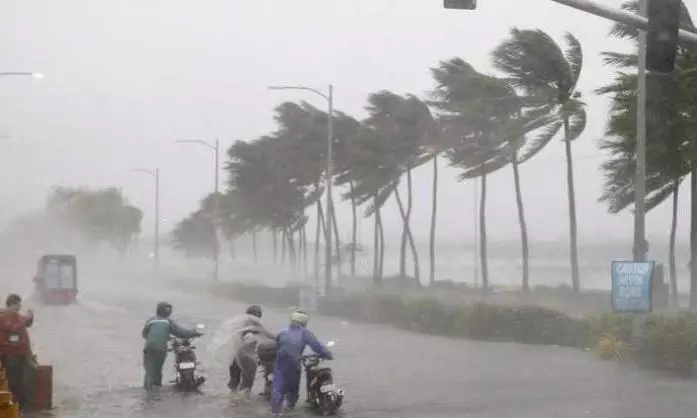

We Keralites were worried that not even half of the expected rainfall had been received since the onset of the monsoon this time. Experts explained that the El Niño phenomenon was the reason; they also warned that its impacts would be long-lasting. Naturally, as we were disappointed yet finding solace in whatever weak rainfall was occurring, the skies darkened from August 1st and the rain began to pour incessantly. But past experience has taught us that excess rainfall, just like drought, creates its own havoc. That is precisely what is happening this time as well. According to figures from the India Meteorological Department, the state received 232 percent excess rainfall between August 1 and August 3 compared to what is normally expected. When 184.2 mm of rainfall was received instead of the expected 55.4 mm, its associated consequences quickly followed. Pathanamthitta district has had to bear the brunt of the rain havoc. One can easily imagine what happens when 533 percent excess rain falls. It goes without saying that flash floods have disrupted normal life. As the Achenkovil and Manimala rivers overflow, life across Ranni, Thiruvalla, and surrounding areas is facing a grave situation. Hundreds of single-story houses lie submerged under water, while residents of two-story homes take refuge in upper rooms. As this is being written, Chief Minister V. D. Satheesan has personally arrived to assess the situation directly and expedite relief measures, leading the efforts on the ground.
Also read: Kerala rains: 3 killed, one missing as landslides, flash floods batter state
Although not as severe as Pathanamthitta, people across other districts are also suffering in various ways due to the heavy downpours. Erattupetta, a town on the banks of the Meenachil River in Kottayam district, witnessed the largest flood in its history. As flash floodwaters surged in without warning, homes and commercial establishments were submerged. Business establishments have suffered damages worth crores of rupees. While acknowledging that the state government rises to the occasion by taking swift defensive and relief measures, the fact that we are still unable to scientifically and efficiently prevent and minimise these recurring monsoon damages and distress should be cause for serious introspection. Governments usually perform routine relief and rehabilitation services — such as temporarily rehousing flood victims, delivering food and sleeping supplies to those affected, expediting measures to rescue trapped lives as quickly as possible, and providing financial aid to those whose houses were fully or partially destroyed. As those in power claim that they handled the flood crisis most efficiently and swiftly, while those in opposition carry out their routine role of pointing out flaws, lapses, and shortcomings, we see the same story repeating this time as well. Beyond that, without differences between the ruling party and the opposition or jurisdictional disputes between the central and state governments, is it not sheer collective irresponsibility and apathy that we are unable to adopt long-term, effective preventive measures for the recurring flood crisis? Why have we failed to learn any lessons from the great floods that submerged Kerala in 2018 and 2019?
Also read: Kerala floods: 21 dead, 6 missing as heavy rain threat continues
It is said that every monsoon, as the monkey in the forest gets drenched, it resolves: "First thing next year, I'm building a hut." But to this day, the monkey has never built one. The question is — should human beings, blessed with intellect, behave the same way? In an era when science and technology have expanded beyond outer space, why is Kerala — a state that continuously produces countless scientists and technical experts — unable to find answers to questions such as where and how the raging floods of six or seven years ago affected us, what caused them, and how to eliminate those causes? In this age of globalisation where the world has become a global village, is it truly the case that there are no people or resources at the national or international level to assist us in this matter? Let this question also become a topic for thought in minds chilled by the rains.
Also read: Kerala witnesses heavy rains, strong winds; red alert in Calicut