
















Influencer’s viral video on ‘Is Kanyadaan’ a myth?’ sparks debate
text_fields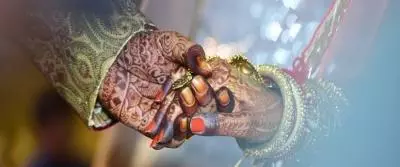

The Hindu wedding ritual of Kanyadaan, where a bride’s parents formally give her away to the groom, is traditionally viewed as a sacred act symbolising love, trust, and sacrifice.
However, it has increasingly come under scrutiny, with critics arguing that it implies a transfer of ownership and suggests that the bride and her parents lose their rights over her after marriage.
The debate gained attention in 2021 following a Manyavar Mohey advertisement featuring Alia Bhatt, which questioned the concept of Kanyadaan and introduced the idea of “Kanyamaan” as an alternative. More recently, the discussion has resurfaced after a viral video by social media influencer Soumya Aggarwal, Free Press Journal reported.
In her video, she suggested that the ritual is widely misunderstood and argued that interpretations of its meaning have been misrepresented, reigniting divided opinions online.
She says, "If you think the concept of "Kanyadaan" defines the Vedic view of marriage, you are misreading the source code. The word "Kanyadaan" does not exist in the Rigveda, Yajurveda, or Samaveda. These texts use the term "Paani-Grahan"—a ritual of mutual acceptance, not a transaction of property.”
She further says, "The idea that a daughter is a commodity to be "donated" is a later social distortion, not a spiritual directive. In the original Vedic framework, the feminine was always a source of "Maan" (respect), never an object for "Daan." Stop defending a mistranslation and start reclaiming the actual precision of our scriptures.”
According to her, Kanyadaan was never about offering a daughter as property; rather, it represented transferring a sacred responsibility. The popular video generated debate regarding the Kanyadaan rite, with some supporting her claims and others calling it misleading information.
One of the Instagram users named adv.priti_tikhe wrote, "Putra daan ka vidhi shuru karo."
While another user wrote in the comment section, "Stop fooling women, naye naye labels laga kr, there are a ton of rules only imposed on women, stop this, own that you're a patriarch!!”
rathore_ankit_feb22 wrote, "Obviously mam Shiv ne maa Shakti ka Panigrahan hi kiya tha aur hum bhi Panigrahan hi karenge, nari vamangi hoti hai purush ka vam ang jiske bina purush poora nahi hai, waise hi jaise nari purush tatva ke bina."
Another commented, "Bro, Kanyadaan ka matlab kanya par se mata-pita ka jo apna haq hota hai bache par usse free karna hota hai… har kuch mat padha karo tum log camera samne dekh kar."
While many people regard Kanyadaan as an essential wedding ritual, some scholars argue that it does not appear in any of the four Vedas and is instead referenced in the Manusmriti. They suggest that it is not a core part of traditional Vedic marriage practices, which primarily focus on Paanigrahan, or the mutual acceptance of partners.
It is also noted that Kanyadaan is not mentioned in the Hindu Marriage Act of 1955. In a significant legal observation, the Allahabad High Court ruled on March 22, 2024, that Saptapadi—the ritual of taking seven steps around the sacred fire—is the only ceremony necessary for a marriage to be considered valid, indicating that a marriage can be legally recognised even without Kanyadaan.
References from Hindu mythology are also used in this discussion. According to accounts from the Puranas, the marriage of Subhadra and Arjuna, arranged by Lord Krishna, followed the Gandharva tradition based on mutual consent rather than formal rituals like Kanyadaan.
It is said that when Balarama questioned the absence of this ritual, Krishna explained that a daughter should not be viewed as something to be given away, emphasising instead that she represents a blessing and shared responsibility rather than ownership. This interpretation underscores the idea that a daughter is not property, but a cherished and invaluable gift.
Historically, Kanyadaan is believed to have emerged in the post-Vedic period, gaining prominence through texts like the Manusmriti. Mythological narratives also trace its origins to King Daksha, who is said to have performed Kanyadaan when he gave his 27 daughters in marriage to Chandradev.