













In a 25% Muslim population, Muslim removals account for 95% in SIR in Bengal’s Nandigram
text_fields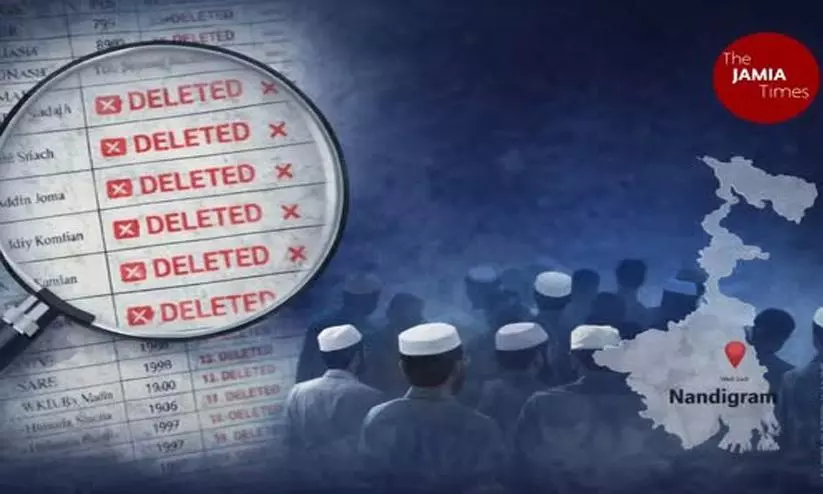

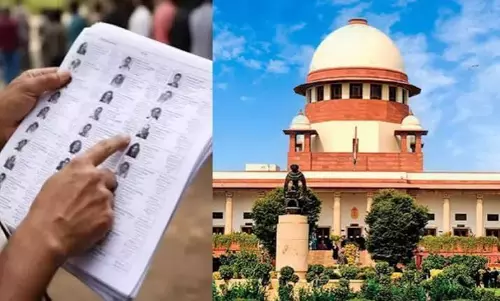
An alarming deletion of Muslim voters has been found in six of the seven supplementary lists released after the Special Intensive Revision (SIR) by the Election Commission in West Bengal’s Nandigram, as out of the 25 per cent Muslim population in the region, about 95.5 per cent of voters removed from the electoral rolls were Muslims.
According to the Sabar Institute, a Kolkata-based public policy research organisation, an examination of the Election Commission of India’s data indicates that Muslims were removed across the supplementary lists, while in six of the seven lists the proportion of Muslim deletions ranged between 60.9 per cent and an extraordinary 98.7 per cent, thereby suggesting a pattern that appears statistically incongruous with demographic realities.
The institute observed that although Muslims constitute only a quarter of the population in Nandigram, the deletions disproportionately affected them, whereas the remaining 75 per cent non-Muslim population accounted for merely 4.5 per cent of removals.
While the trend of deletions extended across both genders, the data nonetheless revealed a discernible pattern, and although list 4a stood out as an exception, with all those removed being non-Muslim women and no Muslim deletions recorded, as per the analysis, the broader trajectory continued to underscore what the institute described as a concerning disproportionality.
The institute emphasised that Muslims accounted for nearly all removals at 95.5 per cent, and it cautioned that such figures, when juxtaposed with population composition, warranted serious scrutiny of the SIR process and its ramifications for electoral inclusivity.
The analysis also referenced the Election Commission’s December 2025 Absent, Shifted, Deceased and Duplicate dataset, which showed Muslims constituting 33.3 per cent of deletions and non-Muslims 66.7 per cent, and although this dataset too reflected an imbalance relative to population share.
Voters whose names were deleted have been permitted to appeal before 19 appellate tribunals established across the state, yet with the nomination window for the first phase closing on April 6, the electoral roll for Nandigram has been frozen, thereby rendering those unable to appeal ineligible to vote.
West Bengal Chief Minister Mamata Banerjee alleged that names of people belonging to the Matua and minority communities had been removed from the post-SIR rolls, while urging voters to cast their ballots as a response to the deletions and calling upon party workers to remain vigilant until the counting date on May 4, even as the 294-member Assembly election is scheduled to be held in two phases on April 23 and April 29.