





Ganj Shahida Mosque in Varanasi faces demolition notice
text_fields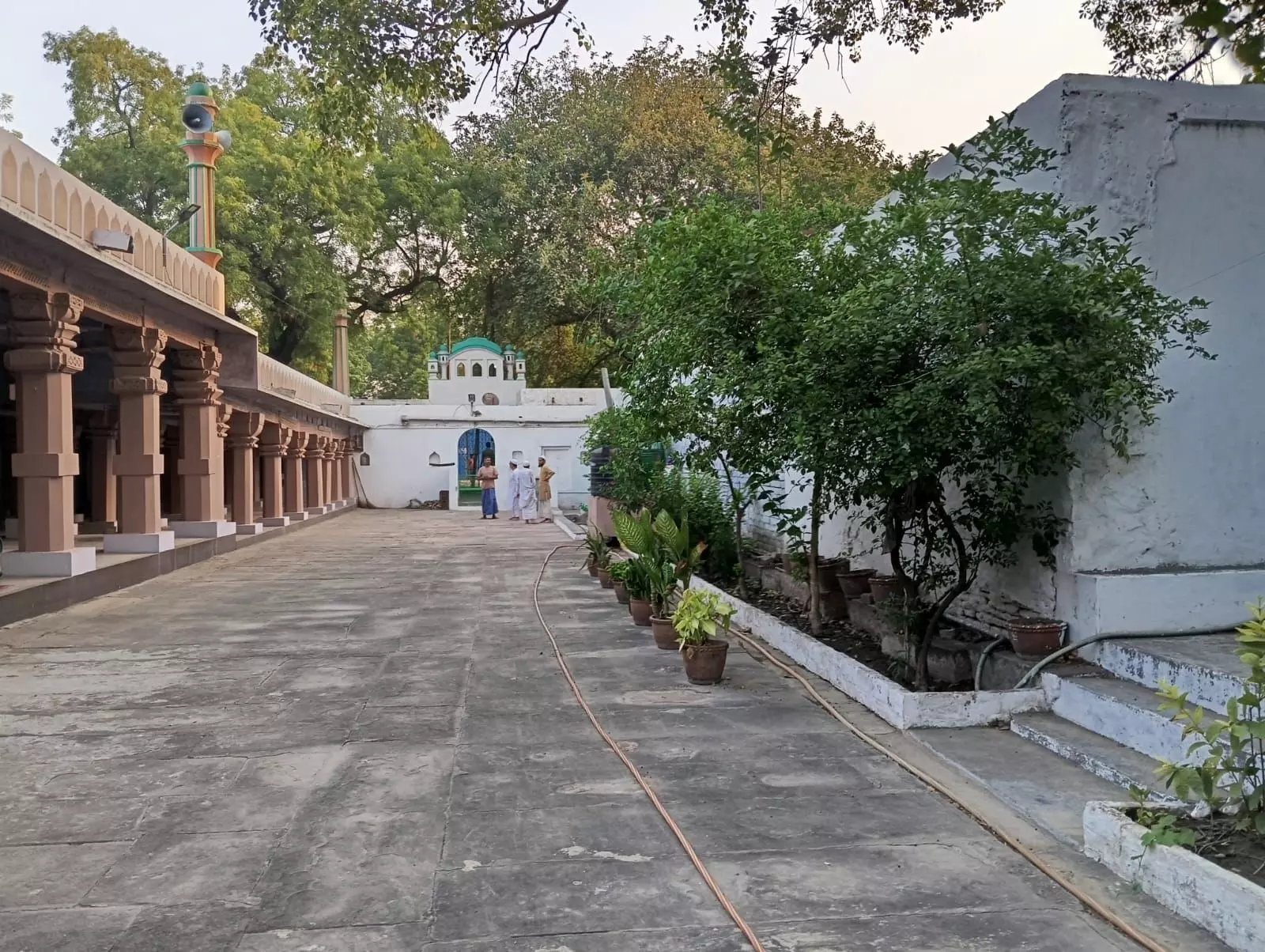

Varanasi: The Ganj Shahida mosque near Kashi Railway Station in Varanasi is facing a demolition threat after a notice claimed the structure was an “illegal construction on railway land” and asked the mosque committee to remove it by June 20, failing which the railway administration may demolish it.
The notice, which appeared on the mosque wall on June 12, stated that a civil suit, Suit No. 1174/1991 (Anjuman Intizamia vs Union of India), was pending before the Court of the Civil Judge (Senior Division), Varanasi. It claimed that the case was dismissed on August 28, 2024, following which the railway administration decided to remove the mosque allegedly built on railway land.
The notice stated, “It is requested that those concerned should remove the mosque by 20 June 2026,” adding that if the structure was not removed by the deadline, the railway administration could take steps to remove and demolish it.
However, the authenticity of the notice has been questioned as it did not carry a date, official stamp or signature of any authorised authority. It was typed on plain white paper and mentioned “Railway Administration, Northern Railway, Varanasi” at the bottom.
Responding to the notice, Anjuman Intizamia Masajid, Varanasi, issued a counter-statement on June 13 on behalf of the Ganj Shahida Mosque, alleging that the railway administration’s claims were “misleading” and based on an incorrect interpretation of legal proceedings.
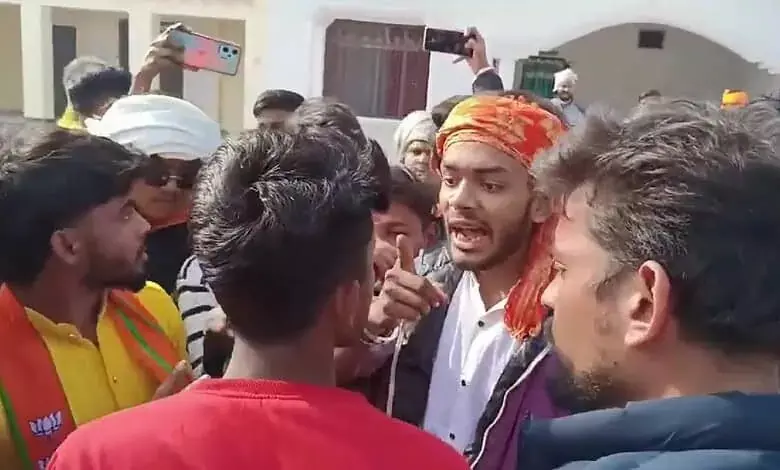
The mosque committee questioned the validity of the notice, stating that it neither carried the signature of an authorised railway official nor mentioned the date of issuance.
The committee also argued that the civil suit cited by the railway administration — Suit No. 1174 of 1991 (Anjuman Intizamia vs Union of India) — was not related to the mosque structure.
“The cited case was not about ownership or existence of the mosque itself. The litigation concerned land situated on the eastern side of the mosque and had no connection with the mosque itself,” the committee said.
The committee further claimed that the railway administration had earlier acknowledged in an affidavit that the mosque existed before the railway line was laid.
“In the said case, the railway administration itself stated in its affidavit that the mosque existed before the railway,” the statement said.
Claiming historical evidence, the mosque committee said the structure dates back to Hijri year 1034, approximately 1624-25 CE, and is mentioned in settlement maps of 1883-84 as well as earlier revenue records.

The committee said the railway infrastructure came later, arguing that the mosque predates the railway development in the area.
“Anjuman Masajid will fight this legal battle at every level,” the statement said.
The mosque body also accused the railway administration of attempting to create confusion and disturb public order through the notice, describing the claims as contrary to historical and factual records.
The committee cited historical maps to support its claim that the mosque existed before railway development and was part of the historic landscape of Kashi.
According to the committee, the mosque appears not only in the 1883-84 settlement map but also in earlier records, including an 1880 map of Kila Kohna.
The map titled “Qila Kohna, District Benares, 1883-84” is part of colonial-era settlement records prepared by the British administration. It shows the area around the present-day railway station and the Ganges riverfront.
The map reportedly marks a structure as “Masjid” near what is identified as the “New Cantt River Station”. It also identifies a larger area as “Palang Shahid”, a name the mosque representatives say is historically linked to Ganj Shahida.
The committee said the presence of “Palang Shahid” on the official survey map indicates that the mosque and associated religious site existed in the locality by at least 1883-84.
Speaking to Maktoob, SM Yaseen, joint secretary of the committee, said the records challenged the railway’s claim that the mosque was a recent encroachment.
“This record undermines claims of the railway, if that notice is official, that the mosque was a recent encroachment on railway land,” he said.
“The structure predated the railway station itself and was recognised by government authorities more than a century ago,” Yaseen added.
The central dispute now concerns whether the land on which the mosque stands continued to belong to the mosque and the Muslim community or whether it later became railway property through acquisition or other legal processes.
Yaseen said, “This case cited in the notice was filed by Anjuman Masajid in 1991 to protect the land located outside Masjid Ganj Shahida. It is not related to the ownership of the land.”
He added that the mosque is registered with the Uttar Pradesh Sunni Central Waqf Board and recorded on the government’s UMEED portal.

“We are very soon moving the High Court with all the evidence contesting the claims made by the railway,” the joint secretary said.
The development comes after the demolition of the nearly 200-year-old Azgaib Shaheed mosque and an adjacent mazar in Varanasi on June 2 during an overnight operation as authorities cleared land for the redevelopment of Kashi Railway Station into a multi-modal transport hub.
The mosque and other structures were reportedly removed within “22 minutes”, and the site was cleared before morning, with no visible remains of the rubble.
The demolition was part of a larger redevelopment project aimed at transforming Kashi Railway Station into an integrated transport hub connecting rail, road, metro and water transport systems. The project is estimated to cost between ₹330 crore and ₹400 crore.
Reacting to the developments, Muslim leader and three-time Lok Sabha candidate from Varanasi Ather Jamal Lari alleged that the redevelopment process was being used as a pretext to target historical Muslim properties.
“All this redevelopment and road widening is just theatrics. This entire exercise appears to be nothing more than political theatrics,” he said, according to Maktoob.
He claimed that historical records, revenue maps and official documents acknowledging the mosque’s existence were being ignored while centuries-old religious structures were being portrayed as encroachments.

Lari alleged that there was a pattern of Muslim-owned properties being targeted in the name of development and said that development should not become a reason for removing historical and religious landmarks.
“If the authorities are genuinely interested in development, they must proceed in accordance with the law and historical facts. What we are seeing instead is a selective approach that raises serious concerns about whether Muslim-owned and waqf properties are being disproportionately targeted,” he said.
Nadeem Khan, human rights activist and national secretary of the Association of Protection of Civil Rights, alleged that marking properties as illegal and demolishing them was no longer only a legal issue.
“All these marking of the properties as illegal and then bulldozing them is not a matter of legality or illegality anymore,” he said.
Khan questioned why places of worship belonging to only one community were being targeted and asked whether religious structures of other faiths always had complete documentation.
“This is an attempt to give collective punishment to a particular community, dehumanising Muslims and preparing to declare them second-class citizens,” he alleged.