










Freedom @ 80: new questions from a new generation
text_fields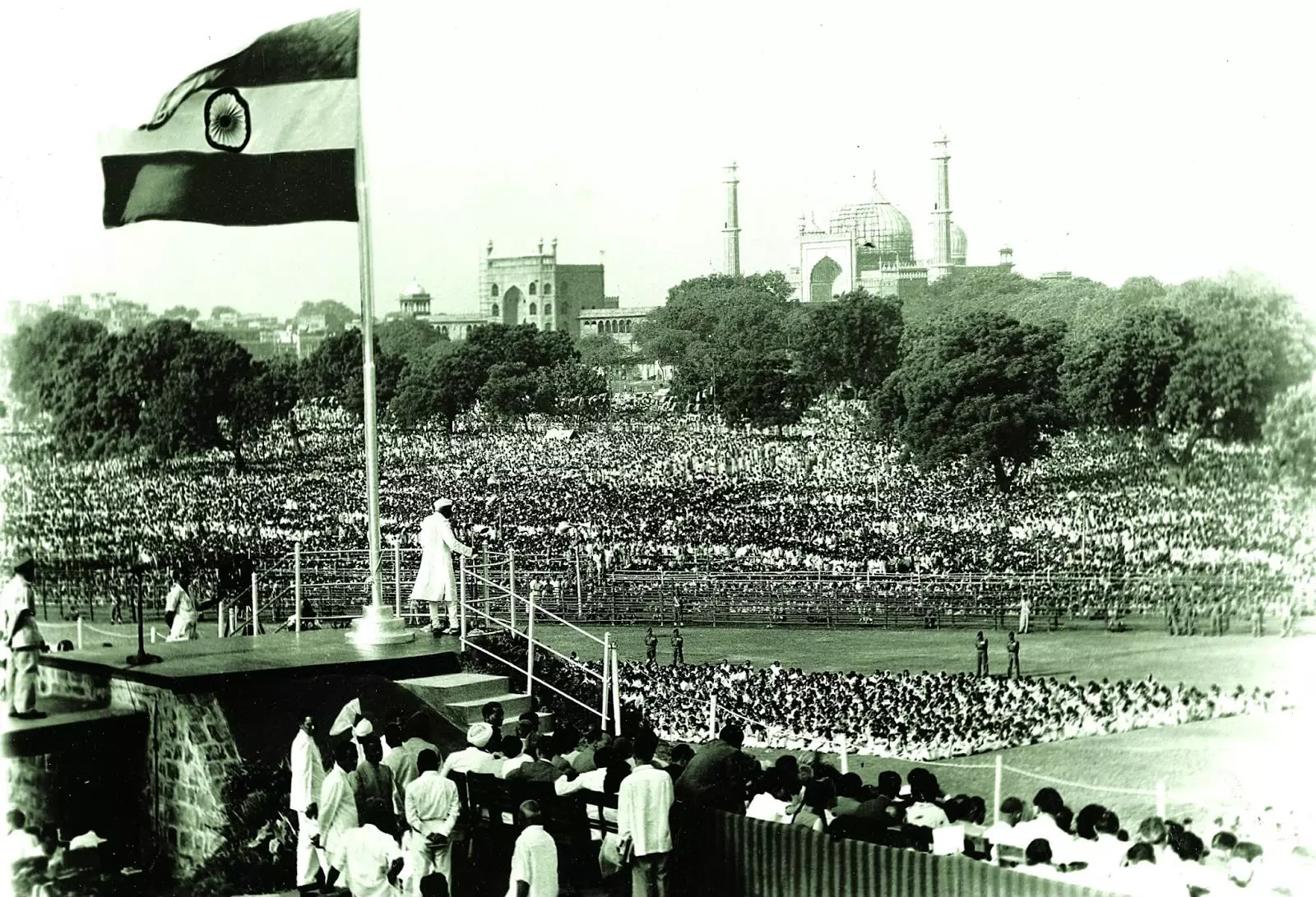
August 15, 1947: Beginning of the country's new journey and the end of centuries of colonial rule. Prime Minister Jawaharlal Nehru addresses the people beneath the national flag, with the Jama Masjid and a sea of people in the background
“Dear friends, let me share a joke with you…”
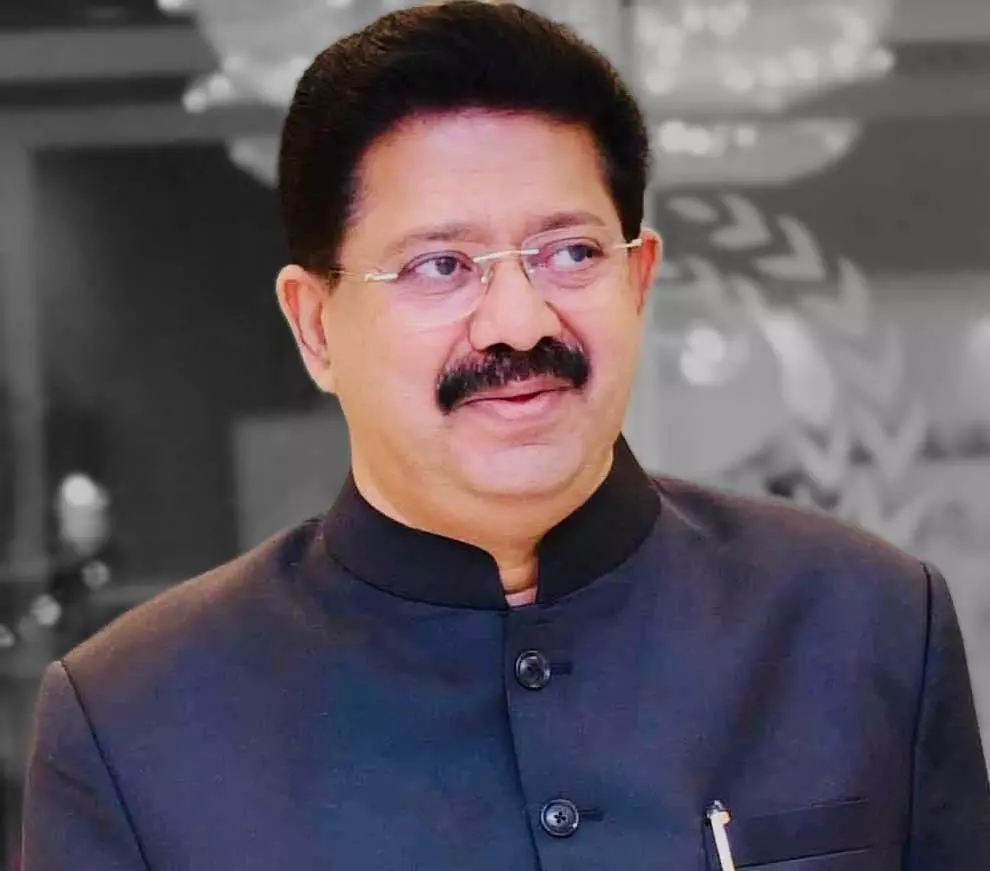
With just a few days to go before India’s Independence Day, this is how a video shared by actor Prakash Raj on social media on August 11 begins. But what he said was not a joke. It was a serious and thought-provoking question, posed with a smile to a democratic country.
Prakash Raj’s video was about his name being removed from the voter list in Bengaluru. He reminds us that he was born in the constituency, studied there, worked in theatre there, and now lives there. Moreover, he points out that he had also contested the Lok Sabha election from Bengaluru. Yet he now finds himself having to prove his right to vote—and does so with sarcasm.
“Okay, if this is your game, then I am ready too,” says Prakash Raj, with the expression “Game on!”
The question he then asks is even more important:
“You can use your power to deny your fellow citizens the right to vote—citizens who may not elect you. But can you stop us from using the power of democracy to remove you from power?”
This question is not just Prakash Raj’s. It can be read as a symbol of the questions that ordinary citizens will ask as India enters its eightieth year of independence.
What they asked in 1947; what the new generation asks in 2026
On August 15, 1947, India became independent from British rule. That generation asked one defining question:
“Will you give our country back to us?”
In prison cells, under the blows of British lathis, in the dark chambers of the Cellular Jail in the Andamans, on the blood-stained soil of Jallianwala Bagh, inside the suffocating railway wagon during the Wagon Tragedy in Malabar, on the railway tracks at Kakori, where Ram Prasad Bismil and Ashfaqulla Khan left the fiery footprints of revolution; in the aftermath of Chauri Chaura, at the salt pans of Dandi, and in the call of “Quit India” that rang out from Gowalia Tank Maidan in Bombay, that generation found the answer to its question.
India became independent on August 15, 1947. Nearly eighty years on, the tricolour will once again fly over the Red Fort. The national anthem will be played in schools and public institutions. The freedom fighters will be remembered. The streets will be filled with the tricolour. We will proudly assess how far we have come as a nation.
But on the 80th Independence Day, another question will arise:
*How safe is the freedom we celebrate in our daily democratic life?*
Freedom is not just a historical moment when a foreign power leaves a country. It is the right to express one’s opinion, the right to question those in power, the right to dissent peacefully, and the right to choose one’s own beliefs and way of life. Above all, it is the right to participate equally in deciding who will govern us.
That is where the importance of voting lies. In a democracy, a vote is not just a number. It is recognition of a citizen’s political existence.
Therefore, the accidental disappearance of a voter’s name from the electoral roll cannot be seen as a mere technical error. It is the responsibility of a democratic government to ensure that, if such an error occurs, it will be corrected easily and transparently.
Prakash Raj is a well-known public figure. The country will hear his voice. If he shares a video, the media will report on it. But what about those who are not Prakash Raj?
What if the name of a farmer or a daily-wage earner in a village is removed from the electoral roll? What if the name of a tribal person or an elderly citizen is removed? What happens to someone who has neither the time, the money, nor the influence to get things done by making repeated trips to government offices, carrying documents simply to reclaim their right to vote?
Who will listen to their voices? That is the real democratic question raised by Prakash Raj’s experience.
The same concern was raised by another recent incident. And it is not an isolated one. The name of R. Rajagopal, a former editor of The Telegraph, was removed from the electoral roll in West Bengal, causing problems with the renewal of his passport.
If a prominent actor and a senior journalist have to explain themselves to the system and produce documents to prove their citizenship, then the question naturally arises: what happens to an ordinary citizen who has neither a familiar name nor influence?
It is easy to confine such incidents to the familiar cycle of political allegations and counter-allegations. But when we think about safeguarding democracy, we need to look beyond partisan politics. Maintaining public trust in the electoral system is not just a concern of the ruling party or the opposition. It is a national necessity.
This is where India’s new generation becomes particularly significant. It cannot be measured by the political yardsticks of earlier generations. We often hear people say that the new generation is not interested in politics. But that is not the reality.
Young people may not always be seen at public meetings organised by political parties. But when issues that directly affect their lives demand answers, they will take to the streets.
They will ask about employment opportunities. They will question the quality of education. They will raise their voice about women’s safety. And they will certainly ask questions about their right to vote.
For them, a sixty-second video can sometimes be more politically significant than a two-hour speech by a leader. They may give greater importance to a hashtag than to a public meeting. They can reach hundreds of thousands of people more effectively with a video shot on a mobile phone than with a pamphlet.
This is neither a rejection of politics nor an argument for being apolitical. It is a transformation in political messaging.
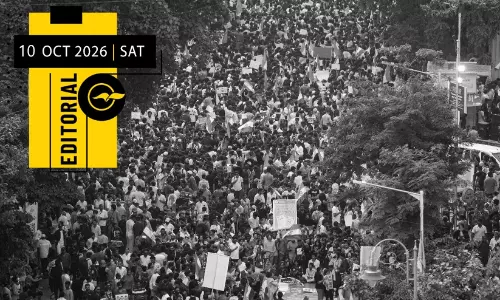
This new political language has emerged from places such as Jantar Mantar. Recent student protests are an example of this. What was raised there was not merely a question about an examination. Beneath it lay another question:
“Don’t we have the right to demand accountability from the systems that determine our future?”
The most powerful words in this generation’s political language are not slogans. They are questions such as these:
“Why?”
Why did this happen? Who is responsible? On what evidence was the decision based? How will it be corrected? Who will answer?
These are the questions that can make a democracy uncomfortable. At the same time keep a democracy alive.
India’s freedom struggle also had its own language: satyagraha, non-cooperation, the Salt March, and Quit India. Its instruments included public meetings, pamphlets, newspapers, marches, and prisons. Our opponent then was a foreign imperial power.
Today, India is an independent nation. Therefore, it would not be historically correct to compare today’s struggles with the freedom struggle. But a society that has gained freedom has another responsibility: to remain constantly vigilant so as not to lose the rights it has gained. The language of that vigilance has now changed.
Today, there are Instagram posts featuring placards.
Today, there are livestreams of speeches.
Today, there are memes with slogans.
Today, a television channel’s OB van is not needed to share footage of an event with the world. All that is needed is a mobile phone in a student’s hand.
The new generation does not merely listen; it verifies. The words spoken by a political leader may be fact-checked the very next moment. That, perhaps, is one of the greatest challenges confronting those in power in the digital age.
The new generation approaches information with a critical mind. Its members are intellectually honest: they do not believe only the news they like; they accept facts as facts.
On the 80th Independence Day, there is a fundamental truth worth remembering: the government is not the country, and India is not a political party. Governments will change. Parties will win and lose. Criticising a government is not the same as criticising the country. Disagreeing with a government policy is not being anti-national. Pointing out an administrative error is not an insult to the country. Asking questions about the voter list is not an attempt to weaken the election; rather, it is an attempt to strengthen faith in it.
A strong nation should not be afraid of citizens who ask questions. In a democracy, questioning is not a crime; it is a right.
The young people of India in 1947 had a great dream: an independent India.
Many left their studies to pursue it. They left their jobs. They went to prison. Some gave their lives. We are the beneficiaries of the freedom they won.
But history gives different responsibilities to each generation. The generation of 2026 does not need to tell the British to leave India. It has other responsibilities:
- Be careful not to lose the freedoms guaranteed by the Constitution under any government.
- Protect the right to vote.
- Protect freedom of expression.
- Protect freedom of religion.
- Protect freedom of the press.
- Protect equality before the law.
This should be our love for our country.
Freedom @ 80
Eighty years is not a short period in the history of a country. During this time, India has made remarkable progress.
We have remained the world’s largest electoral democracy. We have made great strides in science, technology, space, education and industry. We have fought a long battle against poverty, and the lives of crores of people have changed. At the same time, our journey is not over.
Unemployment and inequality have increased in recent times. The quality of education and equality of opportunity remain major concerns. Divisions in the name of religion and caste are greater than ever.
Women’s safety and social justice remain challenges. Misinformation and digital hatred are dangers of the new era. The responsibility to protect public trust in democratic institutions has become even more critical. Therefore, the 80th Independence Day should not be just a celebration; it should also be an occasion for introspection.
This is where Prakash Raj’s sarcastic phrase, “Game on,” takes on another meaning.
Democracy is not a war between the rulers and the people. It is not a conflict between the ruling party and the opposition.
The real strength of democracy lies in its ability to transfer power. Those who rule today can be replaced by the people tomorrow. Those who are in opposition today can come to power tomorrow. Power is temporary. This is the beauty of Indian democracy.
The generation before 1947 said:
“We want freedom.”
Eighty years later, the new generation is making another declaration about freedom:
“We are not ready to lose the freedom we have been given.”
The eighty years of independent India’s history lie between these two sentences. The first was a declaration of the freedom struggle. The second should be the watchword of a democracy.
What the new generation has to say on the 80th Independence Day can be summed up as follows:
This country is ours.
This Constitution is ours.
This vote is ours.
This freedom is ours.
Previous generations fought hard and made sacrifices to secure this freedom for us. It is now our turn to preserve the freedom they won.