









Delimitation must be politically fair, not just numerical: Sonia Gandhi
text_fields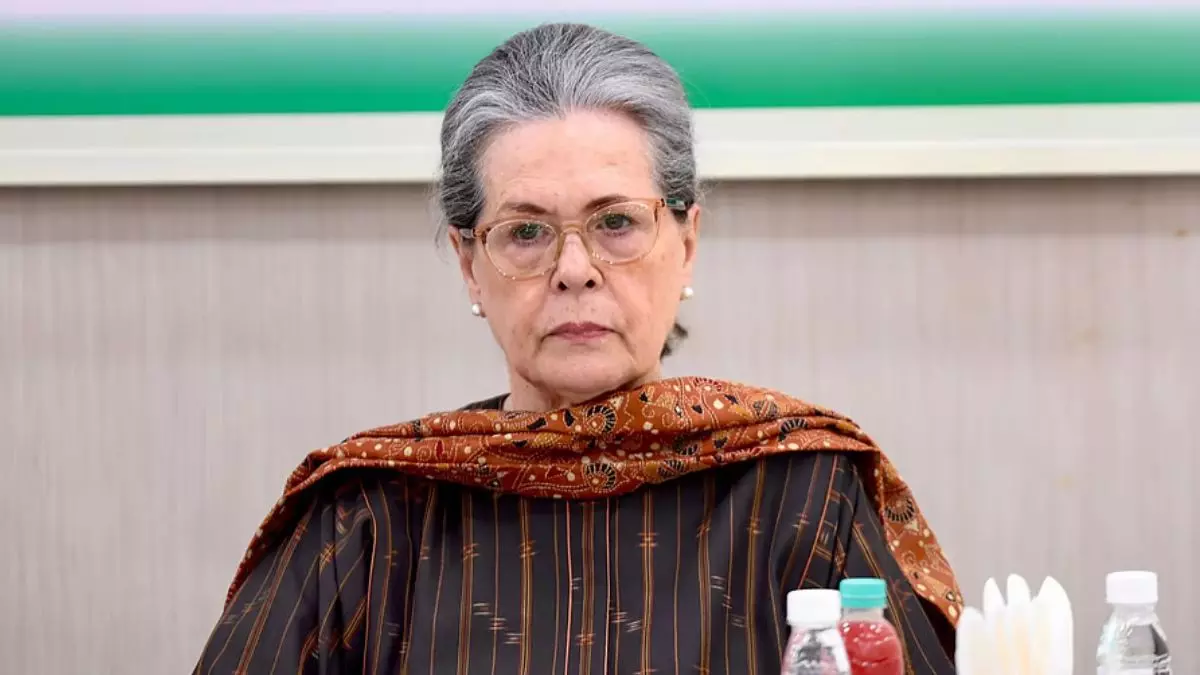

Congress leader Sonia Gandhi on Monday said that any delimitation of electoral constituencies involving an increase in Lok Sabha seats must be politically, and not merely arithmetically, equitable.
In an article published in The Hindu, Gandhi stressed that the process of redrawing constituency boundaries should not disadvantage smaller states or those that have been pioneers in family planning, either absolutely or relatively.
Her remarks come ahead of a special sitting of Parliament later this week, where a draft constitutional amendment proposing to increase the Lok Sabha’s strength from 543 to 816 seats and reserve 273 seats, nearly one-third, for women, is set to be discussed. If implemented as proposed, the proportional share of seats among states would remain unchanged.
However, Gandhi argued that even a proportionate increase could reduce the relative influence of some states, as differences in absolute seat numbers would widen.
She also asserted that delimitation must be preceded by a national Census, as has been the established practice. Noting that caste enumeration is expected to be part of the upcoming Census, she pointed out that similar exercises in Bihar and Telangana were completed within six months.
“It is clear, therefore, that the propaganda that a caste census will delay the publication of the Census 2027 is just not true,” Gandhi said, alleging that the government’s intent is to delay and derail the exercise.
The Congress leader also questioned Prime Minister Narendra Modi over the delay in implementing women’s reservation, asking why it took “30 months to make his U-turn” on the timeline.
She referred to the Nari Shakti Vandan Adhiniyam, passed in 2023, which provides for 33% reservation for women in Parliament and state Assemblies. Initially, its implementation was linked to delimitation based on the 2027 Census, which could have delayed the rollout until 2034.
However, the proposed amendment, if passed in the upcoming session, would make women’s reservation effective from the 2029 Lok Sabha elections.
Gandhi noted that when the law was passed, Leader of Opposition in the Rajya Sabha Mallikarjun Kharge had demanded its implementation from 2024, but the government did not agree at the time. She alleged that the Centre’s change in stance is linked to upcoming Assembly elections in Tamil Nadu, West Bengal, Kerala and Puducherry.
She further criticised the Centre’s approach, stating that there was no justification—other than “narrative management during troubled times”—for what she described as a hurried push to introduce far-reaching changes. According to her, the process being followed is deeply flawed and anti-democratic.
“Reservation for women is not the issue here. That has already been settled. The real issue is delimitation which, based on the information unofficially available, is extremely dangerous and an assault on the Constitution itself,” Gandhi wrote.
Separately, Dravida Munnetra Kazhagam chief and Tamil Nadu Chief Minister MK Stalin also criticised the Centre, accusing it of using women’s reservation as a “weapon” ahead of the delimitation exercise.
In an interview, Stalin said that women’s reservation should be implemented immediately without linking it to delimitation. “The Union government is not concerned about implementing reservations for women. If their concerns were genuine, they could have done it right away. Rather than doing that, the Bharatiya Janata Party-led Centre is thinking of using it as a weapon to tackle the opposition and push delimitation based on population,” he alleged.