












'Merger' of AAP MPs with BJP
text_fields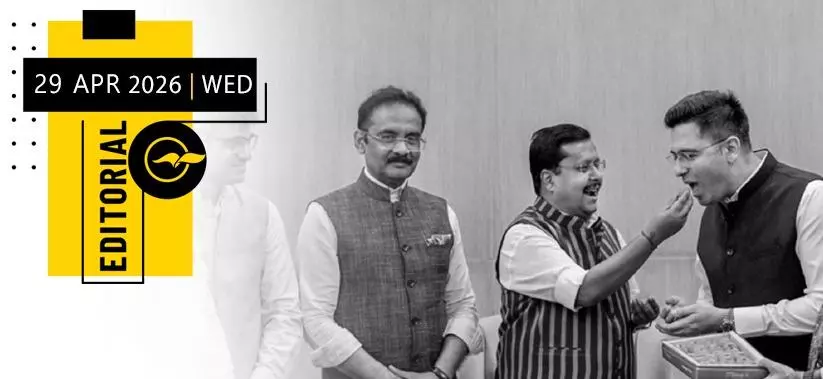

With the endorsement by Vice President and Rajya Sabha Chairman C. P. Radhakrishnan of the “merger” of seven AAP Rajya Sabha members led by Raghav Chadha with the BJP, the AAP leadership’s claim that Chadha and his group’s action is unconstitutional will now have to be examined by the Supreme Court. The Aam Aadmi Party leadership has stated that it will approach the court. The group comprising Raghav Chadha, Ashok Mittal, Sandeep Pathak, Harbhajan Singh, Vikramjit Sahney, Swati Maliwal, and Rajinder Gupta had submitted a letter to the Rajya Sabha Chairman on April 24 stating that they had left AAP and merged with the Bharatiya Janata Party. According to the Tenth Schedule of the Constitution which was introduced at a time when defections emerged as a major threat, undermining and even ridiculing the parliamentary democratic system, with the objective of curbing that trend, if fewer than two-thirds of the members of a party in Parliament or a state legislature defect, their membership becomes invalid. The one-third stipulation was later changed to two thirds. To circumvent this, AAP leader Raghav Chadha, who was being targeted by the ED in the Delhi Jal Board corruption case, along with the help of the BJP, gathered six other Rajya Sabha members and orchestrated what is being described as a “merger drama”. It need hardly be said that the Enforcement Directorate (ED) threats allegedly deployed by the ruling party, along with other temptations, compelled these members to betray their own party and switch sides.
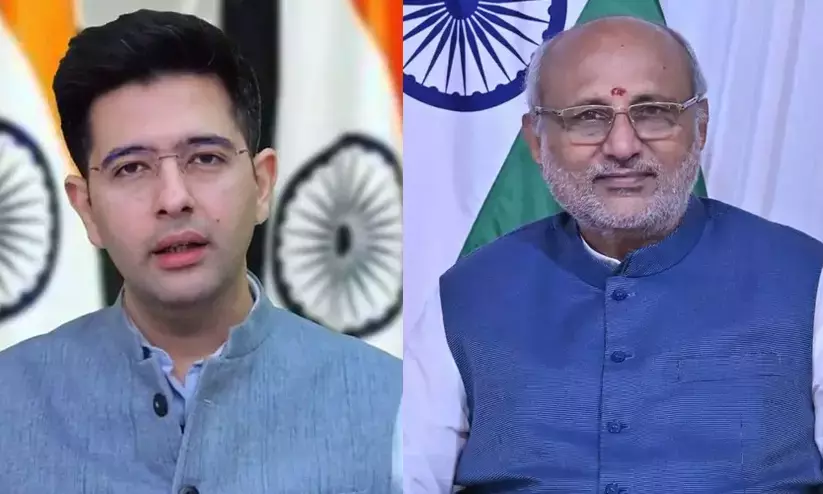
This can be seen as a continuation of the strategy used in several state legislatures such as Karnataka, Goa, and Bihar. Even after the anti-defection law came into force, it has once again become clear that the Sangh Parivar need not fear anyone while continuing what is described as destruction of democracy through money, positions, and threats. With this development, the number of BJP members in the Rajya Sabha has increased from 106 to 113, while that of the Aam Aadmi Party has shrunk drastically from 10 to just three. Senior advocate and Rajya Sabha MP Kapil Sibal has indicated that the court will have to consider a technical hurdle: the unilateral declaration by the seven members that they merged with the Bharatiya Janata Party cannot be treated as a valid “merger” under the Tenth Schedule of the Constitution. He pointed out that the merger was recognised by the party only after the act of defection of MPs had already taken place. Since this issue is largely technical in nature, it remains to be seen how beneficial the Supreme Court’s verdict will be for AAP. The Congress has not had a comfortable relationship with the Aam Aadmi Party, especially after AAP wrested control of Delhi’s governance from it. Even during the formation of the INDIA alliance and afterwards, ties between the two parties were far from warm. The Congress’s response to the merger of AAP’s Rajya Sabha members with the BJP reflects this reality.
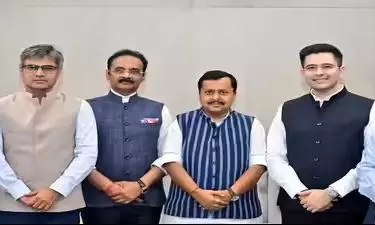
Reacting to the development, Congress leader Ajay Maken remarked that, given the declared assets of the AAP MPs who joined the BJP, averaging ₹818.5 crore per person, the party should be renamed from “Aam Aadmi” (common man) to a party of millionaires. He further alleged that by selling tickets to wealthy candidates, AAP effectively enabled the BJP, despite receiving only 6.6% of the vote in Punjab and never having ruled the state, to secure 85.7% representation in the Rajya Sabha. Even if there is some truth in these claims, it is hard to deny the broader reality that in a country of 140 crore people, where around 22–28% live below the poverty line, the decisive factor in who gets elected to legislatures and Parliament is often the influence of massive backdoor financial dealings worth thousands of crores. It cannot be denied that the BJP, which holds power at the Centre and in a majority of states, wins elections with extensive support from large corporate entities. In Karnataka and Telangana, without the strong financial backing of D. K. Shivakumar and Revanth Reddy respectively, the Congress party’s tricolour flag might have continued to fly low. The real challenge before genuine democratic and people’s movements is the extremely difficult task of freeing Indian democracy and its public institutions from the grip of billionaires. That is not something that can be tackled merely with the broom symbol of the Aam Aadmi Party.