



















Archaeologists find Byzantine-era city and ancient tombs in Egypt
text_fields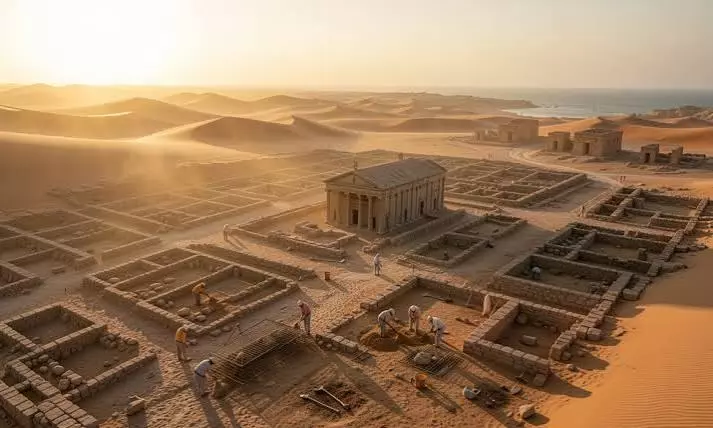

Archaeologists have uncovered a well-preserved Byzantine-era city in Egypt's western desert, along with 18 ancient tombs near Alexandria, the country's Ministry of Tourism and Antiquities has announced.
The fourth-century settlement was discovered in the Dakhla Oasis in the New Valley province. According to the ministry, the site includes residential buildings, a basilica-style church, watchtowers, streets, public squares, and a fortified structure with thick defensive walls.
Archaeologists also found bread ovens, kitchens, grinding tools, pottery, bronze coins bearing Byzantine emperors, and a collection of about 200 inscribed pottery fragments, known as ostraca, documenting commercial transactions, correspondence, and daily life.
Among the discoveries were gold coins dating to the reign of Roman emperor Constantius II, who ruled between AD 337 and 361.
The ministry said the findings provide new insights into urban development, economic activity and everyday life in Egypt during the Byzantine period. The Dakhla Oasis is on UNESCO's tentative World Heritage List.
In a separate excavation at Marina el-Alamein, about 100 km west of Alexandria, archaeologists uncovered 18 tombs, including 11 rock-cut tombs and seven limestone-built surface tombs, taking the total number of tombs discovered at the site to 48.
The excavation yielded pottery vessels, amphorae, lamps, altars, limestone basins, and a 2.5-metre-long granite sarcophagus containing skeletal remains that are being studied.
Researchers also found the remains of a plaster sphinx statue and four gold pieces placed inside the mouths of some of the deceased, a funerary practice known as the "golden tongue."
Marina el-Alamein is believed to be the site of the ancient Greco-Roman port city of Leukaspis, which flourished between the second and fourth centuries.